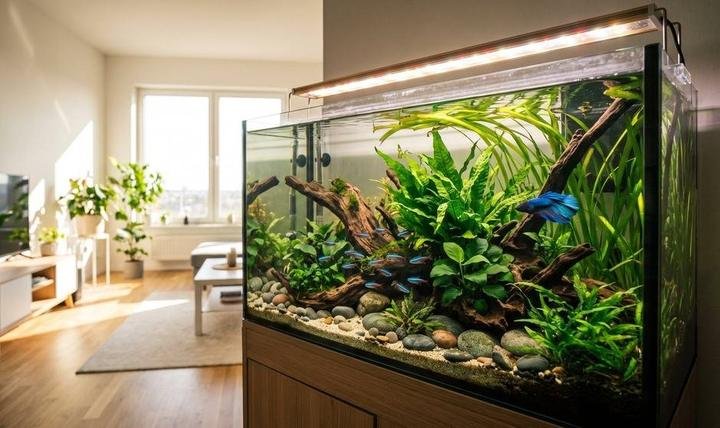
Short answer: Plan on about two hours of hands-on setup, then two to six weeks of cycling before any fish go in. Start with a 20-gallon tank, a heater near 5 watts per gallon, and a filter rated to move 4 to 6 times the tank’s water volume every hour. Rinse everything with plain water, fill the tank, run the equipment, and cycle it before adding fish. That cycling wait is the step beginners skip, and it is the one that kills the first batch of fish.
If you are setting up a fish tank for the first time, this guide walks you through the whole process step by step — from the empty box on the floor to the day your first fish go in.
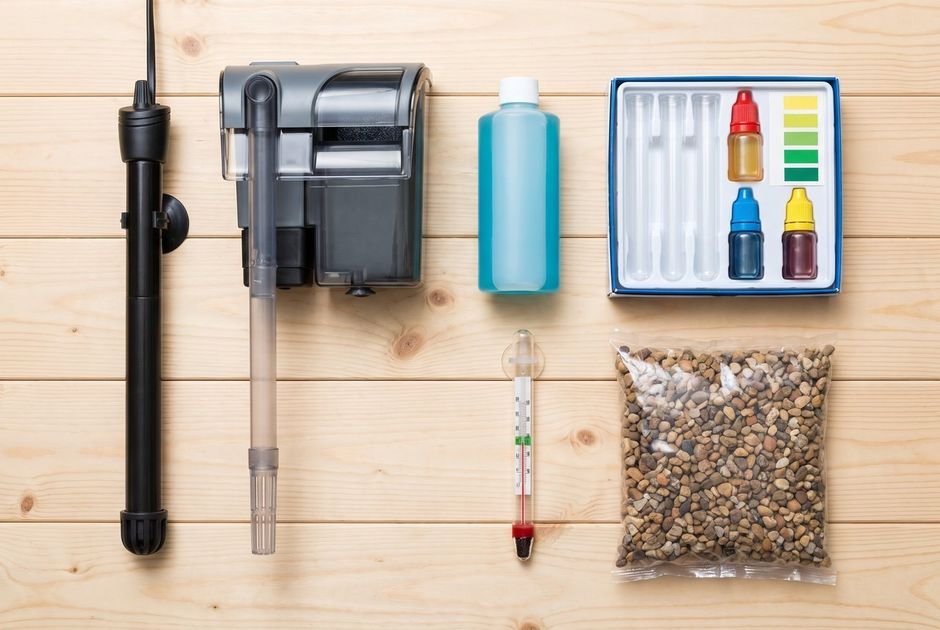
What you need before the tank goes on the stand
Buy the whole list before you start. Filling a tank halfway and then driving back to the store for a dechlorinator is how fish end up in unsafe water.
| Item | What to get | Why it matters |
|---|---|---|
| Tank | 20 gallons or larger | More water dilutes ammonia and holds temperature steady. Small bowls swing fast and punish mistakes. |
| Filter | Rated 4 to 6x tank volume per hour | For a 20-gallon tank, that is roughly 80 to 120 gallons per hour. The filter houses the bacteria that keep water safe. |
| Heater | About 5 watts per gallon | A 100-watt heater holds a 20-gallon tank at a stable 76 to 80 degrees for most tropical fish. |
| Dechlorinator | Any liquid conditioner (Seachem Prime, API Tap Water Conditioner) | Tap water carries chlorine or chloramine that kills the bacteria you are trying to grow. Non-negotiable. |
| Test kit | A liquid kit, not paper strips | You cannot see ammonia. A liquid kit reads ammonia, nitrite, and nitrate accurately. Strips drift and mislead. |
| Substrate | 1 to 2 pounds of gravel or sand per gallon | Holds plants and gives bacteria surface area. |
| Thermometer | Stick-on or glass | So you verify the heater instead of trusting its dial. |
You do not need a fancy light, CO2, or expensive gadgets to keep your first fish alive. Skip them for now.
Why a 20-gallon tank is easier than a nano
Beginners assume a small tank is the easy starter. The opposite is true, and the reason is arithmetic: volume is forgiveness. Almost everything that goes wrong in a first tank, an extra pinch of food, a missed water change, a heater fault, ends up dissolved in the water, so its effect is the size of the mistake divided by the gallons it lands in. The identical overfed meal raises ammonia four times higher in 5 gallons than in 20. A stuck heater moves a small tank several degrees in the hours a 20-gallon drifts one. A bigger tank does not prevent your mistakes; it shrinks every one of them by the ratio of the volumes, which is what buys a beginner the time to notice and fix things. If budget forces a smaller tank, 10 gallons is the floor for a community setup, and it changes how many fish you can keep. Our stocking calculator turns a list of fish into the minimum tank size they need. The rest of our beginner Getting Started guides build on the foundation in this article.
Step 1: Rinse everything with plain water
Rinse the tank, gravel, and decorations under the tap. Not sure how much gravel to buy? The aquarium substrate calculator works it out from your tank size and depth. Never use soap or detergent, because residue is toxic to fish and hard to fully remove. Swish gravel in a bucket until the water runs mostly clear, or the tank will cloud for days.
Step 2: Add substrate and hardscape
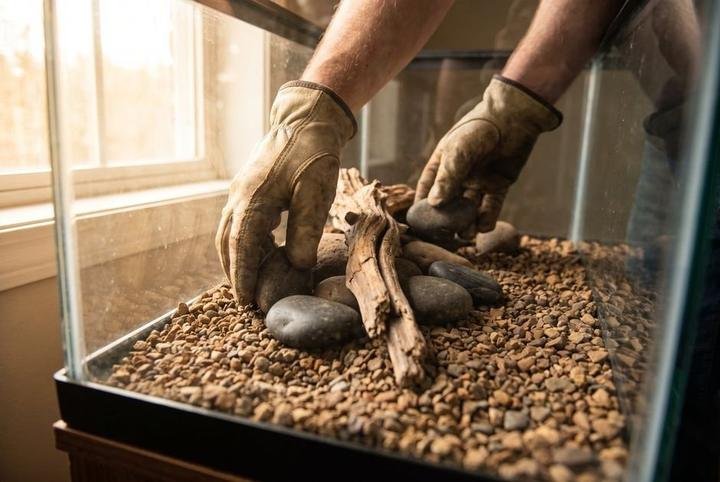
Set the empty tank on its stand, level, against a wall stud if you can, since a full 20-gallon tank weighs about 225 pounds. Add your rinsed gravel or sand, then position rocks and driftwood before there is water in the way.
Step 3: Fill with dechlorinated water
Place a plate or bowl on the substrate and pour onto it to avoid a crater. Fill to about an inch below the rim. Add dechlorinator at the dose on the bottle for your full tank volume, not just the amount you poured. This is the moment the water becomes safe to grow bacteria in.
Step 4: Start the filter and heater
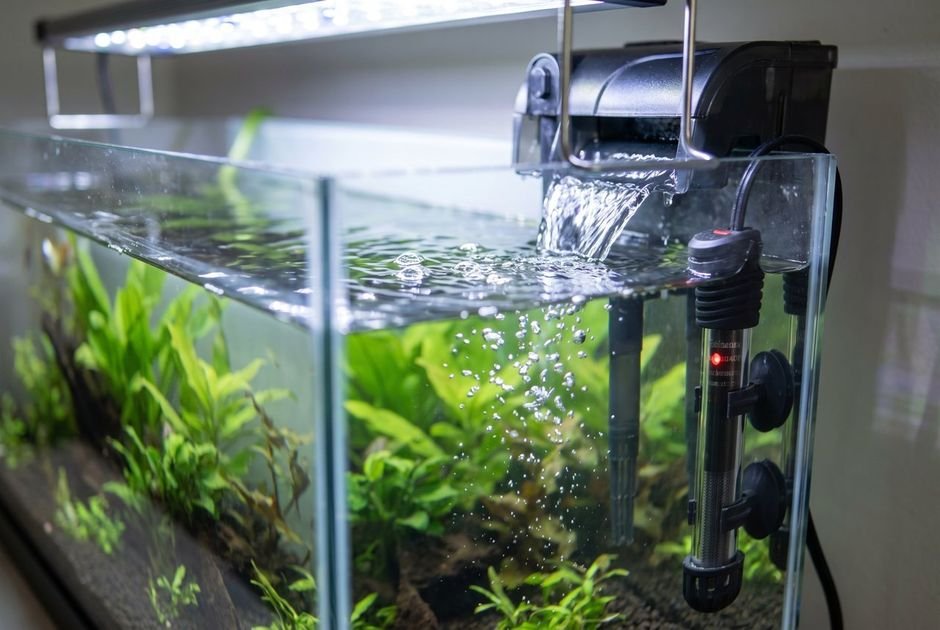
Plug in the filter and confirm water is moving. Submerge the heater, wait 20 to 30 minutes for its thermostat to adjust to the water, then set it to 78 degrees and check your thermometer over the next day. Leave both running 24 hours a day from now on.
Step 5: Cycle the tank before a single fish
This is the part that separates tanks that thrive from tanks that crash. Cycling grows two colonies of bacteria that convert fish waste (ammonia) into nitrite, then into far less toxic nitrate. Until those colonies exist, ammonia builds with nowhere to go. Do a fishless cycle by dosing an ammonia source and testing daily until ammonia and nitrite both read zero and nitrate appears. Our guide to cycling a new tank covers the exact readings to watch and how long each phase takes. Expect two to six weeks. Clear water does not mean a cycled tank.
Step 6: Test, then add fish a few at a time
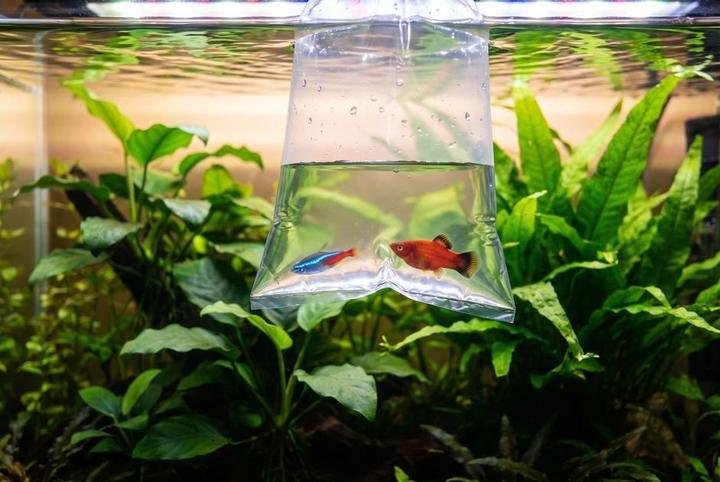
Once the tank reads zero ammonia, zero nitrite, and some nitrate, you are ready. Add a small group first, not a full load, and wait a week between additions so the bacteria can scale to the new waste. How many fish you can keep depends on tank size and species, and overstocking is the fastest way to undo a good cycle. Float new fish to match temperature, then release them without dumping store water into your tank.
What actually kills fish in the first month
Four killers account for nearly every dead fish in a first tank, and each one shows a warning sign days before the losses start, if you know which reading to look at:
| Killer | When it strikes | The early warning | The move |
|---|---|---|---|
| Uncycled tank | Days 2 to 14 | Ammonia or nitrite above 0 ppm on a liquid test | Daily 25 to 50 percent water changes until the cycle completes |
| Untreated tap water | Any water change | Fish look fine that evening; ammonia rises days later, because the tap water killed the filter bacteria | Dechlorinate every drop of tap water, every time |
| Temperature swings | The first cold night | A separate thermometer disagreeing with the heater dial; daily swings over 2 degrees | Trust the thermometer and adjust the dial to match it |
| Overfeeding | Week one onward | Food still floating after about two minutes; nitrate climbing week over week | Feed only what is finished in about two minutes, once or twice a day |
Then sort the urgency:
- Tonight: filling a tank with untreated tap water. Chlorine and chloramine harm fish and wipe out your bacteria. Always dechlorinate.
- Same day: any ammonia reading above zero once fish are in. Do a 25 to 50 percent water change and test again.
- This week: a heater that swings more than 2 to 3 degrees, or gravel packed deeper than 2 inches where waste rots.
- Can wait: a little brown algae on the glass in the first month is normal in a new tank and wipes off easily.
Common setup mistakes
Adding fish on day one is the big one, and it drives most first-tank losses. Close behind: skipping the liquid test kit, using soap to clean, and buying a tank so small it swings out of control. Get the cycle right and the rest of the hobby is mostly maintenance.
How long until it is ready
From filling to fish is two to six weeks, almost all of it the cycle doing invisible work. The two hours of setup are easy. The patience is the skill. For deeper reading on why the wait matters, the nitrogen cycle is well documented in university extension aquaculture guides and in the species and water-parameter references at Seriously Fish.
Set the tank up right once and it runs for years. Rush the cycle and you start over with new fish and a harder lesson.
Fish tank setup FAQ
How do you fill a fish tank for the first time?
Add the substrate first, set a clean plate or plastic bag on top of it, and pour dechlorinated water slowly onto the plate so the stream does not blast a crater in the gravel. Fill to about an inch below the rim, remove the plate, then start the filter and heater.
How do you put fish in the tank after setup?
Only after the cycle is finished. Float the sealed bag in the tank for 15 to 20 minutes so the temperatures match, add a little tank water to the bag every few minutes for another 15, then net the fish gently into the tank. Never pour the store’s bag water into your aquarium.
Do all fish tanks need a filter?
For a first tank, yes. A filter running 24/7 is where most of the beneficial bacteria that keep water safe actually live. Experienced keepers sometimes run heavily planted tanks without one, but that is an advanced technique, not a starting point.