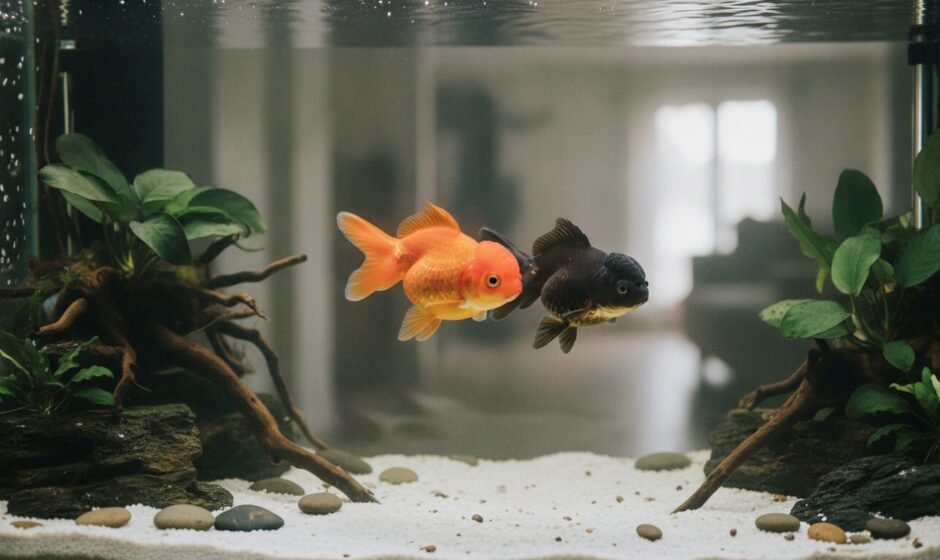
The honest answer to the goldfish tank mate question is more goldfish. Nearly every tropical fish sold two aisles over wants water 5 to 10 degrees warmer than a goldfish should live in, and a goldfish eats anything that fits in its mouth, which by adulthood includes most of the fish people try to pair with it. There is a short workable list beyond other goldfish, and this guide covers it, but it is genuinely short: a dojo loach in a big tank, white cloud minnows with real caveats, and that is about the end of it.
The temperature wall
Goldfish want 65-72°F. Tropical community fish want 76-80°F held steady. There is no honest overlap, only a compromise zone around 73-74°F where both sides are mildly stressed all the time. Chronic mild stress is how fish get sick: the goldfish’s metabolism runs too hot and shortens its lifespan, while the tetra or guppy runs too cold and its immune system sags until ich or fin rot finds it. Pet store employees who suggest “they’ll adjust” are describing survival, and slow decline still counts as survival for a while. Pick a temperature, then pick fish that want that temperature. For an unheated tank at room temperature, the goldfish side wins.
The mouth test
A goldfish is a stomach with fins and no judgment. If a tank mate fits in its mouth, the goldfish will eventually eat it, whether that takes a week or a year. An adult fancy goldfish swallows a neon tetra whole. A 10-inch comet takes down a full-grown platy. This is why the classic beginner pairing of goldfish and small tropicals fails twice over: first the temperature mismatch weakens the small fish, then the goldfish finishes the job. Run the mouth test against the goldfish’s adult size, since a fancy reaches 6-8 inches and a single-tail reaches 12 or more.
The honest answer is other goldfish
Goldfish are social, they want the same water as each other, and nobody gets eaten. That makes another goldfish the best tank mate by a wide margin, with one rule attached: match body types. Fancy goldfish (orandas, ryukins, black moors, fantails) are slow, round, and half blind in some varieties. Single-tails (commons, comets, shubunkins) are torpedoes. Mix them and the single-tails strip every flake from the surface before a fancy finishes its first lap; the fancy slowly starves in a tank full of food. Fancy with fancy, single-tail with single-tail, no exceptions at feeding time. The space math runs 20 gallons for the first fancy and 10 more per additional fancy. Single-tails are pond fish wearing an aquarium disguise; a 75-gallon is the indoor minimum, and a pond is the real answer.
The short workable list
| Tank mate | Works when | Watch for |
|---|---|---|
| Same-type goldfish | Tank meets the 20 + 10 gallon rule | Nothing; this is the safe pick |
| Dojo (weather) loach | 55+ gallons, cool water, sand substrate | Escape artist; a tight lid is mandatory |
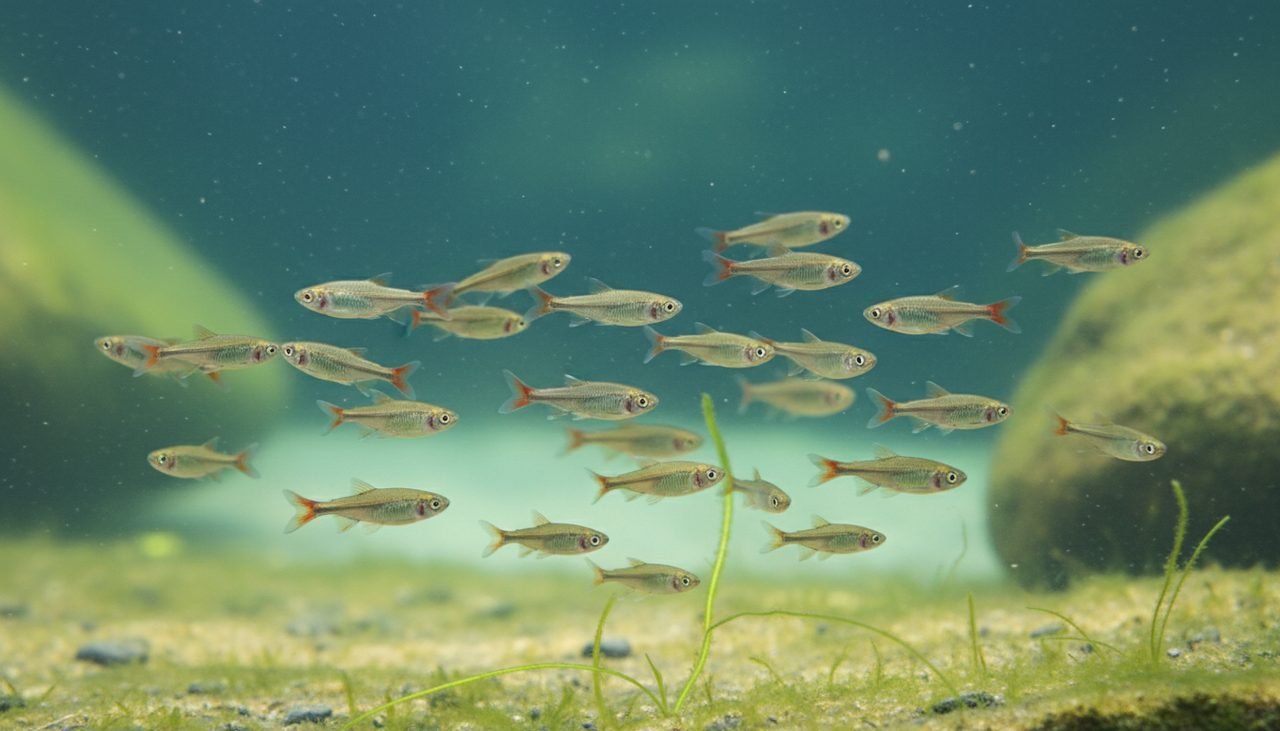
| White cloud minnows | Big tank, school of 10+, dense plants | Adult goldfish will eat the slow ones; treat this as a calculated risk |
| Nerite snails | Any goldfish tank | Goldfish may rip small snails off the glass and mouth them |
The dojo loach is the one genuinely good non-goldfish companion: it wants the same cool water, grows to 10-12 inches so it fails the mouth test in the right direction, and spends its day burrowing and forecasting weather changes with bursts of activity. It needs the tank size a proper goldfish setup already has.
Why the usual suggestions fail
- Plecos. A common pleco grows to 18 inches, and plecos of any size are known to latch onto goldfish at night and rasp their slime coat, leaving wounds. Bad in both directions.
- Cory catfish. Tropical fish that run too cold at goldfish temperatures, and small enough for the mouth test to end badly.
- Guppies, tetras, mollies. Wrong temperature, wrong size, wrong outcome. These are the fish the mouth test exists for.
- Bettas. A tropical fish that wants 75-81°F meeting a fish that will eat its fins or be eaten by it, depending on sizes. One of the worst pairings suggested online.
Goldfish foul water faster than anything they could live with
Even a perfect tank mate has to survive goldfish water. Goldfish eat constantly, digest inefficiently, and produce more ammonia per inch than almost any common aquarium fish. That means oversized filtration, ideally rated for double the tank’s volume; the filter guide explains why a canister or a big hang-on-back earns its cost here. It also means the standard 25% weekly water change is a floor for goldfish tanks; many keepers run 30-40% weekly and their nitrate readings still climb. Any tank mate you add rides on top of that bioload, which is one more argument for keeping the stocking list short. If the tank is not set up yet, start with the setup guide and buy the bigger tank now; upgrading later costs more than starting right.
Adding a tank mate without a disaster
If you settle on a second goldfish or a dojo loach, the introduction still deserves some care. Buy the newcomer at a size that passes the mouth test on day one; a 2-inch dojo loach in a tank with a 7-inch oranda is a snack with a delivery date, so start with one at 4 inches or larger. Feed the established goldfish at one end of the tank while the new fish settles at the other, since a goldfish with food in front of it investigates nothing else. Then watch for two weeks. The failure signs are specific: chased fins, a new fish that never reaches food, or a goldfish mouthing at its tank mate. Have a plan B ready before you buy, whether that is a divider, a second tank, or a store that takes returns. Rehoming a fish after a week is a minor errand; watching a slow-motion mismatch for a year is the version people regret.
Goldfish tank mate FAQ
Can goldfish live with tropical fish?
No, and temperature is the reason. Tropicals need 76-80°F, goldfish need 65-72°F, and holding either fish outside its range shortens its life. Any pairing you see working in a store display is a young goldfish that has not grown into its appetite yet.
Can two goldfish live in a 10-gallon tank?
No. One fancy goldfish needs 20 gallons, and two need 30. A 10-gallon stunts their growth on the outside while their organs keep growing on the inside, which is why goldfish in small tanks die at 2 years instead of 15.
Do goldfish get lonely?
Goldfish are social and do better in pairs or groups of their own kind. A solo goldfish survives fine, but two fancies in a 30-gallon interact, forage together, and show more natural behavior than one alone. Loneliness is a human word; social enrichment is the fish reality.
