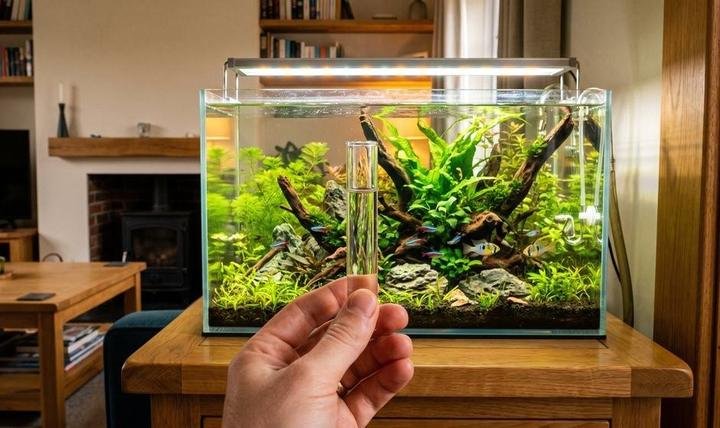
Short answer: run the tank with a source of ammonia for four to six weeks before any fish go in. Feed it pure ammonia (or a pinch of fish food) until a test kit reads 2 to 4 ppm, keep the water at 78 to 82°F (25 to 28°C), and wait for the bacteria to grow. The cycle is done when a full dose of ammonia clears to 0 ppm ammonia and 0 ppm nitrite within 24 hours, with nitrate showing on the test. This walkthrough is written for beginners cycling a new fish tank or aquarium for the first time.
That waiting period is the single biggest reason first tanks fail. The water looks clean. It is not. A brand new tank has no bacteria to process fish waste, so ammonia climbs until it burns gills and kills whatever you put in. Fishkeepers call that new tank syndrome, and it wipes out more beginner fish than any disease.
What the nitrogen cycle does
Fish give off ammonia through their gills and their waste. Ammonia is toxic at very low levels. Around 0.25 ppm starts to stress most fish, and above 1 ppm it burns gills and kills them.
Two groups of bacteria fix this. The first group, the ammonia oxidizers, eats ammonia and turns it into nitrite. Nitrite is still poison; it stops fish blood from carrying oxygen, so a fish in high nitrite suffocates in clean-looking water. The second group, the nitrite oxidizers, eats nitrite and turns it into nitrate. Nitrate is close to harmless at the levels a home tank produces, and you remove it with water changes.
Cycling means growing both bacteria colonies on your filter before any fish arrive. The bacteria do not live in the water. They coat surfaces, mostly the filter sponge and the gravel. A filter you never let dry out is worth more than any bottle of starter additive, because that sponge is where your whole cleanup crew lives.
Fishless cycling: the method that risks nothing
You feed the tank ammonia yourself and let the bacteria build with no animal in the water. Nothing can suffer because nothing is in there. This is the method to use whenever you have the choice, and it is the one the day-by-day table below is built on.
Set the tank up in full first. Substrate rinsed and in, heater set to 78 to 82°F (25 to 28°C), filter running, tap water treated with dechlorinator. Warm water grows bacteria faster, and chlorine from the tap kills them, so the dechlorinator comes first, before anything else goes in.
Then you pick an ammonia source and dose to 2 to 4 ppm.
### Option 1: pure ammonia (faster, more precise)
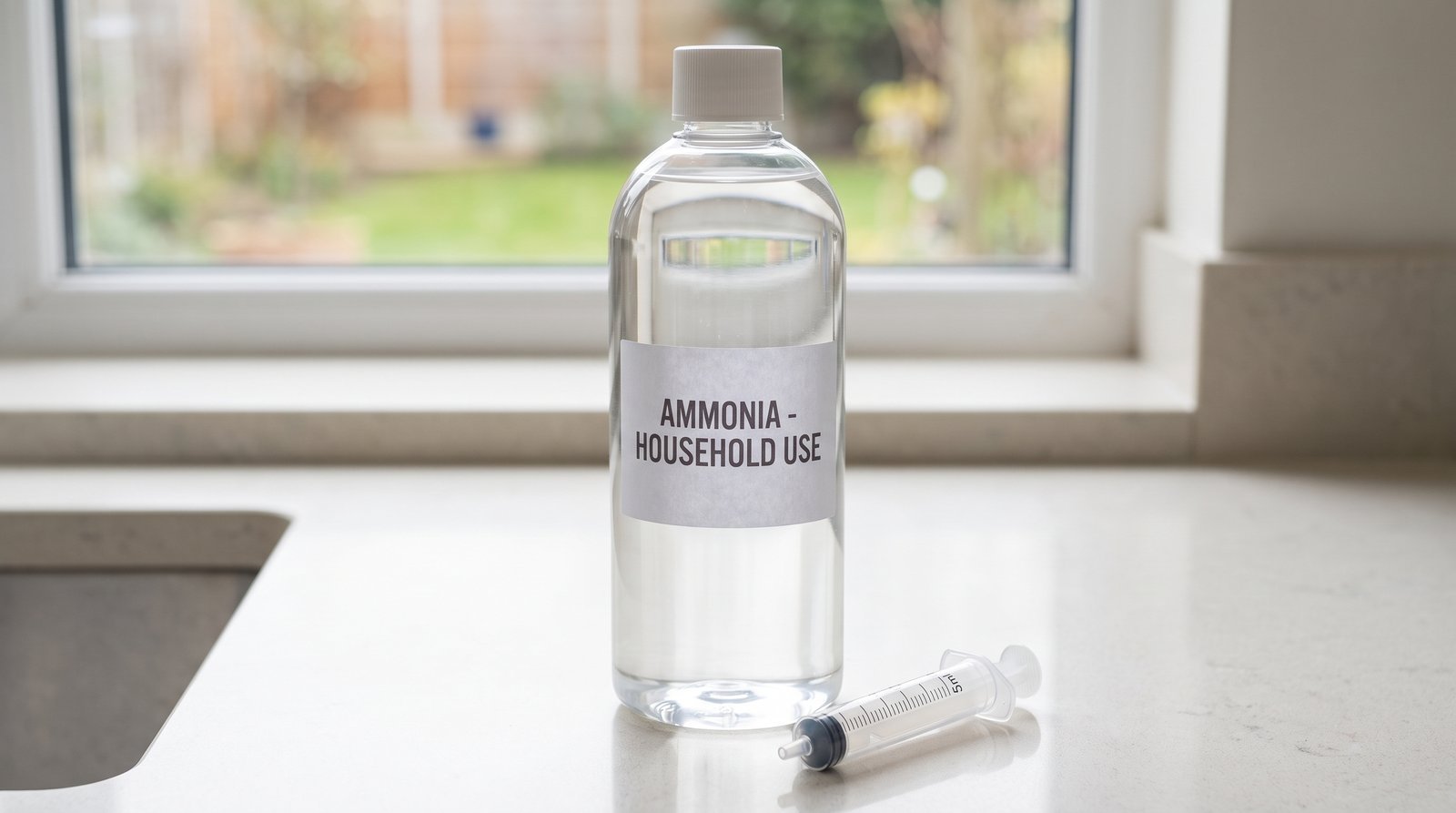
Use plain household ammonia with no soap, no scent, no surfactant, no blue color. Read the label: it should list ammonia and water and nothing else. Shake the bottle; if it foams, it has detergent in it and will poison your tank. Put it back.
The problem with dosing is that household ammonia is sold at anything from 5 to 10 percent, and the bottle rarely tells you which. So you dose in small steps and let the test kit, not the bottle, tell you when you have hit the target. As a starting estimate for a 10 percent solution, about 1 mL raises a 10 gallon (38 L) tank by roughly 2 ppm. Work from there:
- 10 gallons (38 L): start with 1 mL (about 20 drops) for ~2 ppm, or 1.5 to 2 mL for 3 to 4 ppm.
- 20 gallons (76 L): start with 2 mL for ~2 ppm, or 3 to 4 mL for 3 to 4 ppm.
- 29 gallons (110 L): start with 3 mL for ~2 ppm, or 4.5 to 6 mL for 3 to 4 ppm.
Dose, wait an hour so it mixes, then test. If you undershoot, add a little more and test again. Write down the amount that landed you at 3 ppm, because that is the number you will redose every time ammonia falls. A cheap 3 mL dropper or a 5 mL oral syringe from a pharmacy makes this exact and costs about a dollar.
### Option 2: fish food (cheaper, slower, messier)
Drop a pinch of flake food into the empty tank and let it rot. As it decays it releases ammonia, which feeds the same bacteria. A raw shrimp from the grocery store works the same way and is easier to fish back out.
The catch is control. You cannot dial fish food to an exact 3 ppm the way you can with a syringe, so your ammonia reading swings around and the cycle takes longer to read cleanly. Rotting food also clouds the water and can grow mold or a smell. Rough starting point: a pinch of flake per 10 gallons (38 L) every two or three days, then test and adjust. Use this method if you cannot find clean ammonia locally. Otherwise the syringe is worth the dollar.
The 42-day fishless timeline
These numbers assume a 20 gallon (76 L) tank at 80°F (27°C), dosed to about 3 ppm ammonia, with no seeded media. Your dates will slide by a week in either direction depending on temperature, pH and luck. Read the pattern, not the calendar. Whenever ammonia falls to around 1 ppm, top it back up to 3 ppm so the bacteria never starve.
| Days | Ammonia | Nitrite | Nitrate | What it means |
|---|---|---|---|---|
| 1 | 3 to 4 | 0 | 0 | You just dosed. Nothing is processing yet. |
| 2 to 4 | 3 to 4 | 0 | 0 | The quiet phase. Ammonia oxidizers are multiplying where you cannot see them. Boring is normal here. |
| 5 to 7 | 3 to 4, maybe dipping | 0 to 0.25 | 0 | The first trace of nitrite means the ammonia colony is working. This is your first real sign of progress. |
| 8 to 11 | dropping, 2 down to 1 | 0.5 to 2 | 0 to 5 | Ammonia falls faster each day. Redose to 3 ppm when it hits 1. Nitrate starts to appear. |
| 12 to 16 | near 0 within 24h | 2 to 5, often off the top of the chart | 5 to 10 | The nitrite spike. The longest, most discouraging stretch. The ammonia side is basically done; the nitrite side has barely started. |
| 17 to 22 | 0 in 24h | still high or maxed | 10 to 20 | Nitrite oxidizers are slow to establish. Keep dosing ammonia to 3 ppm. Patience is the whole job now. |
| 23 to 28 | 0 | falling, 5 down to 2 | 20 to 40 | The turn. Nitrite finally drops. Once it starts, it usually moves fast. |
| 29 to 34 | 0 | 0 to 1 | 30 to 50 | Almost there. Some mornings nitrite reads 0, some it does not. |
| 35 to 40 | 0 | 0 | 40 or higher | A full 3 ppm dose clears to double zero in 24 hours. If it holds two days running, you are cycled. |
| 41 to 42 | 0 | 0 | high, then reset | Confirm the double zero, do a large water change to cut nitrate under 20 ppm, and add fish the same day. |
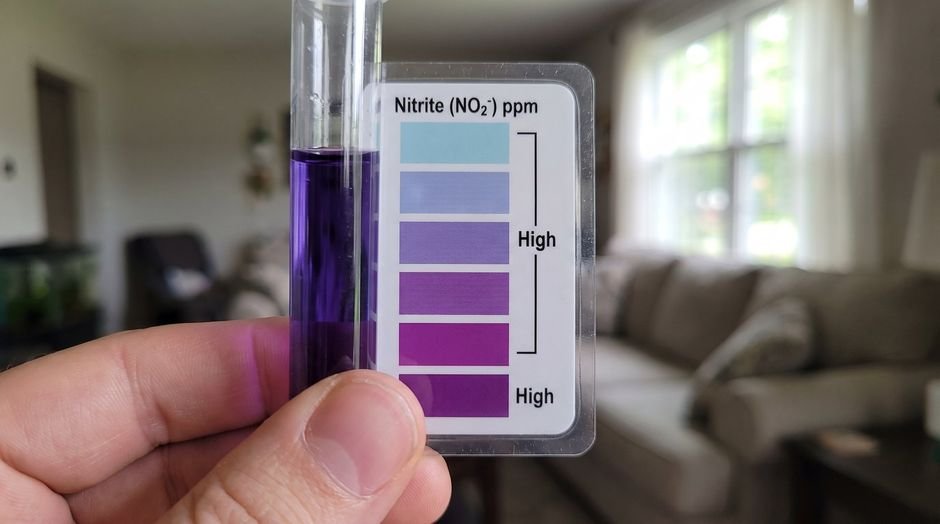
The nitrite spike around days 12 to 22 is where most people quit and dump fish in out of frustration. Do not. A purple nitrite tube is proof the cycle is working, not proof it is broken. It only clears once the second colony catches up, and that colony is the slow one.
Fish-in cycling: slower, riskier, sometimes the only option
Someone handed you a tank with fish already in it. Or a child won a goldfish at a fair and it is sitting in a bag on your counter right now. In those cases you cannot run the tank empty, so you cycle with the fish living through it, and your entire job becomes holding the poison low enough that they survive.
Be honest with yourself about what this is. You are asking an animal to live in water that is slowly filling with a gill toxin, for weeks, while bacteria that should have been there first catch up. Done carelessly it burns the fish’s gills, damages the skin, and shortens its life even if it does not die during the cycle. That is the real cost, and it is why the fishless method exists. If you have any way to wait, wait.
If you cannot wait, here is how to give the fish the best odds.
Stock almost nothing. One or two small hardy fish in a 20 gallon (76 L), no more. Every extra fish adds ammonia the young colony cannot handle.
Pick fish that take a beating. Zebra danios, white cloud mountain minnows, and most livebearers survive fish-in cycling better than the average fish. Bettas can do it in a heated tank. Neon tetras, most cories, and anything delicate should never be used for this; they die in the nitrite spike. Goldfish are hardy but produce so much ammonia they make the cycle harder, not easier.
Test every single day, without exception. The moment ammonia or nitrite shows anything above 0 ppm (0.25 ppm is the smallest reading most liquid kits can display), change enough water to pull it back down, usually 25 to 50 percent, with dechlorinated water matched to tank temperature. On a bad week that can mean a water change every day.
Use an ammonia binder. A conditioner like Seachem Prime locks ammonia into a form fish can tolerate for about 24 to 48 hours, without starving the bacteria, and buys you time between changes. Redose per the label while the tank is cycling.
Feed almost nothing. Every uneaten flake rots into more ammonia. Feed a tiny amount every other day. A fish can go a week without food far more easily than it can survive an ammonia spike.
A fish-in cycle runs six to eight weeks, longer than fishless, because you are deliberately holding ammonia low the entire time and low ammonia feeds the bacteria slowly. You are trading the fish’s comfort for their survival and paying for it in daily testing.
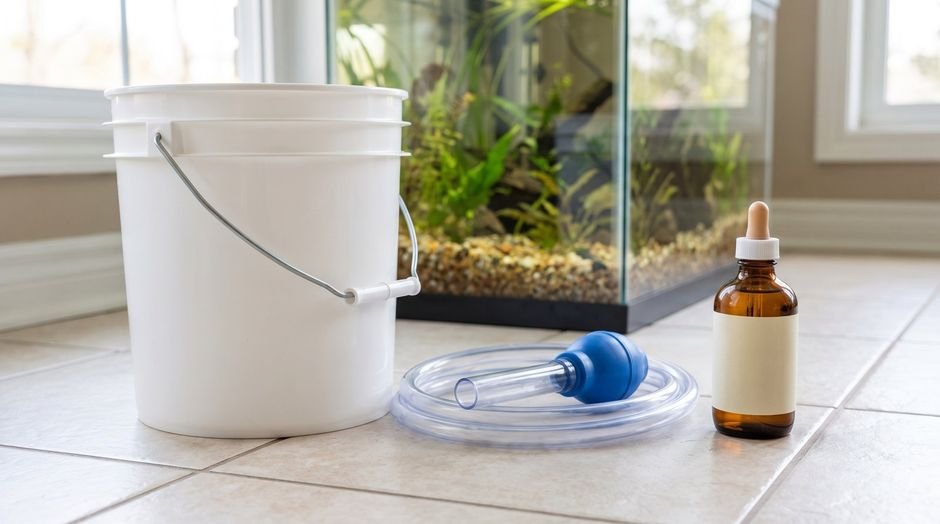
Fishless vs fish-in, side by side
| Fishless | Fish-in | |
|---|---|---|
| Animal in the tank | None | One or two hardy fish |
| Welfare cost | Zero | Real: weeks in gill toxin |
| Time to finish | 4 to 6 weeks | 6 to 8 weeks |
| Ammonia source | You dose to 2 to 4 ppm | The fish produce it |
| Testing | Every 2 to 3 days | Every day |
| Water changes | One big one at the end | 25 to 50% whenever a reading rises above zero |
| Main risk | Boredom, quitting early | Killing or harming the fish |
| Use it when | You can wait | You already have fish and no cycled tank to move them to |
If you are still setting up and have not bought fish yet, cycle fishless. It is the humane choice and the easier one. The full setup order, from stand to substrate to first fill, is in the guide on how to set up a fish tank.
Seeding: how to cut weeks off the wait
A bacteria colony roughly doubles each day in good conditions, so a head start compresses the whole timeline. Seeding means moving live bacteria from an established tank onto your new filter, and a well-seeded tank can finish cycling in one to two weeks instead of six.
What carries live bacteria, in order of how much they move:
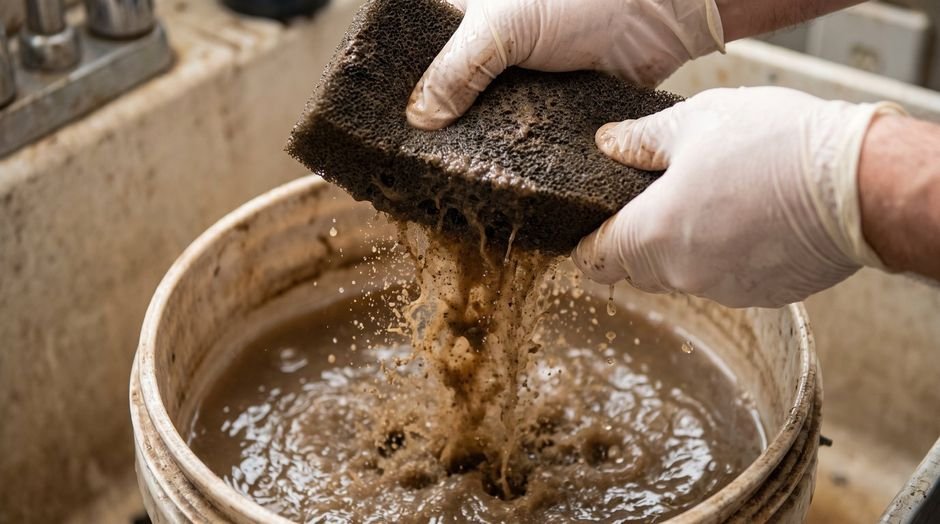
- A used filter sponge or media from a healthy, disease-free tank. This is the best of them. Squeeze it out in your new filter, or just run the old sponge in your new filter for two weeks.
- A cup of gravel from an established tank, dropped into your new substrate or a media bag.
- A mature filter cartridge running alongside your new one.
- A decoration or a chunk of a mature sponge helps a little.
What does not carry a useful amount, whatever the internet tells you: the tank water itself. The bacteria live on surfaces, not floating in the water, so a bucket of “old tank water” moves almost none of them. It is a myth that will not die.
Seeded media still needs feeding. Keep dosing ammonia to 2 to 3 ppm so the transplanted colony has something to eat while it grows into your tank, and keep testing until you get the 24-hour double zero. Seeding shortens the wait; it does not skip the test.
Troubleshooting a cycle that will not behave
The cycle stalled. Ammonia sits high for two weeks and no nitrite appears, or nitrite maxes out and never drops. Run through the four usual causes in order: the colony ran out of ammonia and starved, the water is too cold, the pH crashed, or chlorine or chloramine from a water change killed the bacteria. Check each one below before you decide the cycle failed. A stall is almost always one of these, not bad luck.
Temperature is too low. Nitrifying bacteria slow down below 70°F (21°C) and crawl below 65°F (18°C). If your tank sits in a cold room and the cycle has stalled, raise the heater to 80°F (27°C) and give it a week. Warmth alone often restarts a stuck cycle.
A nitrite spike that will not clear. Nitrite reads off the chart for two or three weeks and refuses to come down. Very high nitrite, above about 15 ppm, becomes toxic to the very bacteria trying to process it, so the colony chokes on its own backlog. Fix it by doing a 50 percent water change to bring nitrite into a readable range, then keep ammonia dosing modest, around 2 ppm, so you are not flooding the tank with more nitrogen than the young colony can clear.
The pH crashed. Nitrification produces acid and eats up the water’s carbonate hardness (KH) as it runs. When KH gets used up, pH falls, and below a pH of about 6.5 the bacteria slow hard; below 6.0 they nearly stop. A cycle that was moving and then froze, with a low pH reading, is a pH crash. Test your KH. If it is near zero, do a water change to bring in fresh buffering, or add a small amount of crushed coral to the filter or a pinch of baking soda to hold KH above about 4 dKH (roughly 70 ppm). The pH matters here because the bacteria need it, so this connects straight to the wider question of reading and fixing your water parameters.
Chloramine in your tap water. Many US cities treat water with chloramine, which is chlorine bonded to ammonia. A dechlorinator that only breaks the chlorine bond leaves the ammonia behind, so your fresh tap water reads 0.5 to 2 ppm ammonia straight from the faucet. That confuses a lot of beginners into thinking the cycle went backward. Use a conditioner that neutralizes chloramine specifically (most of the common ones do; check the label). During cycling this ammonia is just extra food, but during a fish-in cycle you have to account for it in your dosing math.
Bottled bacteria that promised an instant cycle. Products like Tetra SafeStart, Fritz Zyme 7 and Seachem Stability contain real nitrifying bacteria and can shave days off a cycle. They do not deliver the “add fish today” instant cycle the box implies. Quality swings wildly with how the bottle was stored: the bacteria are alive, and a bottle that baked on a hot warehouse shelf or a delivery truck for a summer is mostly dead on arrival. Buy a fresh, refrigerated bottle if you can, treat it as a head start rather than a shortcut, and keep testing. A used sponge from a friend’s tank beats any bottle.
How to know the cycle is actually finished
Stop trusting the calendar and run one test. In the evening, dose the tank to 2 to 4 ppm ammonia. Do nothing else. Twenty-four hours later, test ammonia and nitrite.
If both read 0 ppm and nitrate is clearly present on the chart, your filter just processed a full fish-worth of ammonia, through nitrite, to nitrate, in a single day. That is a cycled tank. Repeat the test once more the next day to be sure it holds, because a single clean reading can be a fluke and two in a row is not.
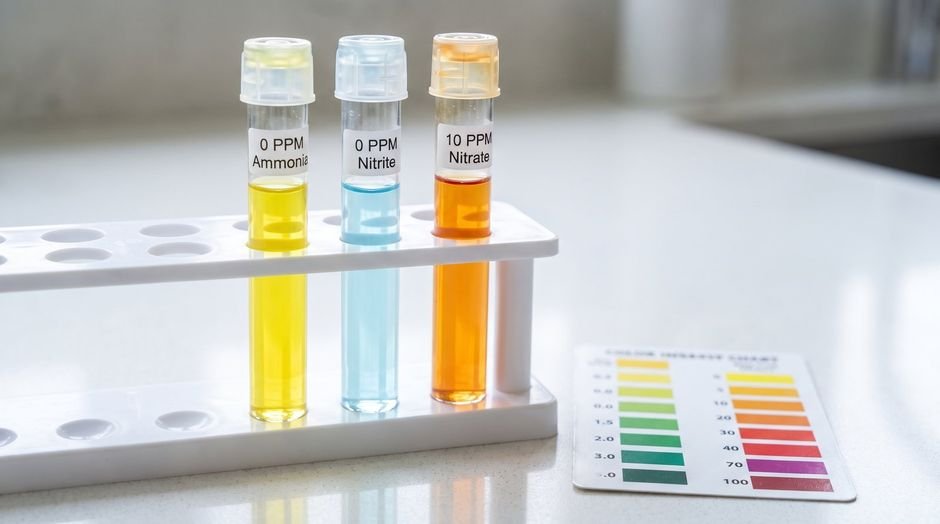
If ammonia or nitrite still shows anything above 0 after 24 hours, you are close but not done. Keep dosing and keep testing every couple of days until the double zero holds.
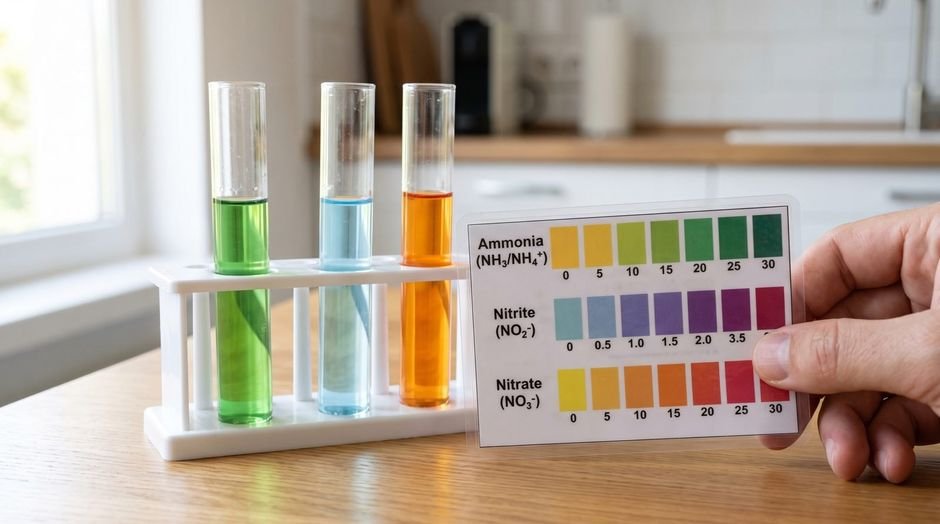
The reading is the proof, not a feeling and not a date on the calendar. A tank that has “been running six weeks” tells you nothing. A 24-hour double zero tells you everything. The specific target numbers are worth pinning up next to the tank:
| Reading | While cycling | Ready for fish |
|---|---|---|
| Ammonia | anything above 0 | 0 ppm |
| Nitrite | anything above 0 | 0 ppm |
| Nitrate | climbing | under 20 ppm after a water change |
Buy a liquid test kit, not the paper strips. The API Freshwater Master Kit is the standard, costs about 25 to 35 dollars, and reads far more accurately than strips that drift with humidity and age. You cannot cycle a tank you cannot measure, and strips will lie to you about the exact levels that decide whether your fish live. More of the questions beginners ask while staring at a cloudy tank are answered in the cycling questions in our FAQ.
The first week after the cycle finishes
The cycle is done, but the tank is now balanced for exactly one thing: the amount of ammonia you were dosing. The living bacteria colony is sized to that load and no bigger. Add fish carefully or you will trigger a small second cycle.
Right before you add fish, do a large water change, 50 percent or more, to pull nitrate down under 20 ppm, since it has been climbing untouched for weeks. Match the new water to tank temperature and dechlorinate it. Then add fish the same day, within a few hours, because a cycled filter with no ammonia coming in starts to starve; the bacteria begin to die back after about a day with nothing to eat.
Add fish in small batches, not all at once. Size the final stock to the tank first with the stocking calculator so you know the target before the first fish goes in. A few fish now, a few more in two weeks, lets the colony grow to match each step up in bioload. Dump a full stock of fish into a tank cycled on 3 ppm of dosed ammonia and the sudden extra waste can outrun the bacteria and spike ammonia again. This is a real mini-cycle, and it is the most common way a “cycled” tank still loses fish in week one.
For those two weeks, test every day or two and watch for a small ammonia or nitrite bump as the load rises. If you see one, do a water change and slow down on adding fish. Feed lightly. Do not clean or replace the filter media, and do not do a giant water change that you do not need, because the filter is where your whole colony lives and you just spent six weeks growing it. How many fish that first batch should be depends on tank size; the stocking math for a small tank is in the guide on how many fish a 10-gallon tank can hold.
Cycle the tank first and the rest of fishkeeping gets easier. Skip it and you spend your first month replacing dead fish and wondering what you did wrong.
Sources
- Nitrification chemistry, ammonia toxicity and the bacteria behind the cycle: Ammonia in Aquatic Systems, University of Florida IFAS Extension, publication FA031.
- Nitrite toxicity thresholds and management: Nitrite in Fish Ponds (PDF), Southern Regional Aquaculture Center, publication 462.
- Hardiness and temperature ranges for the species named above: Betta splendens at Seriously Fish and Paracheirodon innesi at FishBase.
- Product dosing and claims, from the manufacturer pages: Seachem Prime, Seachem Stability, Tetra SafeStart, FritzZyme 7 and the API Freshwater Master Test Kit.