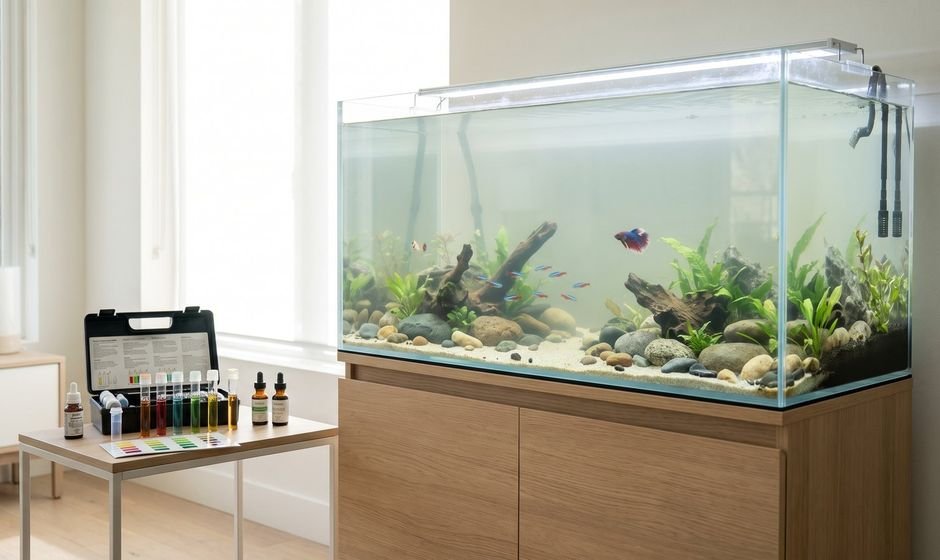
Short answer: New tank syndrome is ammonia and nitrite poisoning in a tank whose filter has not grown its bacteria yet. It usually hits in the first two to six weeks. If fish are gasping, clamped, or refusing food in a tank under two months old, test ammonia and nitrite now, then change 50 percent of the water with dechlorinated water matched to tank temperature.
Nothing you can buy fixes this permanently. Only bacteria fix it, and bacteria take weeks. Your job in the meantime is to keep the poison diluted and buy the colony time to grow.
What is actually happening in the water
Fish excrete ammonia continuously. In a mature tank, filter bacteria consume it within hours and convert it to nitrite, then a second colony converts nitrite to relatively harmless nitrate. In a new tank neither colony exists in useful numbers, so ammonia accumulates and nitrite accumulates behind it. That whole handoff is the nitrogen cycle at work, and new tank syndrome is what a missing cycle looks like from the fish’s side of the glass.
Ammonia burns gill tissue and skin. Nitrite does something different: it stops blood carrying oxygen properly, so fish suffocate in water that has plenty of dissolved oxygen in it. That is why an air stone alone does not rescue a fish in a nitrite spike.
Both wreck the immune system, which is why new tank syndrome is so often followed two weeks later by ich or fin rot. The infection is the symptom. The water was the cause.
The signs on the fish
- Gasping at the surface or hanging in the filter outflow. Fish go where oxygen is highest when their gills or blood are compromised.
- Red, inflamed or purple-looking gills, sometimes with the gill covers flared open. One of the clearest ammonia signs.
- Clamped fins, held tight against the body instead of spread. Easiest to spot on gouramis, bettas and tetras.
- Lethargy. A fish that was active last week now hovers in one corner or behind the heater.
- Sitting on the substrate. Corydoras resting is normal; a tetra doing it is not.
- Refusing food. Two days of ignored food in a new tank is a water problem until proven otherwise.
- Darting or rubbing against decor. Ammonia irritates skin.
- Reddish streaks in the fins or body, or a general loss of color.
- Brownish gills in a severe nitrite spike, from the change in blood pigment.
Symptoms do not arrive in a neat order, and one fish acting oddly can be something else entirely. Several fish showing any of the above at once, in a tank under two months old, is new tank syndrome until your test kit says otherwise.
The water test signature
Symptoms tell you to test. The test tells you where in the process you are.
| Ammonia | Nitrite | Nitrate | What it means | Urgency |
|---|---|---|---|---|
| 0.25 to 4 ppm | 0 ppm | 0 ppm | Early stage. No bacteria established yet. | Water change today |
| Above 0.5 ppm | Above 0.5 ppm | 0 ppm | Worst window. Both toxins present at once. | Emergency, act now |
| 0 ppm | Above 0.25 ppm | Low | First colony working, second not yet. Very common trap. | Water change today |
| 0 ppm | 0 ppm | 10 to 40 ppm | Filter is doing its job. Something else is wrong. | Look elsewhere |
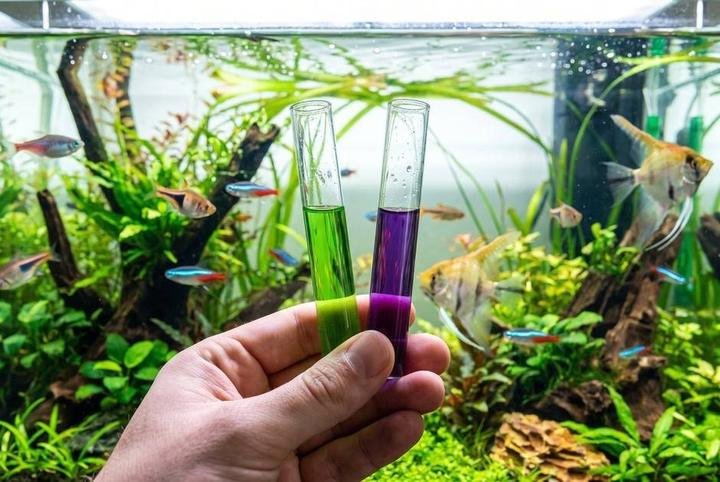
Any ammonia or nitrite reading above 0 ppm needs a response. There is no safe background level of either. Use a liquid test kit; strips read nitrite unreliably and will tell you everything is fine while your fish suffocate.
Rescue protocol if you already have fish in there
This is the situation most people find themselves in, usually because a store sold them fish and a tank on the same afternoon. It is recoverable. Almost all of these fish survive if you act consistently for a few weeks.
- Test ammonia and nitrite every day, at the same time. Write the numbers down; the trend matters more than any single reading.
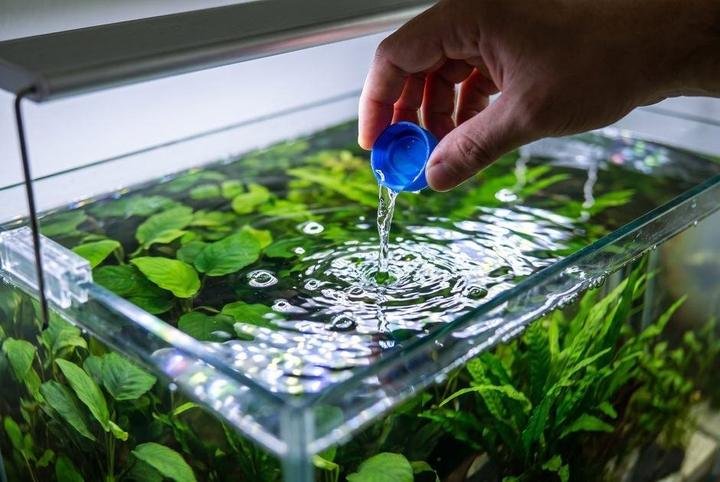
- Change 25 to 50 percent of the water whenever either reads above zero — on a liquid kit that means the first 0.25 ppm tint. Dechlorinate, and match the temperature to within about 2 degrees F. Two smaller changes in a day beat one huge one. Never replace all the water at once.
- Use a dechlorinator that also detoxifies ammonia if you can get one. These convert ammonia to a form fish tolerate for roughly 24 to 48 hours without starving the filter bacteria. Redose with each water change. It is a stopgap, not a cure, and there is more on bringing a high ammonia reading down fast.
- Cut feeding right back. A tiny amount every other day. Uneaten food becomes more ammonia, and adult fish lose nothing from a week of light rations.
- Increase surface agitation. Point the filter outlet at the surface or add an air stone. It will not fix nitrite poisoning, but it maximizes the oxygen available to damaged gills.
- Add bacteria. Squeezed filter sponge or gravel from a friend’s established tank is the fastest fix by a wide margin. Bottled bacteria is the next best option.
- Do not touch the filter. No media replacement, no rinsing in tap water, no deep gravel vacuuming. You would remove the colony you are waiting for.
- Add nothing else alive until ammonia and nitrite have both held at 0 ppm for a week. No more fish, plants or snails.
- Hold the temperature steady in the middle of your species’ range. Do not raise it to hurry the cycle along while fish are in there; warmer water carries less oxygen and shifts more ammonia into its more toxic form.
Expect six to eight weeks of this. As the filter matures, the gap between routine water changes stretches out. When you go a full week without either reading rising, you are through it.
What not to do
Do not dose medication. Nothing in a fish medicine cabinet treats ammonia, and antibacterial treatments knock back the filter bacteria you need. Treat visible disease only once the water is stable.
Do not chase pH with chemicals. Fish tolerate a steady pH they were not born to far better than a swinging one.
Do not replace the filter cartridge because it looks dirty. That brown gunk is the bacteria colony.
Do not trust one day’s improvement. Ammonia hitting 0 ppm in week two means the nitrite spike is still ahead.
Prevention
Cycle the filter before fish arrive. A fishless cycle with a bottled ammonia source takes four to six weeks and costs one test kit. The cleanest way to avoid all of this is to set the tank up and cycle it before you buy anything alive.
If you cannot wait, at least stack the odds:
- Start with seeded media from an established tank.
- Stock in small groups. Three or four hardy fish in a 20-gallon tank, then wait two weeks. Work out how many fish the tank can actually hold before you add a single one.
- Buy the biggest tank your space and budget allow. A 5-gallon tank swings from safe to lethal in hours; a 26-gallon tank dilutes the same mistake into something survivable.
- Underfeed. Beginners overfeed more often than they do anything else wrong.
- Own a liquid test kit before you own fish, and learn what your baseline water parameters look like when nothing is wrong.
FAQ
How long does new tank syndrome last?
Six to eight weeks from the day fish went in, sometimes longer in cool or soft water. Seeded filter media can shorten it to days. It ends when ammonia and nitrite both hold at 0 ppm and nitrate starts climbing.
Will my fish recover, or is the damage permanent?
Most fish recover fully from short exposure once the water is clean. Prolonged exposure can leave permanent gill damage and stunt young fish, and survivors often stay more prone to illness. Fish already gasping at the surface are hours from serious harm, not days.
My water went cloudy at the same time. Is that related?
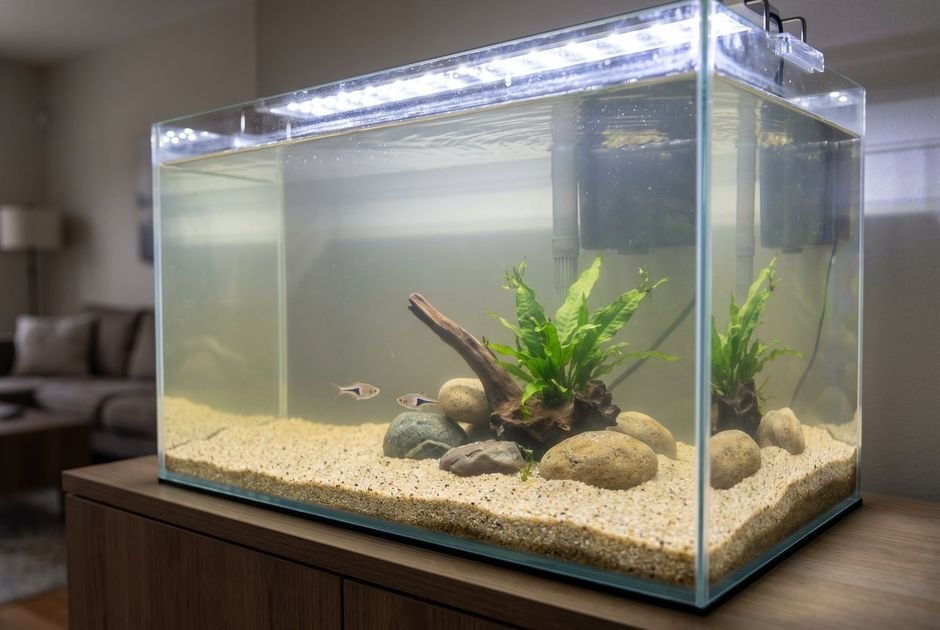
Usually yes, and usually harmlessly. A white or grey haze in a new tank is a bacterial bloom feeding on the ammonia, and it clears itself in a week or two. There is a full rundown in why aquarium water goes cloudy. None of it poisons fish, so keep testing regardless of how the water looks.
Should I take the fish back to the store?
If you cannot commit to daily testing and water changes for a month, returning them is the kinder choice. Otherwise keep them, follow the protocol above, and read up on the species you have ended up with so you know what normal behavior looks like for them.