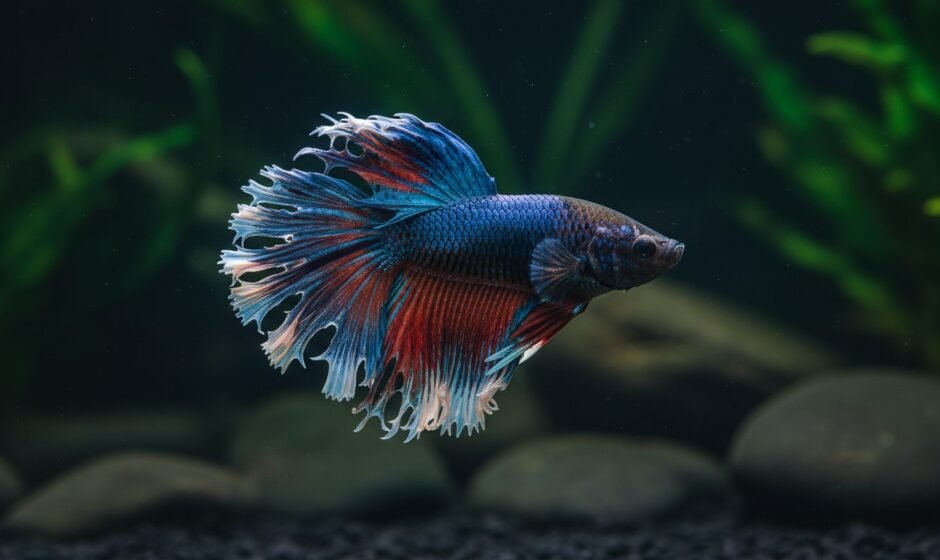
Fin rot is a bacterial infection that eats a betta’s fins from the edge inward, almost always set off by dirty water. Caught early, it clears with nothing more than clean, warm water and daily partial changes. Left late, it reaches the body and needs antibiotics. Every real fix starts with water quality, not medication.
What fin rot looks like
Healthy betta fins have clean, even edges. Fin rot frays them. The tips look ragged or torn, as if something nibbled them, and the edge often darkens to black or turns milky white where the tissue is dying. Over days the fin recedes toward the body, and you can watch it shrink if you photograph it against the same background each morning.
Color at the edge is the clearest tell. A black rim is the fin’s own pigment reacting as it dies back, common on pale bettas. A white, fuzzy edge points to a worse infection that is moving fast. Either way, the direction is the same: the damage works inward from the tips.
What actually causes it
The bacteria behind fin rot are in every tank, all the time. They only take hold when the fish’s defenses drop, and the thing that drops them most is poor water. Ammonia and nitrite from an overdue water change burn the fins and open the door. Cold water does the same by slowing the immune system, which is why unheated bowls see so much of it.
Physical damage gives the bacteria a head start. Sharp plastic plants, rough decor and fin-nipping tank mates all tear fins, and torn tissue is where rot begins. Stress from a cramped tank or constant flaring lowers resistance on top of that. Fin rot is rarely bad luck. It is almost always a sign the setup needs fixing.
The three stages
| Stage | What you see | What it needs |
|---|---|---|
| Mild | Slightly ragged or darkened fin tips, fish acting normal | Clean water and daily partial changes |
| Moderate | Visible recession, white or black edges, some clamping | Clean water plus aquarium salt |
| Severe | Rot reaching the body, fin bases red, fish lethargic | Aquarium antibiotics, fast |
How to treat it
Start with the water, because mild and moderate fin rot heal on clean water alone. Test ammonia, nitrite and nitrate, then change 25 to 50 percent daily until ammonia and nitrite read zero. Hold the temperature at a steady 78 to 80 degrees so the immune system runs at full speed. Many cases turn around in a week on this alone.
For moderate cases, aquarium salt at one teaspoon per gallon, dissolved first and dosed only for the treatment period, helps the fish fight back. Reserve antibiotics for severe rot that is reaching the body or still advancing after clean water. When it gets that far and the fish is also lethargic and clamped, read it alongside the other warning signs of a declining betta and act the same day.
Fin rot, biting, and other diseases
Not every ragged fin is rot. A bored or stressed betta sometimes bites its own tail, which leaves clean, sudden chunks missing rather than a slow fraying edge, and the bitten edge stays healthy-colored. Fin rot recedes gradually and discolors as it goes. If the damage appeared overnight in neat bites, suspect biting and look at boredom or flaring triggers first.
White, cottony tufts that sit on top of the fin are a different problem. Those point toward fungus or the spots covered in the guide to white spots on a betta. Fixing the water prevents most of these at once, which is why the betta care basics put tank conditions ahead of any medicine cabinet.
Common questions
Will a betta’s fins grow back after fin rot?
Usually, yes, if you stop the rot before it reaches the body. New fin grows back clear or pale at first and colors in over weeks. Fins lost all the way to the base may not fully return.
Is fin rot contagious to other fish?
The bacteria are already in every tank, so it does not spread the way a virus would. If a tank mate also gets it, the real cause is shared water that is stressing both fish, not contagion.
Can aquarium salt cure fin rot?
It helps mild to moderate cases alongside clean water, not on its own, and not forever. Use it for the treatment period only. Long-term salt in a betta tank does more harm than good.
How long does fin rot take to heal?
Mild rot stops advancing within days of clean water, and regrowth shows over two to four weeks. Severe cases on antibiotics take longer and may never fully recover the lost fin. Early action is the whole game.
