Change about 25 percent of a betta’s water once a week in a cycled 5-gallon tank. That one habit prevents more betta problems than any medication. In an uncycled or smaller tank, test daily and change water whenever ammonia or nitrite reads above zero, which can mean every single day until the tank settles.
The weekly standard: a quarter of the tank
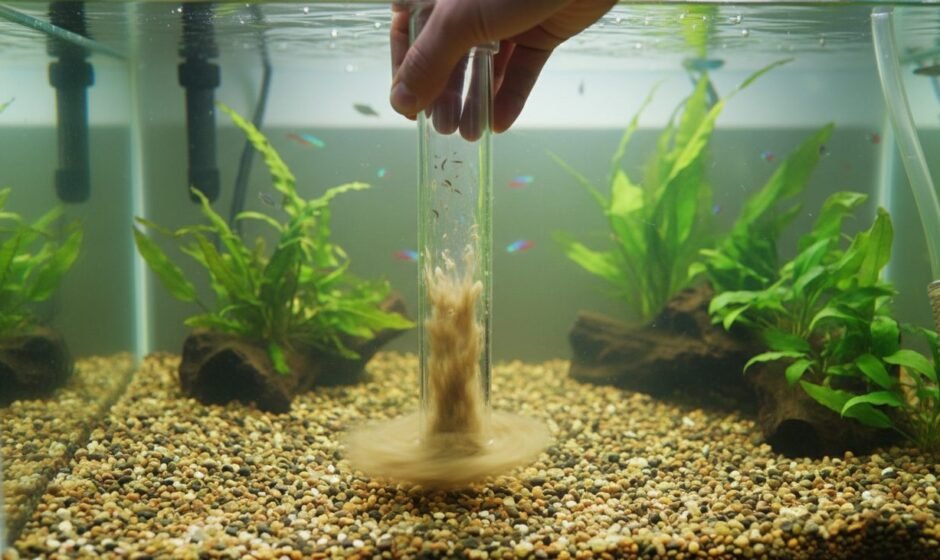
A cycled 5-gallon tank with one betta needs roughly 25 percent of its water swapped each week. That removes the nitrate that builds up between changes and tops up the minerals the fish uses. Pair it with a light vacuum of the substrate to lift the waste that settles under the gravel, where it rots and feeds ammonia.
A bigger tank buys you slack. A 10-gallon tank dilutes the same amount of waste into twice the water, so nitrate climbs slower and a missed week matters less. If you find yourself testing high every few days, the answer is usually a larger tank rather than a harsher cleaning schedule.
Why not change all of it
A full water change feels thorough and does more harm than good. Most of the beneficial bacteria live in the filter and substrate, not the water, so dumping the whole tank does little for your cycle. What it does do is swing temperature, pH and hardness all at once, and that sudden shift stresses a betta far more than the nitrate you removed. Partial changes keep the chemistry stable while still clearing waste.
The exception is an emergency: an ammonia spike, a medication you need to clear, or a tank that was never cycled. Then a 50 percent change, repeated, is the right call, matched carefully for temperature each time.
Uncycled tanks: change on the test, not the calendar
If the fish went into a tank that never finished cycling, the weekly schedule does not apply yet. You are doing the filter’s job by hand until the bacteria establish. Test ammonia and nitrite daily, and change 25 to 50 percent of the water any time either reads above zero. Keep feeding light so you add less waste while the colony catches up.
This phase ends once ammonia and nitrite both hold at zero and nitrate appears, usually after four to six weeks. From there the weekly quarter-change takes over. A betta that stops eating during this stretch is often reacting to the water, not to illness, so check the numbers before you reach for treatment.
How to change the water without stressing the fish
- Match the temperature. New water should feel the same as the tank. A few degrees of difference is enough to shock a betta.
- Dechlorinate every time. Tap water carries chlorine or chloramine that kills both the fish and your filter bacteria. Add conditioner to the new water first.
- Pour gently. Aim the stream at the glass or a decoration, not the fish, so you do not blast it across the tank.
- Leave the fish in. Netting a betta out for a routine change causes more stress than the change removes.
Water change schedule at a glance
| Setup | How often | How much |
|---|---|---|
| Cycled 5-gallon, one betta | Weekly | About 25% |
| Cycled 10-gallon, one betta | Weekly | 20 to 25% |
| Uncycled tank | Daily, on the test | 25 to 50% when above 0 ppm |
| Under 5 gallons | Every 2 to 3 days | 30 to 50% |
| Ammonia emergency | Until it reads 0 | 50%, repeated |
The whole routine, water changes included, is laid out step by step in the betta care guide.
Common questions
Can you change a betta’s water too often?
Yes. Large or daily changes in a healthy cycled tank swing the chemistry and stress the fish. Once the tank is stable, more than a weekly quarter-change is usually counterproductive.
Do I need to take the betta out?
No. For a routine partial change the fish stays in. Netting and moving it adds stress for no benefit. Only remove a betta if you are breaking the tank down completely.
Is tap water safe for a betta?
Only after you treat it. Tap water almost always contains chlorine or chloramine, which is toxic to fish. A dechlorinator makes it safe in seconds. Never use water from a softener, which strips the minerals a betta needs.
How often for a 3-gallon tank?
Every two to three days, roughly a third each time. The smaller the tank, the faster waste concentrates, so a 3-gallon needs more frequent attention than a 5. It is one more reason the 5-gallon is the easier starting point.
