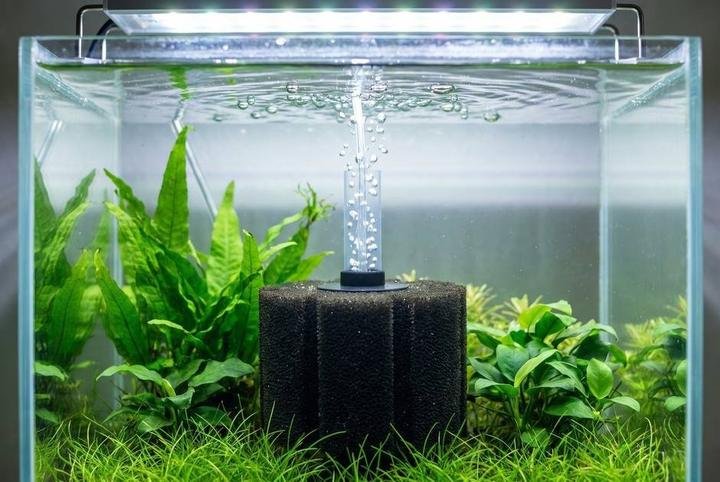
Yes, a betta needs a filter. The fish-in-a-bowl picture on the pet-store shelf sells the opposite, but a filter is what grows the bacteria that turn poisonous ammonia into something harmless, and it keeps the water steady between changes. There is one condition: the flow has to be gentle. A betta is a weak swimmer dragging heavy fins, and a strong current wears it out.
What a filter actually does
Most people think a filter cleans the water by catching debris. That is its least important job. The job that keeps the fish alive is biological: the filter houses a colony of bacteria that convert ammonia from waste into nitrite, then nitrite into far less toxic nitrate. Those bacteria need a constant flow of oxygenated water over a large surface, which is exactly what a filter provides and a bare bowl does not.
This is why a new filter does nothing on day one. The colony has to grow first, over four to six weeks, through the process of cycling the tank. Skip that and ammonia builds until it burns the fish’s gills, whether a filter is running or not.
The puddle myth
Bettas get sold as bowl fish because wild ones live in rice paddies and shallow ditches. The picture leaves out the important part. Those paddies spread across huge areas with plant cover, mud that buffers waste, and water that moves and refreshes with the rains. A sealed glass bowl has none of that. The waste has nowhere to go, so it concentrates fast in a small body of water and poisons the fish.
A betta can gulp air at the surface through its labyrinth organ, which is a separate thing from waste. Breathing air solves oxygen. It does nothing about ammonia. People confuse the two and conclude a betta needs no filtration, which is how so many bowl bettas die inside a year.
The one rule: gentle flow
A betta needs a filter, but not the strong current most filters produce. In the wild it holds in still water and darts in short bursts. Park it in front of a pump pushing the whole tank in circles and it fights the flow all day, which reads as stress: clamped fins, hiding, and a fish blown sideways every time it tries to rest.
The test is simple. If the betta can hold its position anywhere in the tank without swimming hard, the flow is right. If the current drags it around or pins it to the glass, cut the flow down.
The best filter for a betta tank
A sponge filter is the easiest match. An air pump pulls water through a foam block at a gentle rate, nothing sucks in a fin, and the foam holds plenty of bacteria for a 5-gallon tank. It sits visibly in the tank and the clarity is good rather than spotless, which is a fair trade for a betta.
A small hang-on-back filter also works if you tame the outflow. Baffle it with a strip of filter sponge over the lip, a wall of plants under the outlet, or the water bottle trick where a cut plastic bottle spreads the stream. Whatever the type, the betta’s comfort decides whether the flow is right. The full rundown of each option is in the guide to which filter type suits which tank.
Can a betta live with no filter at all?
It survives rather than lives, and only with work most people cannot keep up. A filterless tank has no bacterial colony, so ammonia starts climbing the moment the fish waste hits the water. The only counter is changing a large share of the water every day or two, forever, and even then the readings swing.
Those daily changes also swing temperature and chemistry, which stresses a betta more than steady water with a small amount of waste. If you are already fighting an ammonia reading in a bowl, the fastest fix is in the guide to bringing ammonia down quickly, but the long-term answer is a filtered, cycled tank. The betta care guide covers that full setup.
Betta filter FAQ
Can I turn the filter off at night?
No. The bacteria that keep the water safe need constant oxygenated flow, and large stretches without it start to kill the colony. A filter runs 24 hours a day. If the noise bothers you, a sponge filter on a quality air pump is the quietest option.
My betta hates the filter current. What do I do?
Reduce the flow rather than remove the filter. Baffle a hang-on-back outlet with sponge, add plants under the stream, or switch to a sponge filter. A betta that stops getting pushed around will use the whole tank again.
How often do I clean a betta filter?
Rinse the sponge or media once a month, in a bucket of old tank water, never under the tap. Tap water’s chlorine kills the bacteria you are trying to keep. Squeeze out the gunk, put the media straight back, and never replace all of it at once.
Does a bigger filter mean cleaner water for my betta?
Not for a betta. A powerful filter adds flow the fish cannot handle, and the extra pump rate buys little in a 5-gallon tank. Match the filter to the tank size, then temper the current. Gentle and steady beats strong every time with this fish.
