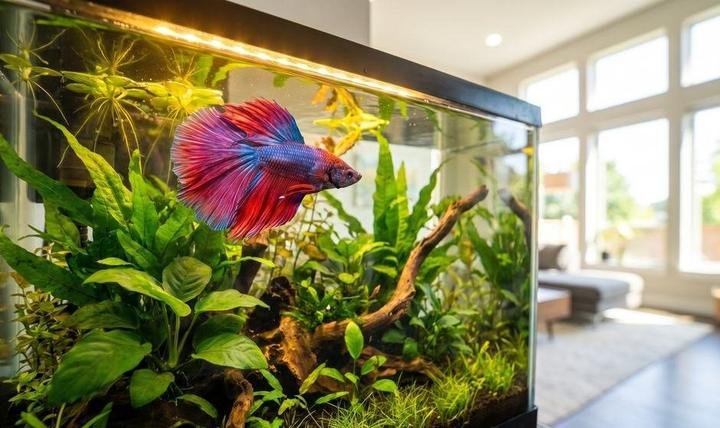
Short answer: A betta needs a heated, filtered, lidded tank of at least 5 gallons. Not a bowl, not a vase with a plant wedged in the top, not the tiny cube sold as a complete betta kit. Hold the water between 75 and 81 F, keep the flow soft, and leave the surface open so the fish can gulp air. Get those right and most betta problems never happen. Match the heater to the tank with our aquarium heater size calculator.
Bettas are tropical fish from the slow, shallow waters of Southeast Asia. A betta in a proper tank usually lives three to five years. One kept cold in an unfiltered bowl often dies inside a year, which is where the “bettas are hard to keep alive” reputation comes from. It is a setup problem, not a fish problem.
Why 5 gallons is the floor, not the goal
The “bettas live in puddles” line misreads the habitat. Wild bettas live in rice paddies, ditches and marsh margins: shallow, yes, but spread over a large area with plant cover and constant water exchange. A sealed half-gallon box has neither.
Volume matters for three practical reasons. Waste concentrates faster in a small body of water, so ammonia can reach a harmful level within a day. Temperature in a small tank tracks the room, swinging several degrees between afternoon and 3 a.m. And there is nowhere to safely fit a heater, which is why unheated bowls sit at room temperature and slow the fish down. To see how big a betta tank should be, and what any tank mates add, run them through the stocking calculator.
If you have space for 10 gallons, take it. A larger tank is more forgiving of mistakes, and the weekly upkeep is the same fifteen minutes. The full method is in how to set up a betta tank from empty.
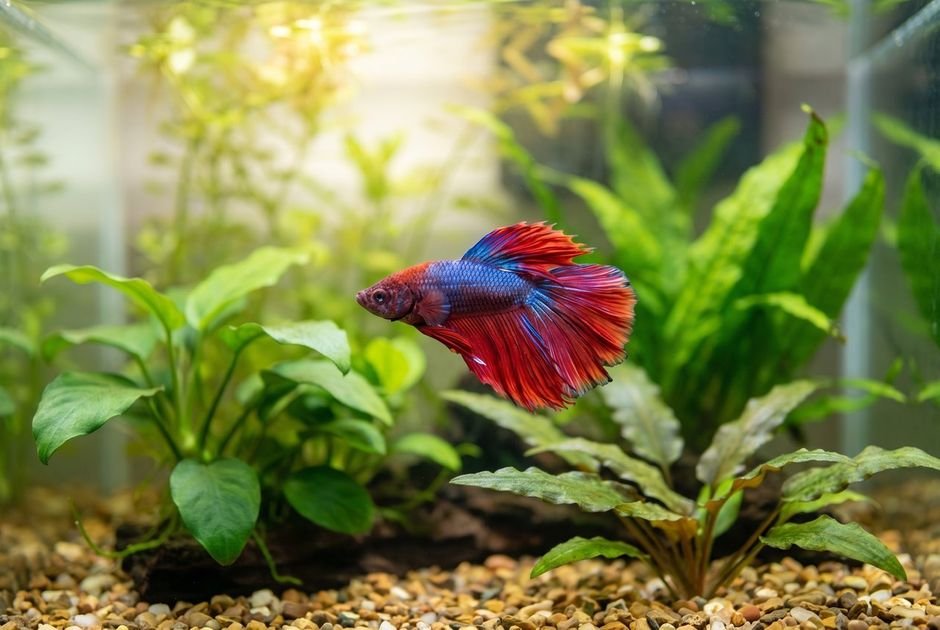
Quick-reference betta setup
| What | Target | Notes |
|---|---|---|
| Tank volume | 5 gallons minimum | 10 gallons stays more stable |
| Temperature | 75 to 81 F | Steady beats perfect. Avoid daily swings over 2 F |
| Heater | Adjustable, thermostat-controlled | Roughly 25 watts for 5 gallons. Trust a thermometer, not the dial |
| Filter | Sponge, or small internal with flow baffled | The fish should hold position without swimming hard |
| Lid | Glass lid or fine mesh | Bettas jump. This is how most are lost |
| pH | 6.5 to 7.5 | Stability beats the number. Never chase pH with chemicals |
| Ammonia / nitrite | 0 ppm both | Any reading above 0 ppm needs action that day |
| Nitrate | Under 40 ppm | Rising nitrate means change water more often |
| Lighting | 6 to 8 hours daily, on a timer | Longer or brighter mostly grows algae |
| Water change | About 25% weekly | Dechlorinated, temperature-matched |
| Substrate | Sand or smooth gravel, 1 to 2 inches | Sharp gravel scrapes a bottom-sitting fish |
Cycle the tank before the fish goes in
A new tank has no bacteria to convert fish waste, so ammonia climbs until that colony establishes. Cycle the tank first with a fishless cycle: it takes roughly four to six weeks and is done when ammonia and nitrite both read 0 ppm and nitrate is present.
If the fish is already home and the tank is uncycled, test daily, change 25 to 50 percent of the water whenever ammonia or nitrite reads above 0 ppm, and feed lightly. There is a full routine for clearing an ammonia reading fast, and the water testing guides cover what the numbers mean.
Bettas breathe air, and that changes your setup
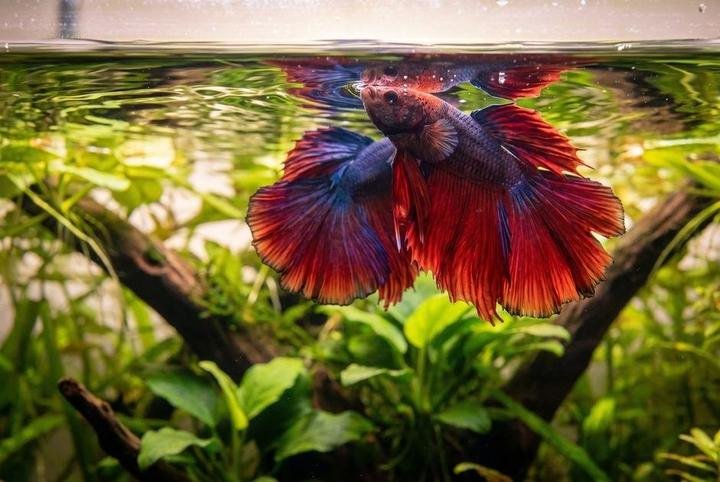
Bettas have a labyrinth organ, a folded, blood-rich structure above the gills that absorbs oxygen straight from air. They surface for a gulp every few minutes, and they need to. A betta held below the surface will drown even in well-oxygenated water.
So never fill a tank so high that the lid sits flush against the water, and never cover the surface entirely with floating plants. Leave a one-inch air gap under the lid and keep part of the surface clear.
It also means strong filter flow is worse for a betta than for most fish. A betta fighting a current to reach the surface is a stressed betta. If the outlet pushes the fish sideways, baffle it, or start with a gentle filter a betta can handle. A betta does need a filter, just not a strong one.
Feeding: much less than you think
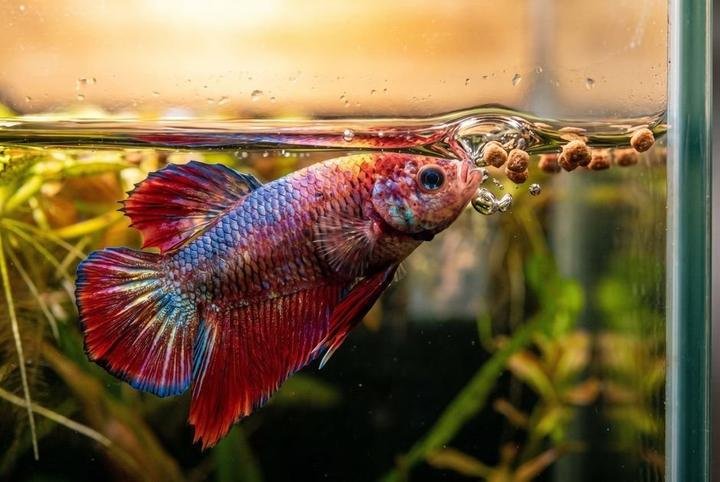
A betta’s stomach is roughly the size of its eye. Two to four pellets, twice a day, is a full ration for an adult. Pellets swell once wet, so soak them in a spoonful of tank water for a minute first. That stops them expanding inside the fish.
Feed what the fish clears in about two minutes, then net out anything left. Uneaten food rots and feeds the ammonia you are trying to keep at zero.
Overfeeding is the most common betta mistake. It shows up as a swollen belly, a fish that sinks to the bottom after meals, and stringy or absent waste. One fast day a week does a healthy adult no harm. Frozen bloodworm is a treat once or twice a week, not a staple; what a betta should eat day to day is a meat-based pellet. Keep frozen daphnia in the freezer too; it helps a constipated fish pass a blockage. If a betta stops eating entirely, work through why a betta stops eating before assuming disease.
Tank mates and decor
A betta needs no company. In a 5-gallon tank, alone is the right answer.
Never house two male bettas together, in any tank size, with any amount of plant cover. They will fight until one is badly injured or dead. Female-only groups exist, but they need a heavily planted tank of 20 gallons or more and a keeper ready to split the group up. Not a beginner project.
Avoid these outright:
- Fin nippers. Tiger barbs, serpae tetras and most active barbs shred long fins.
- Fancy guppies. Bright, flowing-finned males read as rival bettas and get attacked.
- Other gouramis. Same family, same territorial instincts, predictable fights.
- Goldfish. Cooler water, far more waste.
- Anything needing strong current or water below 75 F.
In 20 gallons or more, a calm betta can sometimes live with harlequin rasboras, ember tetras, kuhli loaches or a nerite snail. Amano shrimp work with some bettas and get eaten by others. Temperament is individual, and a fish that flares at everything will never accept tank mates. Work out a sensible stocking limit for the tank before adding any.
Decor that will not shred fins
Betta fins tear easily and torn fins invite fin rot. Before anything goes in the tank, run a pair of pantyhose over it. If the fabric snags, the fin will too. That rules out most stiff plastic plants and plenty of molded ornaments.
Use silk plants or live ones. Anubias, java fern and cryptocorynes all grow in low light and give a betta somewhere to rest. Bettas favor broad leaves near the surface, and a big anubias leaf makes a natural resting spot. The beginner-friendly aquarium plants guides cover species that survive beginner conditions.
Caves are fine if the openings are smooth and wide enough to back out of. Fish do wedge themselves into narrow ornament holes and die there.
A maintenance routine that takes fifteen minutes
- Daily: feed, check the thermometer, look at the fish. Clamped fins, swollen gills or refused food are your early warnings.
- Twice a week: test ammonia, nitrite and nitrate for the first two months, then weekly once readings hold steady.
- Weekly: change about a quarter of the water, temperature-matched and dechlorinated, vacuuming the substrate lightly as you go.
- Monthly: rinse filter sponges in a bucket of the water you just siphoned out. Never under the tap, and never replace all the media at once.
- As needed: trim dead leaves, wipe the front glass, confirm the heater still cycles.
Common questions
Does a betta really need a heater?
Yes. A betta needs a heater unless your room holds 75 to 81 F day and night, year round. Most do not. A betta at 68 F eats poorly and is far more prone to infection.
Can a betta live in a bowl if I change the water daily?
It survives rather than lives. Daily full changes mean constant temperature and chemistry swings, which stress the fish more than the waste you removed. There is also no safe way to heat a bowl.
Why is my betta making a raft of bubbles at the surface?
That is a bubble nest, built by comfortable males. It needs no action, and its absence does not mean anything is wrong.
My betta lies on the bottom a lot. Is it sick?
Bettas sleep and rest, often on a leaf, and heavy-finned varieties rest more. Worry when bottom-sitting comes with the warning signs of a declining betta: clamped fins, a swollen body, labored breathing or refused food. Test the water first; most fish care troubleshooting starts there.