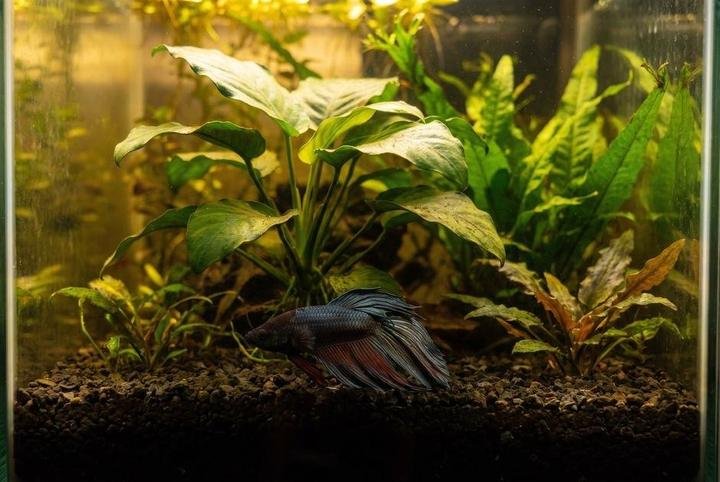
A dying betta gives you signals days before the end, and several of them are reversible if you read them early. The trick is knowing which behavior points to water, which to disease, and which to old age you cannot fix.
Resting on the bottom, barely moving
Bettas do sleep on leaves and gravel, so a resting fish is not automatically a sick one. Worry when the lethargy is constant, the fish ignores food, and its breathing looks labored. The first suspect is always water. Test for ammonia and nitrite; if either reads above zero, do a 30 to 50 percent water change immediately, because ammonia poisoning burns the gills and mimics dying of old age.
Clamped fins held tight to the body
Healthy betta fins flow. Fins clamped shut like a folded fan signal stress, chilling, or the start of an infection. Check that the heater is holding a steady 78 to 80 F, since a cold betta clamps up and stops eating. Sustained clamping alongside other symptoms often means the water chemistry has drifted, which the guide to pH, KH and GH walks through fixing.
Fading color
A betta that dulls from brilliant to washed-out is under stress or aging. Young bettas rarely lose color without a cause; older ones (past three years) fade naturally. Pair fading with a betta that has stopped eating and you are usually looking at a sick fish, not just an old one.
Gasping at the surface
Constant gulping at the top means the fish is not getting enough oxygen, or the water is poisoning it. Bettas breathe air through a labyrinth organ, so an occasional trip up is normal. Nonstop gasping is not. Confirm ammonia and nitrite are both zero, then increase surface movement.
White spots, lying on the side, or a swollen belly
White grains like salt scattered on the fins point to ich; read how to identify white spots on a betta before treating, since the fix depends on the exact cause. A betta lying on its side or struggling to stay upright usually has a swim bladder issue, often from overfeeding, and a two to three day fast frequently resolves it.
What actually saves fish
Nine times out of ten the fastest fix is a large water change and a heater check, not medication. Most bettas that decline are living in unstable water, so start there. If you are still learning the basics of temperature, tank size, and feeding, the betta care guide for beginners covers the setup that prevents most of these problems in the first place.
