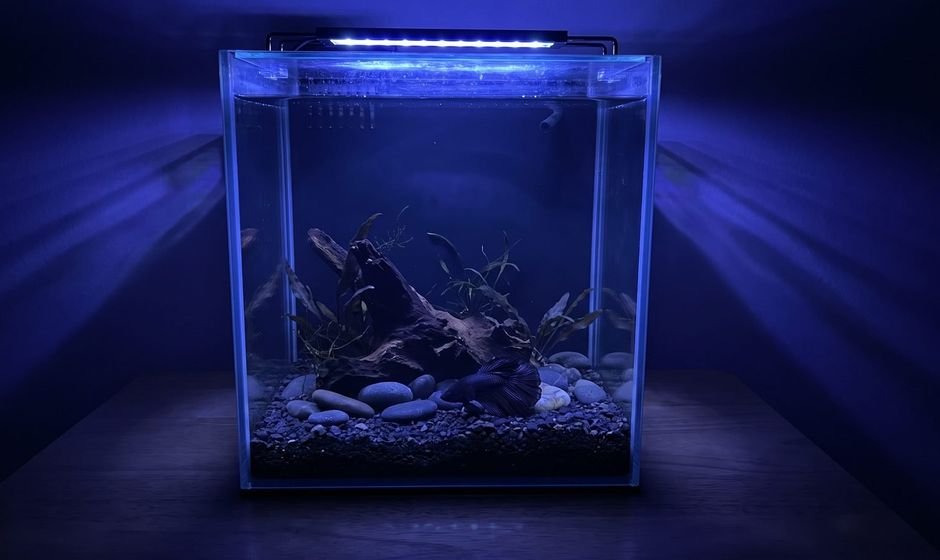
Nobody wants to read this guide, which is exactly why it needs to exist: when a fish is suffering with no path back, the kindest option is a calm, painless end, and the internet’s folklore methods (the freezer, the flush) are neither. This guide has two jobs. First, a gate: a short checklist that catches the fish that look terminal but are actually poisoned by their own water and can recover in days. Second, the clove oil protocol, the two-stage method welfare organizations recommend for home aquarists, done correctly, with the 30-minute rule that removes all doubt.
The gate: rule out the water first
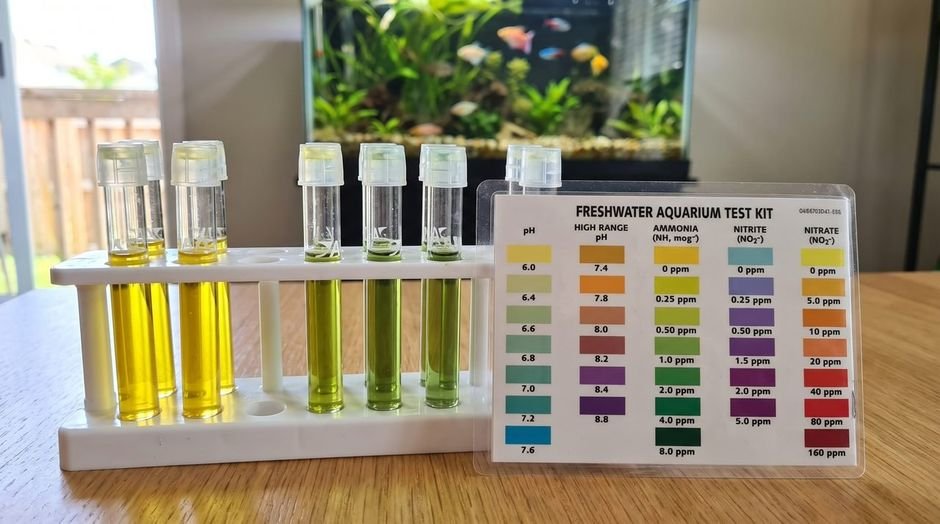
The most common “dying” fish in a beginner tank is not dying of disease. It is being poisoned, and poisoning reverses when the poison goes. Before any end-of-life decision, run this checklist:
- Test ammonia and nitrite. Gasping at the surface, lying on the bottom, red-streaked fins, and glassy stillness are all classic poisoning signs. Any ammonia reading above 0 ppm means the water is a suspect. The ammonia guide covers the emergency response, and fish rebound from poisoning that looked hopeless.
- Check the temperature with a thermometer, not the heater dial. A failed heater, stuck on or off, produces a limp, unresponsive fish that revives as the water normalizes.
- Do a large water change anyway. If the fish perks up within hours, you have your answer, and it was never euthanasia. It was new tank syndrome or its relatives.
Euthanasia is for the other cases: a fish that cannot right itself for days in clean, tested water; visible tumors or deformities that block eating; late-stage disease that has not responded to correct treatment; injuries that cannot heal. The honest test is trajectory. A fish that is stable or improving in a hospital tank deserves more time; a fish declining despite everything does not benefit from another week of it.
The clove oil protocol
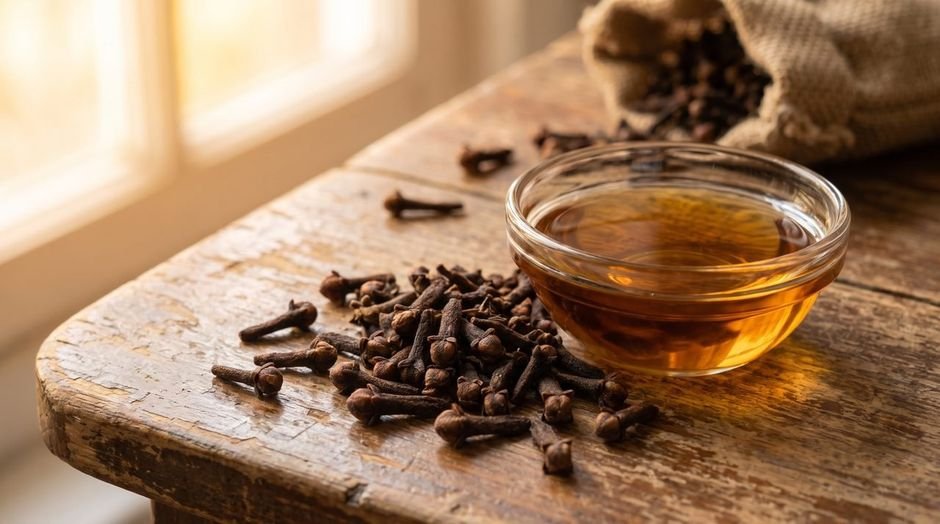
Clove oil (eugenol) is a fish anesthetic. The same compound used at low doses to sedate fish for veterinary procedures. At high doses, an anesthetized fish simply never wakes: it goes to sleep first, and everything after happens under full anesthesia. That two-stage structure is the entire point, and skipping stage one defeats it.
What you need: a small container of tank water (a few liters. Use water from the fish’s own tank so temperature and chemistry match), pure clove oil from a pharmacy, a small jar with a lid for mixing, and somewhere quiet.
Stage one, sedation. Add about 3 drops of clove oil per liter of water to the jar with some tank water, cap it, and shake hard until the oil emulsifies into a cloudy white mix, clove oil does not dissolve on its own, and unmixed droplets can burn gills. Pour the emulsion slowly into the container with the fish. Over the next 5 to 10 minutes the fish slows, settles, and rolls gently as it loses equilibrium. This is anesthesia, not distress. It is now unconscious and feels nothing.
Stage two, overdose. With the fish fully sedated (no response to a gentle touch near the tail), mix a second, much stronger emulsion, enough to raise the total to roughly four to five times the sedation dose, and add it the same way. The anesthesia deepens until breathing stops.
The 30-minute rule. Watch for gill movement to stop completely, then leave the fish in the solution for a further 30 minutes. Fish can suspend gill movement under deep anesthesia and recover if removed early; thirty minutes past the last gill movement removes all ambiguity. There is no rush. The fish has been unconscious since stage one.
The never-do list
Each of these circulates as advice, and each fails the only test that matters, whether the fish suffers:
- Flushing. A slow death by chlorinated water, temperature shock, or the sewer system, and a live flushed fish is an invasive-species release. Never.
- The freezer or ice water, for tropical fish. Ice crystals form in tissue while the fish is still conscious; cold slows a tropical fish’s system without switching off sensation. Welfare bodies reject it for exactly this reason.
- Blunt force, untrained. Done instantly and precisely it is humane; done hesitantly by someone who has never done it, it usually is not. Clove oil asks no skill of you, that is its virtue.
- Removal from water. Suffocation over long minutes. It is the fish equivalent of drowning, slowly.
Afterward
Bury the fish or dispose of it in sealed household waste. Never in a waterway, where disease organisms can reach wild fish. Then do the useful thing grief allows: figure out why. A single unexplained death in an otherwise healthy tank happens; a pattern is a message, usually written in the water. Test everything, review recent changes, and check the tank against the water parameters guide. The best memorial for a lost fish is a tank where it would have lived.
Fish euthanasia FAQ
How much clove oil for a bigger fish?
The dose scales with the water, not the fish. Keep the same drops-per-liter concentration in whatever volume comfortably holds the fish. A larger fish may take longer at each stage; the protocol and the 30-minute rule are unchanged.
Is the fish suffering during sedation?
The rolling and settling in stage one is loss of balance under anesthesia. The same thing surgical patients experience as “going under.” It looks unsettling and is the opposite of suffering; it is the suffering ending.
My fish is old and slowing down. Is it time?
Old age itself is not suffering. An elderly fish that still eats, swims, and holds its place in the tank is living, not lingering. The line is function: when a fish can no longer eat, breathe comfortably, or control its body, and clean water has been ruled out as the cause, the decision is being made for the fish, not against it.
Can a vet do this instead?
Yes, aquatic veterinarians exist, and some general practices will euthanize a fish with injectable anesthetics. If the DIY route feels wrong to you, that instinct is legitimate and a vet call costs nothing.
Sources
The two-stage clove oil method follows the guidance published by the RSPCA for humane fish euthanasia; the anesthetic action of clove oil’s active compound is described in the overview of eugenol.