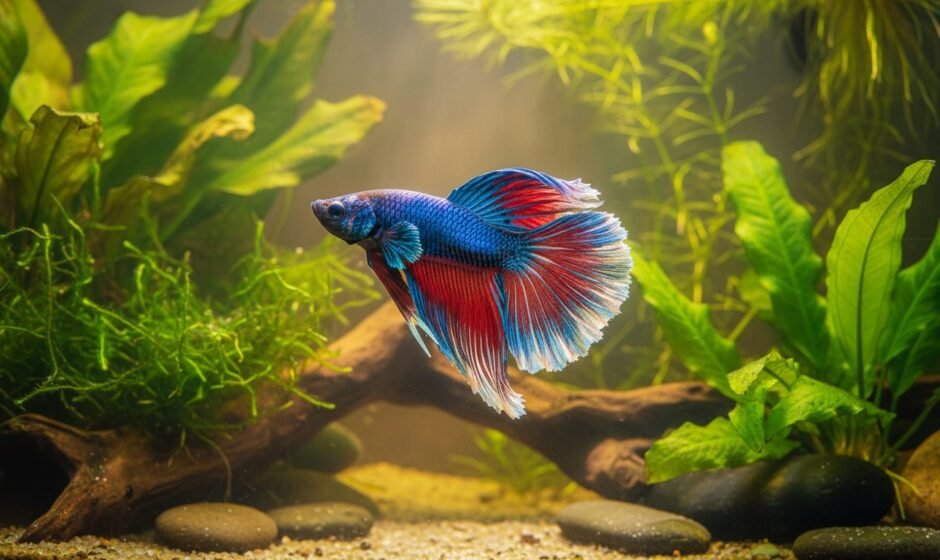
A betta in a heated, filtered, cycled tank lives 3 to 5 years after you bring it home. The 2 to 3 year figure owners repeat online is also true, and the gap between those numbers is the part nobody mentions at the store: the fish in that cup already has a birthday. Male bettas are 6 to 12 months old when they reach the shelf, because they need that long to grow the fins that sell them. Your betta’s clock started running months before you paid for it, and correcting for that changes what “average lifespan” means.
The age-at-purchase correction
Breeders raise male bettas to about 3 months for sexual maturity, then grow them out for several more months until the finnage fills in, because a short-finned juvenile does not sell. Add transport and shelf time and the typical store male is somewhere between 6 months and a year old. Females and plakats (short-finned males) often ship younger, but the flashy halfmoon in the cup is closer to a year than to a fry.
Run the correction and the numbers stop looking grim. A betta that died after 2 years in your care lived close to 3. Owners who report 3 to 4 years of ownership had a fish that reached 4 or 5. Total lifespan for a well-kept betta lands at 3 to 5 years, verified cases pass 7, and the 9 and 10 year claims that float around forums have never come with proof. Plan for 5 and treat anything beyond it as a bonus.
The five lifespan levers
Five things decide how long your betta lives. Four of them are under your control, and the table lists what each one is realistically worth in years:
| Lever | What it does | Realistic impact |
|---|---|---|
| Heater holding 75-81°F | Keeps metabolism and immune function normal; cold bettas go lethargic and get sick | 1 to 2 extra years over an unheated bowl |
| Tank size, 5 gallons minimum | Buffers temperature swings and dilutes waste between changes | Roughly a year over bowl life, more in winter |
| Cycled water, ammonia at 0 ppm | Stops the slow gill burn that shortens every uncycled fish’s life | The single biggest lever; uncycled bowls kill in months |
| Diet and portion control | Quality pellets, what the fish finishes in about two minutes, one fasting day a week | 6 to 12 months; overfed bettas develop fatty liver |
| Genetics | Breeding line, fin type, inbreeding depth | A 1 to 2 year spread you cannot change after purchase |
Water quality outranks everything else on the list. Ammonia at any level above 0 ppm damages gills, and a betta in an uncycled bowl absorbs that damage every hour of every day. Run a full fishless cycle before the fish goes in, which takes 4 to 6 weeks; the tank cycling guide walks through it. For the heater, filter, and feeding routine in one place, the betta care guide covers the full setup.
Why females and wild-types outlive halfmoon males
Those enormous halfmoon and rosetail fins were bred for looks, and the fish pays for them. Heavy finnage creates constant drag, so long-finned males burn more energy resting than a plakat burns swimming. The fins tear, and torn fins are the front door for fin rot. Some rosetails bite off their own tails out of what appears to be sheer burden. Breeders also selected for fin shape over vigor for decades, so the prettiest lines carry the weakest constitutions.
Females, plakats, and wild-type species regularly outlive fancy males by a year or more under identical care. If lifespan matters more to you than a flowing tail, buy a plakat. You get the same personality in a body that works.
What kills bettas early
Most premature betta deaths trace back to a short list, and none of it is bad luck:
- Unheated bowls. Room temperature in most US homes sits well below the 75-81°F a betta needs. A cold betta is a slowly dying betta.
- Uncycled tanks. Ammonia poisoning is the number one killer of new bettas, and it looks like “he got lazy and stopped eating” right up until the end.
- Overfeeding. A betta’s stomach is about the size of its eye. Feed the two-minute portion, skip a day weekly, and ignore the begging; bettas beg professionally.
- Untreated disease. Ich and velvet are curable when caught early. If you see salt-grain dots, the white spots guide sorts out which one you have and what to do.
Old age or illness: telling them apart
A betta past 3 slows down, and owners often medicate a fish that is aging normally. Old bettas sleep and rest more, sit on leaves, fade in color, and develop a slight arch in the back. Their fins may curl at the edges. All of that is normal wear. Warning signs are different: pineconed scales, sudden bloat, gasping, white growths, or a fish that stops eating entirely. Appetite is the most useful tell, and the betta not eating guide separates a picky old fish from a sick one. An old betta that still eats is fine. Let him nap.
Buying for lifespan at the store
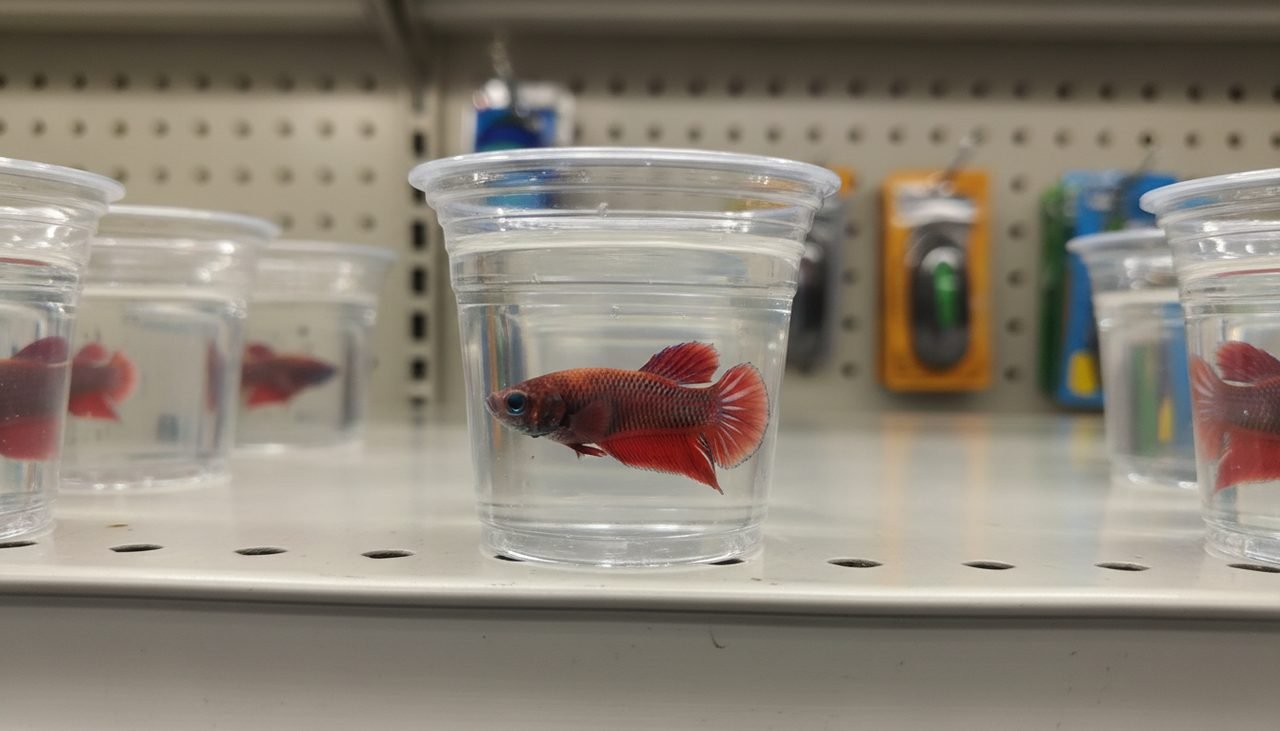
You cannot age a betta precisely, but you can shop for youth and vigor. A younger male carries fins that look slightly short for his body, because finnage keeps growing after maturity; the males with the most spectacular full spreads are usually the oldest fish on the shelf. Look for a fish that is alert in the cup, flares or postures at a neighbor when the cups slide together, and holds its color evenly. Walk past anything pale, clamped, hollow-bellied, or lying at the bottom of dirty cup water, no matter how much you want to rescue it. A rescue betta is a fine project; a rescue betta bought as a five-year pet is a setup for heartbreak.
Store choice matters as much as fish choice. A shop that keeps its betta cups on a heat mat or shelf-warmer, changes cup water visibly, and can tell you where its stock comes from is selling you months of extra lifespan before you ever plug in your own heater. The big-box shelf where half the cups are cloudy is selling you someone else’s problem.
Betta lifespan FAQ
How long do betta fish live in a bowl?
Usually under 2 years, often under 1. Bowls stay too cold, foul too fast, and cannot hold a stable cycle. The betta survives it for a while because bettas are tough, and toughness is what the bowl industry sells as suitability.
How old is a betta fish at the pet store?
Males are usually 6 to 12 months old, because full finnage takes that long to grow. Females and plakats can be a few months younger. There is no way to age one precisely, so count from purchase and add roughly a year for the honest total.
Can a betta fish live 10 years?
No verified case exists. Documented bettas have passed 7 years with excellent care and lucky genetics, but 10 is forum legend. A realistic target for a well-kept betta is 5 years total, which means about 4 in your care.
