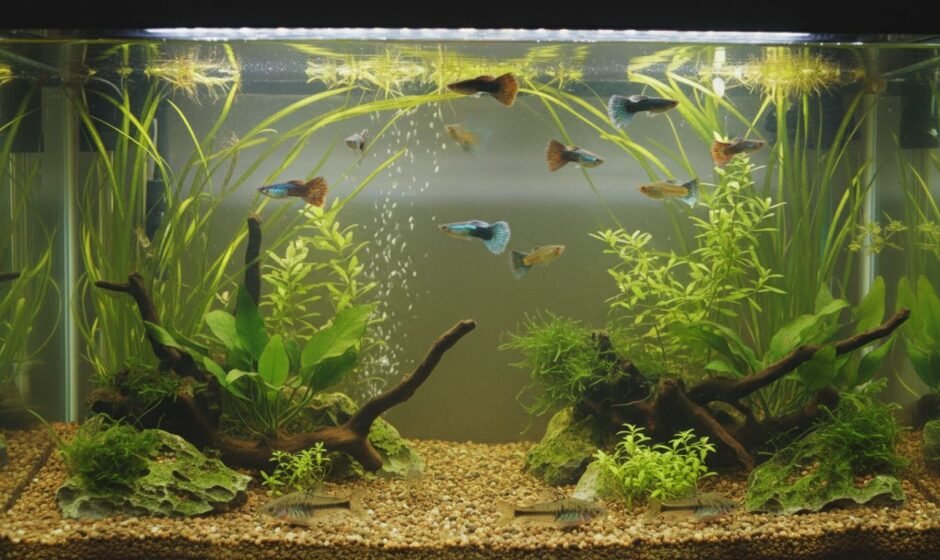
The safest guppy tank mates are cory catfish, platies, neon tetras, harlequin rasboras, snails, and adult cherry shrimp. The worst are tiger barbs, serpae tetras, and bettas, and the reason is the same for all three: a fancy guppy tail reads as a lure to any fish with a nipping habit. Sort every candidate by that one trait, the urge to nip, and the guppy tank mate question mostly answers itself. This guide gives you the fin-nipper list to screen against, a table of mates that work, and the uncomfortable truth about what guppies do to their own babies.
Why guppy tails invite trouble
A wild guppy is a drab, quick little fish. A fancy male from the pet store drags a tail larger than his own body, swims at half speed, and cannot dart away from anything. Breeders spent decades selecting for exactly the traits that make him a target. To a tiger barb, that flowing tail is food waving on a stick. To a male betta, it is a rival’s flag. The damage goes beyond cosmetics: torn fins get infected, fin rot moves in, and a harassed guppy stops eating and spends its day hiding behind the heater. In a 10-gallon tank there is nowhere to hide, so a bad pairing gets ugly within days, sometimes hours.
The fin-nipper list
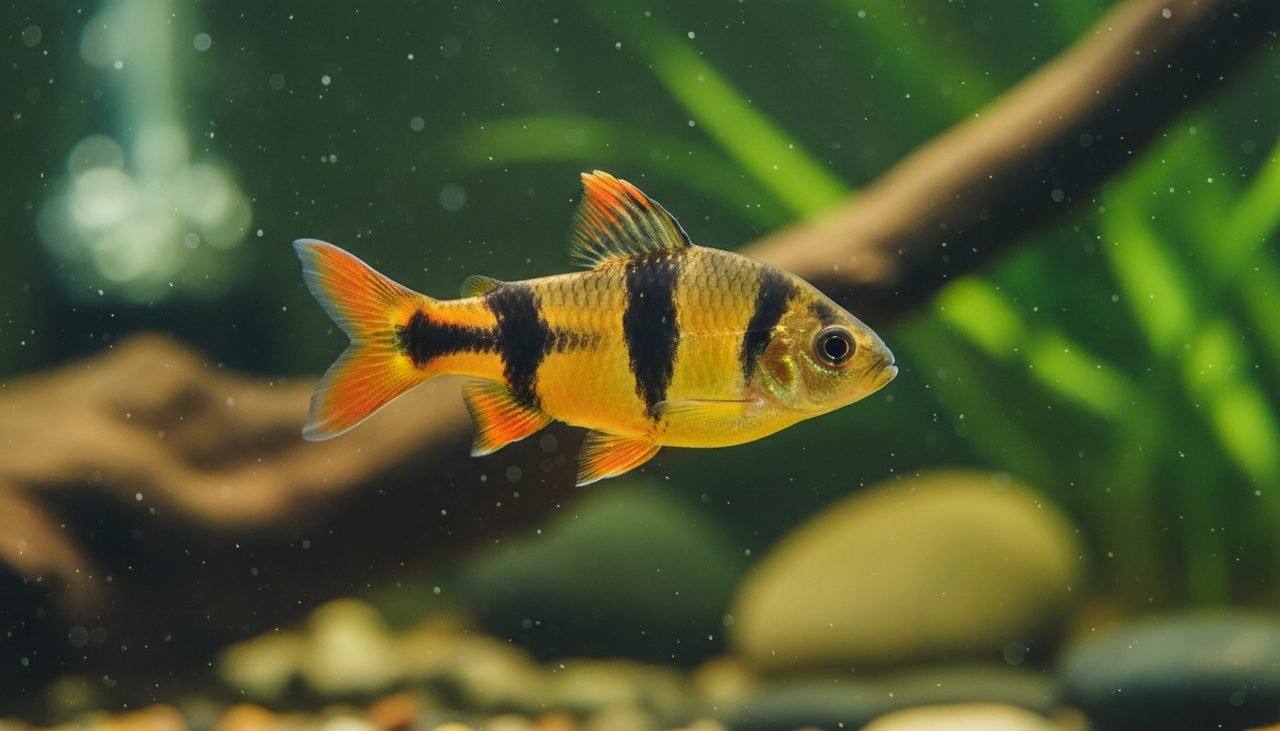
Screen every prospective tank mate against this list before you buy. If the species appears here, leave it at the store no matter how peaceful the individual fish looks in the display tank:
- Tiger barbs. The worst offender in the hobby. A proper school of 8+ calms their aggression toward each other, but nothing calms their interest in a slow fish with a big tail. Tiger barbs and guppies never mix, in any tank size.
- Serpae tetras. Sold as peaceful community tetras, and they are, right up until something slow and flowy swims past. Serpaes nip at feeding time even in good schools.
- Bettas. A male betta reads a male guppy as another betta and attacks the tail first. Some individual bettas tolerate guppies for weeks, then shred one overnight. Bettas also eat guppy fry like popcorn.
- Angelfish. A juvenile angel ignores guppies. An adult reaches 6 inches, swallows fry whole, and picks at adult tails. Buying tank mates based on juvenile behavior is how this mistake happens.
- Black skirt tetras in small groups. Fine at 8 or more. In a group of 3 or 4 they redirect their pecking order onto whatever has the longest fins in the tank, which is always the guppy.
Safe tank mates that actually work
Every fish below passes the nipper screen and overlaps with guppies on water chemistry. Guppies run 72-82°F and prefer hard, alkaline water; hold a mixed tank at 76-78°F and everyone in this table sits comfortably:
| Tank mate | Adult size | Group size | Why it works |
|---|---|---|---|
| Cory catfish | 2-3″ | 6+ | Bottom dweller that never looks up; cleans up sunk flake the guppies miss |
| Platies | 2.5″ | 3+ | Fellow hard-water livebearer with zero interest in fins |
| Neon tetras | 1.5″ | 6+ | Calm midwater schooler; no nipping in a real school |
| Harlequin rasboras | 2″ | 6+ | Possibly the most peaceful schooling fish sold |
| Nerite or mystery snails | 1-2″ | 1+ | No interaction with fish at all; eats algae |
| Kuhli loaches | 4″ | 3+ | Nocturnal bottom noodle; the guppies will never notice it |
Two picks that come with caveats
Cherry shrimp are safe in one direction only. Adult shrimp are too big for a guppy to eat, but shrimplets are guppy food, every single one the guppies can catch. A shrimp colony can still grow alongside guppies if the tank has dense moss or plant cover for the babies; in a bare tank the colony slowly shrinks to zero.
Mollies share the guppy’s hard-water preference and peaceful nature, but they grow to 4-5 inches and need a 20-gallon tank as a floor. Male mollies also pester guppy females during breeding season. Workable in a larger tank, wrong for a 10.
Guppies are their own worst tank mates
The biggest threat to a baby guppy is its parents. Adults eat their own fry on sight, and males harass females relentlessly; keep at least 2 females per male or the females get chased to exhaustion. The bigger problem is math. One trio (1 male, 2 females) becomes 50 or more fish within a few months, because females store sperm and drop 20-50 fry every 4 weeks. Before mixing sexes, read the trio math for a 10-gallon tank and decide on a fry plan first. A males-only tank sidesteps the whole issue and gives you the prettier fish anyway.
Stocking numbers by tank size
In a 10-gallon: 5-6 male guppies plus a snail, and the tank is full. Adding a school of anything on top of that overloads the filter; the 10-gallon stocking guide walks through why the ceiling is lower than it looks. A 20-gallon opens real options: 6 male guppies, 6 cory catfish, and 8 neon tetras make a complete, colorful community with room to spare. The 20-gallon stocking plans include a livebearer build you can copy outright. Whatever the size, keep up the 25% weekly water change; guppies are messy for their size and their tails show poor water before your test kit does.
If nipping starts anyway
Screening by species stacks the odds, but individual fish break the rules, and a single rogue platy or rasbora can pick up a nipping habit no chart predicted. Watch the guppies’ tails for the first two weeks after any new addition. Clean V-shaped notches mean a nipper is at work; ragged edges with a white or fuzzy margin mean fin rot, which is a water quality problem wearing a similar costume. If it is nipping, remove the nipper, never the victim, because a returned guppy with a healing tail gets targeted again on day one. Floating plants help in the meantime: guppies rest under cover at the surface, and a layer of frogbit or water sprite cuts harassment noticeably while a torn tail regrows. Regrowth takes two to four weeks in clean water, and the new fin tissue comes in clear before the color returns.
Guppy tank mate FAQ
Can guppies live with bettas?
Plan on no. Some individual bettas ignore guppies for months, which is why you will find success stories online, but the failure mode is a shredded guppy overnight and you cannot predict which betta you have. If you try it anyway, have a spare tank ready and check fins daily for the first two weeks.
Can guppies and neon tetras live together?
Yes, and it is one of the best-looking beginner combinations. Hold the tank at 76-78°F, where both species overlap, and keep the neons in a school of at least 6 so they school instead of stress. Neons need a mature, cycled tank, so add them last.
Do guppies eat shrimp?
Adult cherry shrimp, no; they are too large. Shrimplets, yes, constantly. A heavily planted tank with java moss lets enough babies survive to keep the colony going. In an open tank the guppies win.
