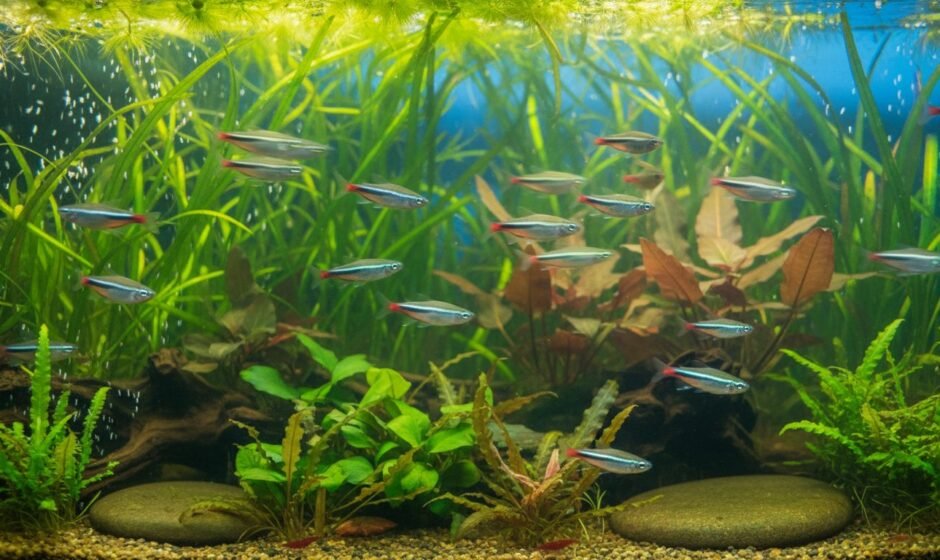
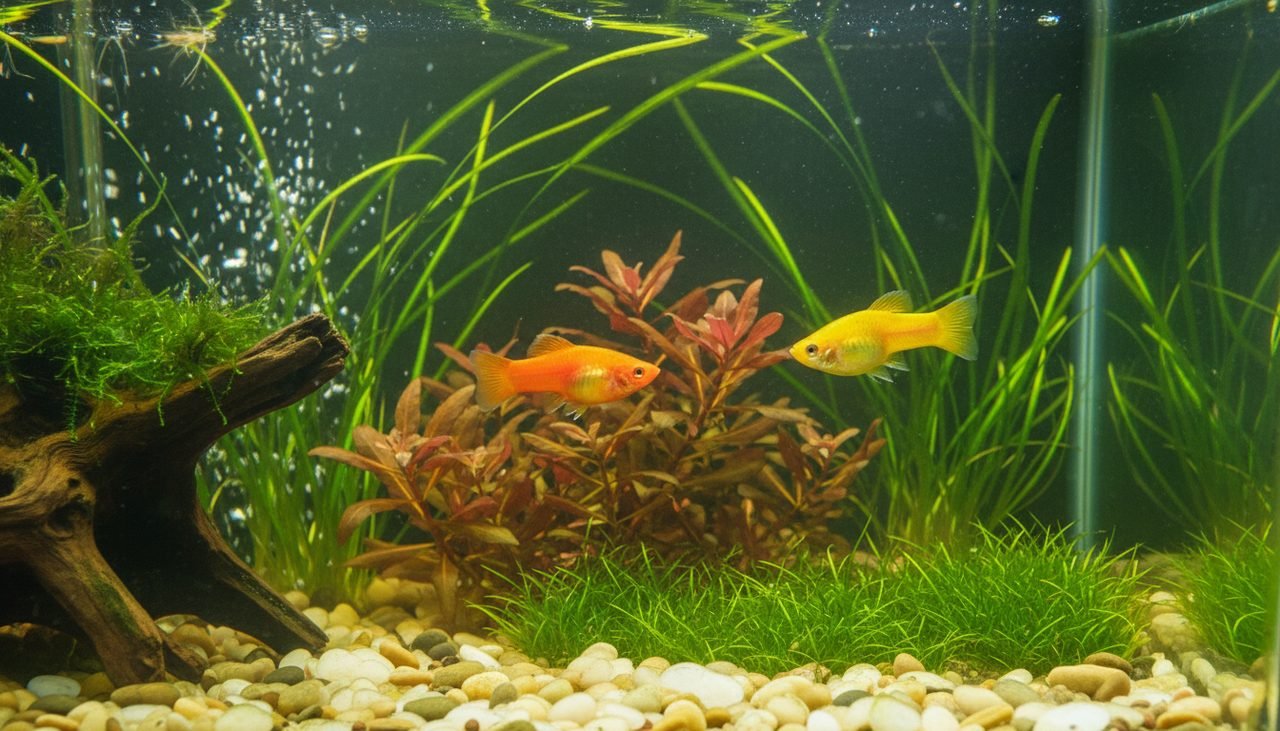
The best beginner fish is a platy, and the best beginner list is ranked by one measure: what survives the mistakes every new keeper makes. That measure produces a different list than the one the pet store hands you, because “popular” and “forgiving” are different qualities. Neon tetras top the popular lists and die by the dozen in new tanks. Common goldfish are the most purchased fish in America and belong in ponds. The ten fish below earned their spots by shrugging off missed water changes, wobbly temperatures, and first-year overfeeding.
Forgiving vs merely popular
A popular fish is cheap, colorful, and stocked in every chain store. A forgiving fish tolerates the specific things beginners do wrong: feeding too much, changing water too little, and letting temperature drift. Those two lists overlap less than you would hope. Popularity comes from how a fish looks in a store display at eight weeks old; forgiveness only shows up months later, in your tank, when the heater sticks or a water change slips a week. Every fish below was picked for that second quality, and a few store favorites got cut for lacking it. No fish forgives an uncycled tank, though. The 4-to-6-week fishless cycle comes first no matter what you stock.
The 10 picks
| Fish | Adult size | Temperature | Tank floor |
|---|---|---|---|
| Platy | 2.5″ | 70-78°F | 10 gal |
| Betta | 3″ | 75-81°F | 5 gal, kept solo |
| Harlequin rasbora | 2″ | 72-80°F | 10 gal, school of 6+ |
| Male guppy (males only) | 1.5″ | 72-82°F | 10 gal, group of 5-6 |
| White cloud minnow | 1.5″ | 60-72°F | 10 gal, school of 6+ |
| Zebra danio | 2″ | 65-77°F | 20 gal long, school of 6+ |
| Bronze corydoras | 2.5-3″ | 72-79°F | 20 gal, group of 6 |
| Cherry barb | 2″ | 73-80°F | 20 gal, school of 6+ |
| Honey gourami | 2″ | 74-82°F | 20 gal |
| Bristlenose pleco | 4-5″ | 73-80°F | 29 gal |
A few notes the table cannot hold. The platy takes the top spot because it pairs near-indestructible hardiness with real color and a calm temperament; a single-sex group of five in a 20-gallon is close to foolproof. The betta wins the small-tank category outright, with the full routine covered in the betta care guide. White clouds and zebra danios are the two that thrive without a heater in a normal room. And the bristlenose pleco is the one honest “algae eater” on the list: it stays under 5 inches, unlike the common pleco, which reaches 18 and ruins tanks.
Read the tank-floor column before the temperature column. Half of these fish are labeled “great for 10 gallons” at stores when their real needs say otherwise: zebra danios are torpedoes that need a 20-long’s runway, bronze corys want a group of six with sand to sift, and the bristlenose earns its 29-gallon floor on waste output alone. A forgiving fish in a cramped tank stops being forgiving.
The neon tetra surprise
Neon tetras appear on nearly every beginner list ever published, and they are one of the worst first purchases you can make. The species is fine; the supply chain is the problem. Modern mass-farmed neons arrive weak, and they cannot handle the chemistry swings of a tank younger than about three months. The classic sequence goes: new tank, ten neons, three dead by Friday, the rest gone in a month, and a beginner convinced they have no talent for the hobby. Neons belong in mature, stable tanks owned by people who already got through new tank syndrome. Buy them in year two, add ten at once to a tank that has held steady for months, and they reward the wait with one of the prettiest schools in freshwater.
Three near-misses worth knowing about
The honey gourami made the list; the dwarf gourami did not, and the difference is disease. Dwarf gouramis carry an incurable iridovirus through much of the commercial supply, and a fish that might arrive terminally ill has no business on a beginner list no matter how blue it is. The honey gourami gives you the same peaceful surface-dwelling centerpiece without the lottery. Otocinclus catfish miss for a different reason: they are algae grazers that starve in clean new tanks, so they belong in mature setups with something to graze. And kuhli loaches are hardy and charming but spend their first months hidden, which teaches a new keeper nothing except doubt about whether their fish exist.
The leave-at-the-store list
- Common goldfish. A pond fish, 12-plus inches at adulthood, needing roughly 75 gallons indoors. Sold for a dollar, which is the most misleading price in the pet trade.
- Mollies, if your tap water is soft. Mollies are hard-water livebearers that develop the shimmies and waste away in soft, acidic water. Test your tap before buying; in hard-water towns they are a fine fish, which is exactly why blanket lists get them wrong in both directions.
- “Assorted cichlids.” A mixed tank of unidentified African cichlids with incompatible temperaments and adult sizes nobody at the store can name.
- Tiger barbs for a community. Hardy, yes, but they nip fins for sport. A tiger barb school in its own tank is great; in a beginner community it is a demolition crew.
What “forgiving” does not cover
Hardy fish tolerate drift; nothing tolerates poison. Ammonia at any reading above 0 ppm burns gills whether the fish cost one dollar or thirty, so the sequence matters more than the species: set the tank up properly, cycle it empty, then stock slowly over several weeks. Feed what the tank finishes in about two minutes, change 25% of the water weekly, and even the fragile picks get easier. Skip those steps and the forgiving picks die a little slower than the delicate ones. That is the entire difference.
Beginner fish FAQ
What is the single best fish for a beginner?
A platy for a 10-or-20-gallon community, a betta for a 5-gallon desk tank. Both survive early mistakes, show real color, and cost under $6. If you can only pick one tank and one species, five single-sex platies in a 20-gallon is the safest complete answer in the hobby.
Are goldfish good beginner fish?
Not for aquariums. A common goldfish needs about 75 gallons and decades of commitment, and fancy goldfish still need 20 to 30 gallons each plus heavy filtration. Goldfish are wonderful pond animals being sold as starter pets, and the mismatch kills most of them young.
How many fish should I start with?
One school, added after the cycle finishes: six harlequin rasboras in a 20-gallon, for example. Wait two to three weeks, confirm ammonia and nitrite hold at 0 ppm, then add the next group. Stocking a tank over six weeks feels slow and saves more fish than any product you can buy.
