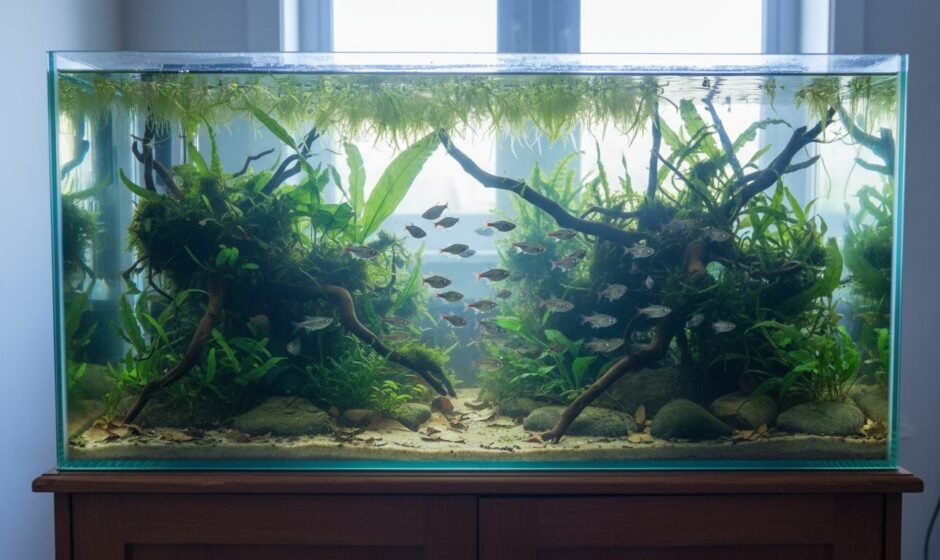
An unheated tank in a normal US home sits between 65 and 72°F, and that single number decides which fish you can keep. White cloud mountain minnows, zebra danios, goldfish, hillstream loaches, and dojo loaches genuinely thrive in that range. Almost everything else sold under a “coldwater” label is a tropical fish being slowly chilled, and slowly chilled fish get sick on a delay that lets the store off the hook. This guide runs the room-temp reality check, then lists the fish that pass it.
The room-temp reality check
Before buying anything, put a thermometer in the tank and log it for a week, including a reading first thing in the morning. Tank water tracks room air within a degree or two, so a house kept at 68°F by day and 62°F on autumn nights gives you a tank that swings between about 64 and 70°F. Two questions follow. Does the coldest reading stay at or above the low end of your fish’s range? And does the daily swing stay under about 4 degrees? A fish “surviving” at the bottom of its range with a big nightly swing is a fish with a suppressed immune system waiting for ich. Thrive means eating aggressively, coloring up, and behaving normally at your actual room temperature, in January, with the thermostat you actually use. And if the log shows your house holding 74°F year-round, you have a tropical tank without the electric bill, and the standard tropical stocking lists open up instead; this article is for the rest of us.
Fish that genuinely thrive without a heater
| Fish | Happy range | Tank floor | The caveat |
|---|---|---|---|
| White cloud mountain minnow | 60-72°F | 10 gal, school of 8+ | None worth naming; the single best no-heater fish |
| Zebra danio | 65-77°F | 20 gal long, group of 6+ | Hyperactive; needs horizontal swimming room, bothers slow fish |
| Fancy goldfish | 65-72°F | 20 gal for one, +10 each | Heavy waste; oversize the filter |
| Single-tail goldfish (comet, common) | 60-72°F | 75 gal, honestly a pond | Reaches 12+ inches; the classic regret purchase |
| Hillstream loach | 61-75°F | 20 gal long | Needs strong flow and high oxygen; a still tank slowly starves it of both |
| Dojo (weather) loach | 60-72°F | 55 gal, group of 3 | Escape artist; gaps in the lid become exits |
White clouds deserve the top spot. They were nearly lost in the wild and survive in the hobby because they are tough, cheap (often under $3), and genuinely beautiful in a school: silver-green bodies, red fins, and constant sparring displays from the males at 66°F, a temperature that would have a neon tetra shutting down. Two of these picks, the white cloud and the zebra danio, also appear on the best beginner fish list, which is no accident; fish that shrug off cool water tend to shrug off beginner mistakes too.
Goldfish, with the size caveats attached
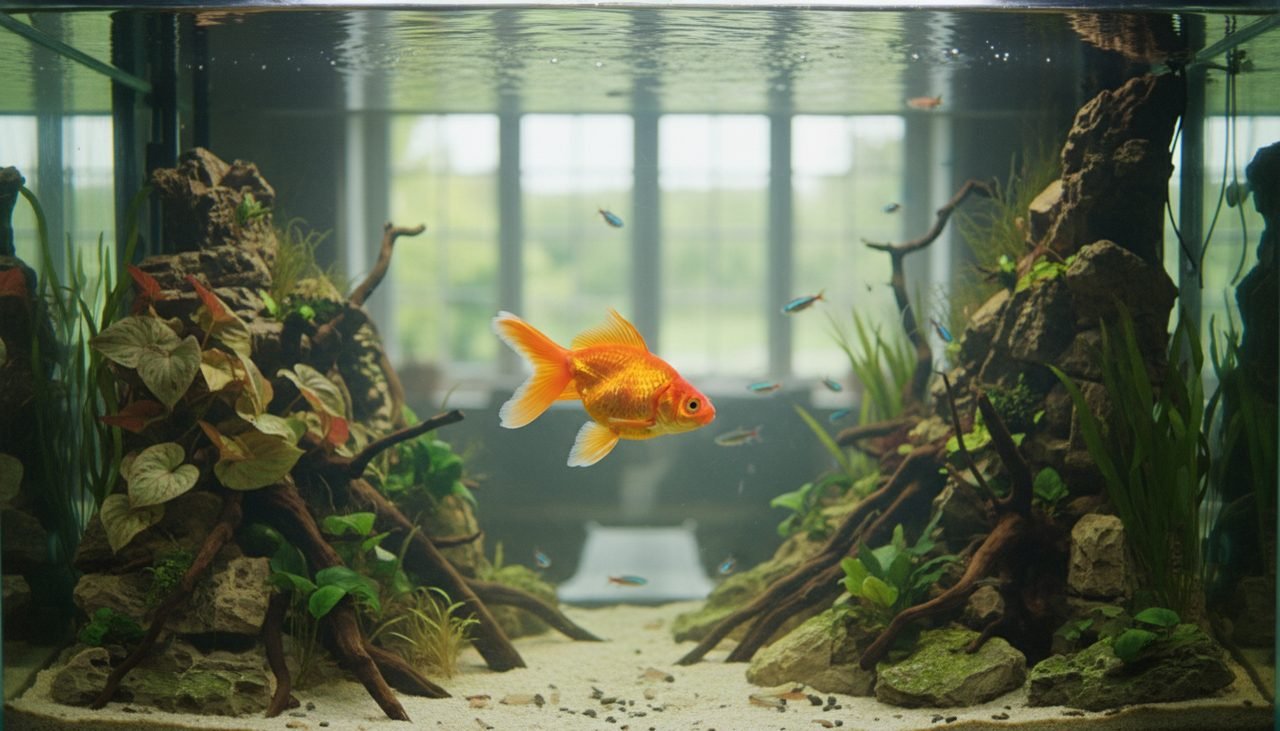
Goldfish are the obvious no-heater fish and the most mishandled. A fancy goldfish needs 20 gallons to itself and produces waste that demands a filter rated for twice the tank. A single-tail comet or common is a 12-inch pond fish, whatever size it was when the fair handed it over in a bag. Both types are wonderful in the right setup and miserable in a 10-gallon. Stock them with their own kind and read the goldfish tank mate guide before adding anything else, because the compatible list is shorter than any store will admit.
Tropical fish mislabeled as coldwater
These show up in unheated tanks constantly, and every one of them is a tropical fish paying for the mistake on a delay:
- Bettas. The worst offender because the bowl-on-a-desk image normalized it. Bettas need 75-81°F; at 68°F a betta goes lethargic, stops eating, and develops fin rot within weeks.
- Guppies. Marketed as hardy, and they are, at 72-82°F. Room temperature in winter sits below their range and chilled guppies die of everything at once.
- Mollies, platies, and most tetras. All want mid-70s or warmer. A cool tank does not kill them Tuesday; it kills them over a season.
The pattern behind the label problem: stores call a fish coldwater if it survives an unheated store rack for the two weeks it takes to sell. Your fish has to live years, so the standard is different.
Setting up the no-heater tank
Dropping the heater removes one piece of equipment and nothing else from the checklist. The tank still needs a cycled filter before fish arrive, and the fishless cycle still takes 4 to 6 weeks; ammonia does not care about temperature. The 25% weekly water change still applies, and match the temperature of the new water to the tank by hand, since a bucket straight from a cold tap in January can sit 15 degrees below the tank and shock fish that were otherwise fine. Species-specific hardware matters more here than in a tropical setup: the dojo loach needs a lid with every gap covered, because a loach can exit through an opening the width of a finger, and the hillstream loach needs real current from a powerhead or an oversized filter output, plus the extra oxygen that moving water carries. Cool water holds more oxygen than warm, which is one quiet advantage the no-heater tank has over its tropical cousins.
When a heater still earns its spot
Skipping the heater is a fine plan in a climate-controlled room. It fails in basements, sunrooms, drafty offices, and any house where the thermostat drops hard at night, because swings stress fish more than steady cool water does. The cheap insurance is a heater set low, around 66-68°F, acting as a floor rather than a tropical target: it never runs on a normal day and catches the cold snap that would otherwise take the tank to 58°F. Sizing still follows the standard 5 watts per gallon; the heater sizing guide covers wattage and placement. A $15 heater used ten nights a year beats an ich treatment every time.
Cold water aquarium fish FAQ
What fish can live in a tank without a heater?
White cloud mountain minnows, zebra danios, goldfish, hillstream loaches, and dojo loaches all thrive at typical room temperatures of 65-72°F. White clouds are the best pick for tanks of 10-20 gallons; goldfish need 20 gallons and up.
Can a betta live without a heater?
No. Bettas need 75-81°F, and most homes run 8-10 degrees below that. An unheated betta becomes sluggish, refuses food, and gets sick. A small adjustable heater fixes this for under $20.
Do cold water fish need a filter?
Yes, every fish tank needs a cycled filter; temperature changes nothing about ammonia. Goldfish need more filtration than tropicals, since they produce more waste per inch than almost anything else in the hobby. Aim for the standard turnover of 4-6 times the tank volume per hour, and double it for goldfish.
