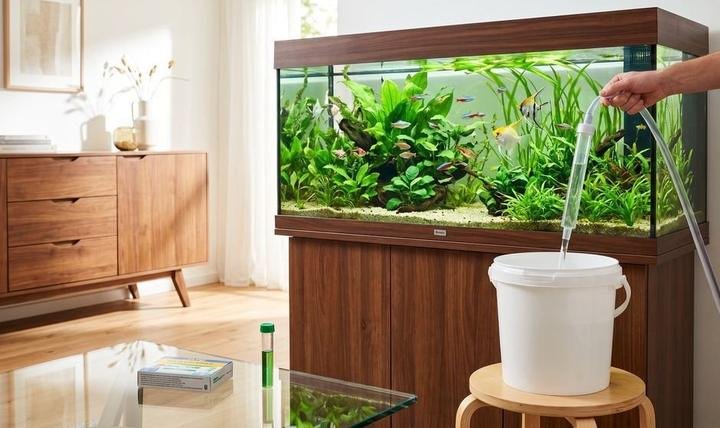
Short answer: Any ammonia reading above 0 ppm is an emergency. It burns gill tissue, and fish can be dying while the water still looks clear. The fastest way to bring it down is a partial water change with dechlorinated, temperature-matched water, repeated until the test reads zero. A 50 percent change removes about half the ammonia within minutes.
Do that first. Then stop feeding, dose an ammonia binder if you have one, and work out why the reading appeared, because a water change lowers ammonia for a day but does not stop it coming back.
If you only remember one thing: water changes are the treatment, and a working biological filter is the cure. No bottle fixes this permanently.
Emergency steps, in this order
- Test to confirm, with a liquid kit. Strips read poorly at the low end, and 0.25 ppm looks like 0 ppm on a strip. Test ammonia, nitrite, nitrate, and pH, and note the temperature.
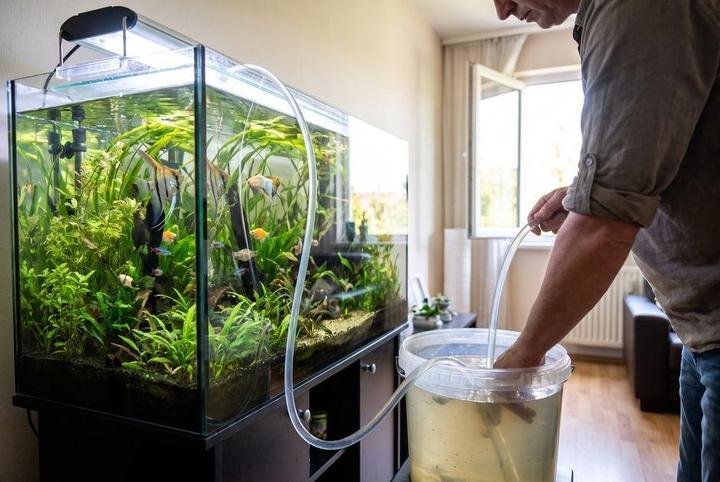
- Change 30 to 50 percent of the water. Use dechlorinated water within about 2 degrees F of the tank. A 50 percent change removes roughly half the ammonia, so 2 ppm becomes about 1 ppm. Repeat after a few hours if the reading is still high. Two spaced 50 percent changes are safer than one enormous one.
- Stop feeding. Uneaten food and fish waste are the ammonia source. Healthy adult fish are fine unfed for several days. Resume with tiny amounts once ammonia reads 0 ppm.
- Dose an ammonia binder if you have one. It converts free ammonia into a far less toxic form your filter bacteria can still process, buying a day or two. It is not a fix.
- Check the filter, then the stocking. Is it plugged in and flowing? Did you recently rinse or replace media? Is the intake blocked? Then count the fish, review what you feed, and search for a dead fish or snail behind the hardscape.
- Increase aeration. Ammonia-damaged gills struggle to take up oxygen. Angle the outflow at the surface or add an air stone until readings are stable.
- Test daily, same time each day, until ammonia and nitrite both read 0 ppm for several days running. Expect nitrite to rise after ammonia falls. That is the cycle progressing, and nitrite is just as toxic.
How much water to change, and how often
A water change dilutes ammonia in direct proportion to the volume you swap, so the math is simple.
| Ammonia reading | Urgency | Action |
|---|---|---|
| 0 ppm | Fine | Nothing. Keep to your normal weekly change. |
| 0.25 ppm | Act today | 25 to 30% change, stop feeding, test again in 12 hours. |
| 0.5 to 1 ppm | Act now | 50% change, repeat in 6 to 12 hours if still above 0. Dose binder. Aerate. |
| 2 ppm or more, or fish gasping | Critical | 50% change now, another 50% a few hours later, binder, heavy aeration. Test every 6 to 12 hours. |
Change up to 50 percent at a time as often as needed during a spike. What to avoid is replacing all the water at once, which swings pH, hardness, and temperature, adding a second stressor on top of the ammonia. For the day-to-day routine that keeps it at zero, see how often to change aquarium water.
Why ammonia spikes happen
Ammonia comes from fish waste, uneaten food, and anything decomposing. In a working tank, nitrifying bacteria in the filter media and substrate convert it to nitrite, then nitrate, fast enough that you never see a reading. A spike means production has outrun that capacity. The usual reasons:
- A new tank that has not cycled. Overwhelmingly the most common cause, and the heart of the uncycled-tank ammonia crisis. A fishless cycle takes about four to six weeks and is finished when ammonia and nitrite both read 0 ppm and nitrate is present.
- Filter media cleaned or replaced. Rinsing media under a tap kills bacteria with chlorine and temperature shock, and swapping a cartridge for a new one throws out most of the colony. Rinse in a bucket of tank water and replace media in stages.
- Too many fish added at once. The bacterial population grows to match the waste load, which takes one to three weeks.
- Overfeeding. Food that is not eaten decomposes. Feed what disappears in about two minutes.
- Something died unnoticed. One dead fish behind a rock can push a small tank to 1 ppm within a day.
- Medication or a filter outage. Some antibiotics knock back nitrifying bacteria. A filter left off for hours starves them of oxygen.
- Ammonia in the tap water. Where the supply is treated with chloramine, dechlorinator breaks it into chlorine and ammonia. It is a small amount, but it shows on a test right after a change in an uncycled tank.
pH and temperature change how dangerous a reading is
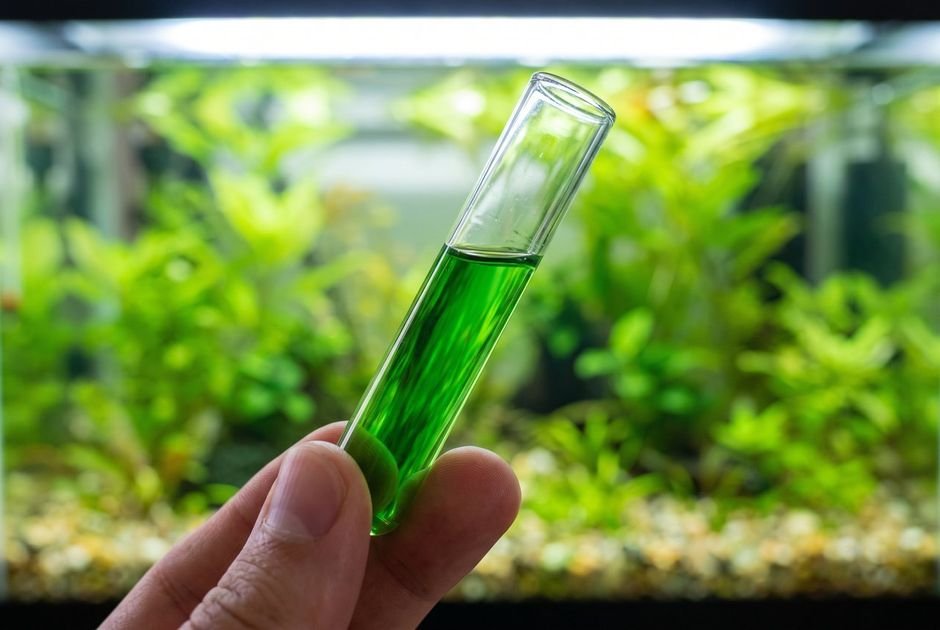
A test kit reports total ammonia: the sum of ammonium (NH4+), which is relatively harmless, and free ammonia (NH3), which does the damage. The split depends on pH and temperature, and higher values of either push more of the total into the toxic free form. Roughly what share is free ammonia at 77 F:
| pH | Free ammonia as share of total | Practical meaning |
|---|---|---|
| 6.5 | About 0.2% | Same reading, far less immediate harm |
| 7.0 | About 0.6% | Still act, but you have more time |
| 7.5 | About 1.8% | Roughly three times as toxic as pH 7.0 |
| 8.0 | About 5% | Serious. Act immediately. |
| 8.5 | About 15% | Very dangerous even at 0.5 ppm total |
So 1 ppm in a hard, alkaline tank at pH 8.2 and 81 F is a far worse situation than 1 ppm at pH 6.8 and 75 F. Two things follow.
Do not try to lower pH with chemicals to make the ammonia safer. Chasing pH gives you a swinging, unstable pH, which will kill fish faster than the ammonia you were managing. And while dropping the temperature a degree or two slightly reduces toxicity and lowers the fish’s oxygen demand, it is a marginal help within the species’ safe range, not a treatment. Never cool a tank quickly.
What an ammonia binder actually does
Binders lock free ammonia into a complexed form that fish gills cannot absorb, while leaving it available to your nitrifying bacteria. That is genuinely useful during a spike, especially overnight or while you are at work. Three limits are worth knowing:
- Your test will often still show ammonia. Most hobby kits measure total ammonia, bound or not, so a reading after dosing does not mean the product failed. Kits sold as free-ammonia tests distinguish them; a standard salicylate or Nessler kit does not.
- It wears off. A dose lasts a day or two at most, so redose per the label while the underlying problem is unfixed.
- It adds no filter capacity. If the tank is uncycled or overstocked, ammonia keeps being produced. The binder is a holding pattern.
The real fix is biological filtration. The fastest route is mature filter media, a sponge, or substrate from an established, healthy tank, squeezed or placed into your filter. That transplants a live bacterial colony and can cut weeks off the process. Bottled bacteria can help and is worth using if no mature media is available, though results vary with storage and handling.
What not to do
- Do not rinse filter media in tap water, or scrub it clean. Squeeze it in a bucket of tank water.
- Do not add more fish, or move fish into another uncycled tank.
- Do not dose pH-down products to reduce toxicity.
- Do not rely on ammonia-removing resin pads long term. They strip the ammonia your bacteria need to grow on, so the tank never finishes cycling.
Stopping it coming back
Once ammonia holds at 0 ppm, the maintenance that keeps it there is unglamorous: a water change of about 25 percent weekly, sparing feeding, mechanical media rinsed in tank water every few weeks, and never more than a third of the biological media replaced at once. Stock conservatively, add fish in small groups, and test monthly in a settled tank or weekly in a new one.
If ammonia keeps reappearing in a tank running for months, the problem is load rather than bacteria: either more fish than the filter and volume support, or heavier feeding than it looks. The rest of the water quality section covers testing and stocking limits, and the equipment section covers matching filter capacity to your tank.
Frequently asked questions
How quickly can I lower ammonia?
Immediately, by volume. A 50 percent water change roughly halves the reading within minutes of refilling. Getting it to stay at 0 ppm takes as long as the bacteria need to catch up: typically one to three weeks, or a few days if you seed the filter with mature media.
Is 0.25 ppm ammonia safe?
No. Treat it as a problem to fix today. It will not usually kill healthy adults outright, but ongoing exposure damages gills, suppresses the immune system, and stunts young fish. There is no safe ammonia reading above zero. Low-level ammonia is also one of the most common reasons a betta stops eating.
Do plants lower ammonia?
They help. Most aquatic plants take up ammonium readily, and fast-growing floating plants take up a lot of it, so a heavily planted tank buffers small spikes. They will not rescue an uncycled or overstocked tank, and they do not act fast enough to count as an emergency measure. See the fast-growing floating plants guide for easy options.
Should I move my fish out during an ammonia spike?
Usually no. A bucket or uncycled spare tank swaps one stressor for a worse one, since a small unfiltered container builds ammonia within hours. Fix the water they are in. The exception is a contaminated tank, where you would use a container with an air stone, matched temperature, and changes every few hours.