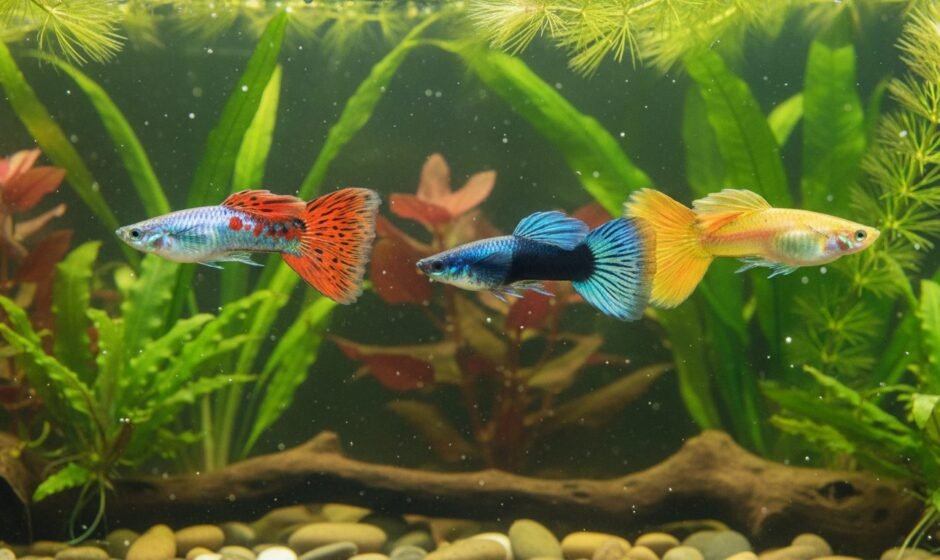
Guppies are hard-water fish. Give them GH 8 or higher, pH between 7.0 and 8.0, and a steady temperature anywhere from 72 to 82°F, and they rank among the toughest fish in the hobby. Give them soft, acidic water and they clamp their fins, hang near the surface, and die one at a time while their keeper hunts for a disease that was never there. Most guppy trouble comes down to two things you can settle before buying a single fish: your tap water’s mineral content and your plan for the fry.
The hard-water fish
Guppies come from mineral-rich streams and coastal waters in Trinidad and northern South America, and a century of captive breeding has not changed their chemistry. They use the dissolved calcium and magnesium that GH measures to regulate their internal fluid balance, and in soft water they lose minerals faster than they can replace them. The result is a fish that never looks quite right and never lasts. Test your tap water before you buy anything: you want GH 8 or above and pH between 7.0 and 8.0. If those letters mean nothing yet, the GH, KH, and pH guide covers what each number does.
Hard tap water means you have free guppy water and can skip ahead. A reading of GH 4 and pH 6.5 leaves two honest options: harden the tank with crushed coral in the filter or a mineral additive dosed at every water change, or keep soft-water fish instead. Both work. What fails is buying guppies anyway and hoping. And never chase pH with liquid adjusters; they swing the water back and forth, and swings kill guppies faster than a wrong number ever will.
Tank size, groups, and the ratio
A 10-gallon tank is the floor for guppies, and how you stock it decides how the next year goes. Males-only groups of five or six are the low-drama option: full color, constant activity, zero fry. Mixed groups need one male for every two or three females, because males pursue females all day and a 1:1 ratio wears the females down. The full stocking math, including why a single trio outgrows the tank, lives in the guide to how many guppies fit in a 10-gallon tank.
A 20-gallon buys forgiveness: more stable water, more room for a colony to grow before it becomes a problem. Whatever the size, keep the filter rated for the tank and hold the 25% weekly water change, because a breeding guppy colony’s bioload climbs faster than the fish count suggests. For company, stick to peaceful hard-water species such as platies, corydoras, and snails. Anything that nips fins treats a guppy tail as a lure; the safe and unsafe picks are sorted in the guppy tank mates list.
Setup itself is plain. A heater, a gentle filter (guppy tails and strong intake tubes are a bad pairing; a sponge prefilter solves it), and live or fake plants for cover. Cycle the tank fully before the first fish goes in, because guppies handle hard water beautifully and ammonia terribly. Floating plants earn their keep twice over here: guppies pick at the roots all day, and fry hide in them long enough to survive.
Guppy care at a glance
The numbers that matter, in one place:
| Stat | Guppy |
|---|---|
| Adult size | Males 1.5″, females 2.5″ |
| Lifespan | 2-3 years |
| Temperature | 72-82°F, held steady |
| Water | pH 7.0-8.0, GH 8+ |
| Tank floor | 10 gallons |
| Diet | Crushed flake staple, frozen treats, two-minute portions |
| Temperament | Peaceful; males pester females |
| Breeding | Livebearer; a new brood roughly every 30 days |
Feeding
Guppy mouths are tiny. Crush a quality flake between your fingers and feed what the group finishes in about two minutes, once or twice a day. Rotate in frozen baby brine shrimp or daphnia once or twice a week; the protein deepens color and conditions females. One fasting day per week does no harm and helps digestion. The real feeding risk has nothing to do with hungry fish: uneaten flake rots into ammonia, and ammonia is a far more common guppy killer than starvation ever was.
Fry: cull or crowd
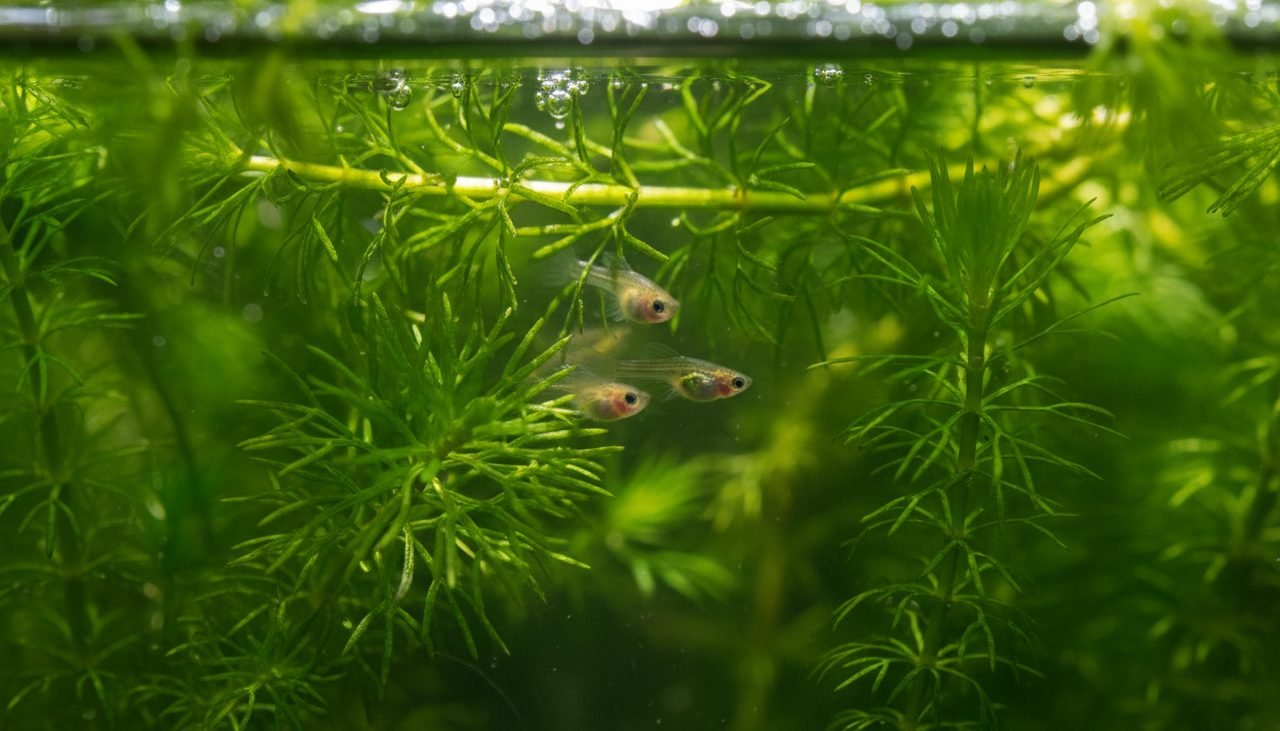
Every mixed guppy group breeds. Females store sperm for months, so even a lone female bought from a mixed store tank will likely drop fry. Broods run 20 to 50, arrive roughly every 30 days, and the fry themselves breed at three months old. One trio becomes 50-plus fish in a season. No plan is a plan to crowd, so pick one:
- Keep males only. The cleanest answer. Full color, no population.
- Let the adults eat the fry. Guppies eat their own young, and in a tank without dense plants most fry disappear. A few survivors still slip through, so the count creeps upward, slowly.
- Grow out and rehome. Local fish stores often take healthy juvenile guppies for free or store credit. Chain stores usually will not, so ask before the tank fills up.
- Cull. Serious breeders remove deformed or excess fry early, often by feeding them to larger fish. Unpleasant to read, standard in the hobby, and kinder than letting 200 fish stunt in a 10-gallon.
How healthy guppies actually die
Set disease aside; well-kept guppies mostly die from three preventable things. Chilling is the first. Guppies get marketed as bowl fish, and an unheated tank in a US home sits in the high 60s for much of the year. Sustained temperatures below 72°F suppress the guppy immune system, and infections that a warm fish shrugs off take hold. A heater sized around 5 watts per gallon fixes this for a few dollars.
Breeding burnout is the second. A female who is pregnant every month of her life burns out early, which is why females in mixed tanks often die a year before the males. More females per male spreads the harassment; a males-only tank ends it. Weak genetics is the third. The flashiest fancy strains are heavily inbred and travel badly, so a $2 guppy from a local breeder or aquarium club routinely outlives a $12 show-strain import. Buy boring, local, and healthy over spectacular and fragile.
Guppy care FAQ
Why do my guppies keep dying?
Check three things in order: water hardness (soft water slowly kills guppies; you want GH 8+), temperature (a heater holding 72-82°F, no unheated tanks), and cycling (an uncycled tank produces ammonia, and 0 ppm is the only safe reading). If all three check out and new fish still die fast, the source stock is weak; try a different store or a local breeder.
Do guppies need a heater?
In almost every home, yes. Guppies tolerate 72-82°F, but the number has to hold steady, and room temperature in most houses drops below that range at night and in winter. A cheap adjustable heater is the single best piece of insurance a guppy tank can have.
How many guppies should a beginner start with?
Five or six males in a cycled 10-gallon tank. You get all the color, none of the fry math, and a stocking level the filter can handle. Add females only once you have read the fry section above and picked a plan you can live with.
