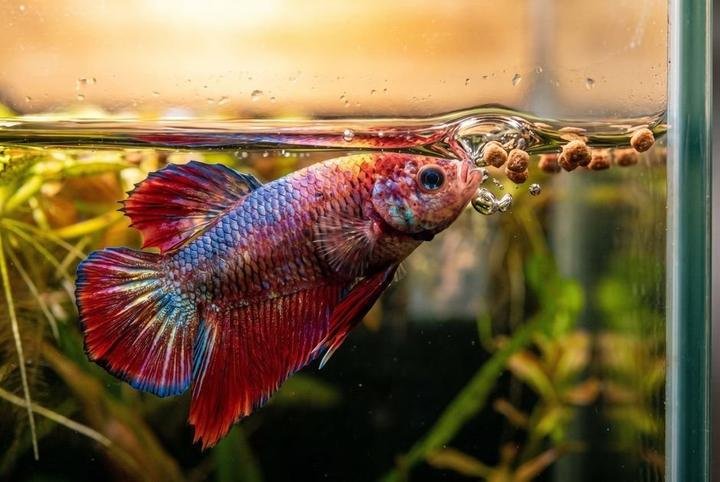
Bettas are carnivores. In the wild they eat insects, larvae, and tiny crustaceans, not plants and not plant-based flakes. A proper betta diet is a quality protein pellet made for bettas as the daily staple, with frozen or live treats like bloodworms and daphnia a couple of times a week. Feed two to four pellets, twice a day, and no more.
Built to eat meat
Everything about a betta’s body points at a meat diet. The mouth turns upward to snatch insects off the surface, the teeth are small and sharp for gripping prey, and the gut is short, the way carnivores’ guts are. A short gut handles protein well and struggles with plant matter, which is why vegetable-heavy flake food leaves a betta underfed and constipated.
Match the food to the fish. The staple should list fish, shrimp, or insect meal as the first ingredients, with protein around 40 percent or higher. If the label leads with wheat, corn, or “fish meal” buried below fillers, it was built for cheapness, not for a betta.
The daily staple: betta pellets
A pellet made specifically for bettas is the simplest reliable base. It is formulated for their protein needs and sized for their small mouths. Flakes are a poor second choice: they foul the water faster, lose nutrients once the tub is open, and most are built for community tropicals, not carnivores.
Pellets swell once they hit water, so soak two to four of them in a spoonful of tank water for a minute before feeding. That stops them expanding inside the fish, which is a common road to constipation. Buy small tubs and replace them within a few months of opening, because the oils oxidize and a stale pellet loses the smell that makes a betta want it.
Treats: frozen and live food
Treats bring variety and bring out a betta’s color and hunting behavior. Thaw frozen food in a little tank water first, feed what the fish clears in a minute, and offer it once or twice a week rather than daily. Good options:
- Frozen or live bloodworms. A favorite, rich and fatty, so a treat rather than a staple.
- Daphnia. Light and high in fiber; it gently clears a constipated fish.
- Brine shrimp. Easy to digest and good for tempting a fussy or recovering betta.
- Mosquito larvae. As close to the wild diet as it gets, if you can source them safely.
Keep frozen daphnia in the freezer as a standing remedy. It is the first thing to reach for when a betta is bloated or sitting on the bottom after meals.
What not to feed a betta
A few foods do real harm or simply pass the fish by:
- Goldfish food and community flakes. Wrong protein balance, built for different fish.
- Bread, crackers, or any human carbs. A betta gut cannot process them, and they bloat the fish.
- A bloodworm-only diet. Too rich and too low in fiber, a direct cause of constipation and swim bladder trouble.
- Freeze-dried food fed dry. It swells in the stomach. Soak it first, or skip it for frozen.
Overfeeding any of these shortens the fish’s life. Fatty liver and chronic bloat are among the quiet reasons a betta falls short of its potential; portion control is one of the levers that decides how long a betta lives.
How much and how often
A betta’s stomach is roughly the size of its eye, which is tiny. Two to four soaked pellets, twice a day, is a full ration for an adult. Feed what the fish clears in about two minutes, then net out anything left so it does not rot and feed ammonia.
Give a healthy adult one fasting day a week. It does no harm and lets the gut clear, which heads off the bloating that dry pellets cause. Ignore the begging; bettas beg like they are starving no matter how recently they ate. A betta lying on its side after meals is often an overfed swim bladder problem, not a dying fish, and a two to three day fast usually fixes it.
If a betta turns its nose up at food entirely, that is a separate problem from what to feed. Work through why a betta stops eating before changing the menu, and see the betta care guide for the full feeding routine in context.
Betta diet FAQ
How many pellets should I feed my betta a day?
Two to four pellets, once or twice a day, soaked first. That is a full ration for an adult. If you feed twice, keep each meal to two pellets. More than this is the single most common feeding mistake.
Can betta fish eat tropical flakes?
In a pinch, briefly, but not as a diet. Community flakes are built around plant matter for omnivores, and a betta needs a meat-based pellet. Long term, flakes leave a betta underfed and prone to constipation.
How long can a betta go without food?
A healthy adult can go a week or more without harm, which is why a weekly fasting day is safe and why you can leave one over a short trip without a feeder. Longer absences want an automatic feeder, not a vacation block that fouls the water.
Do bettas need live food?
No. A good pellet covers their needs, and frozen treats add variety safely. Live food is a bonus that brings out hunting behavior, but it carries a small risk of introducing parasites unless the source is clean.
