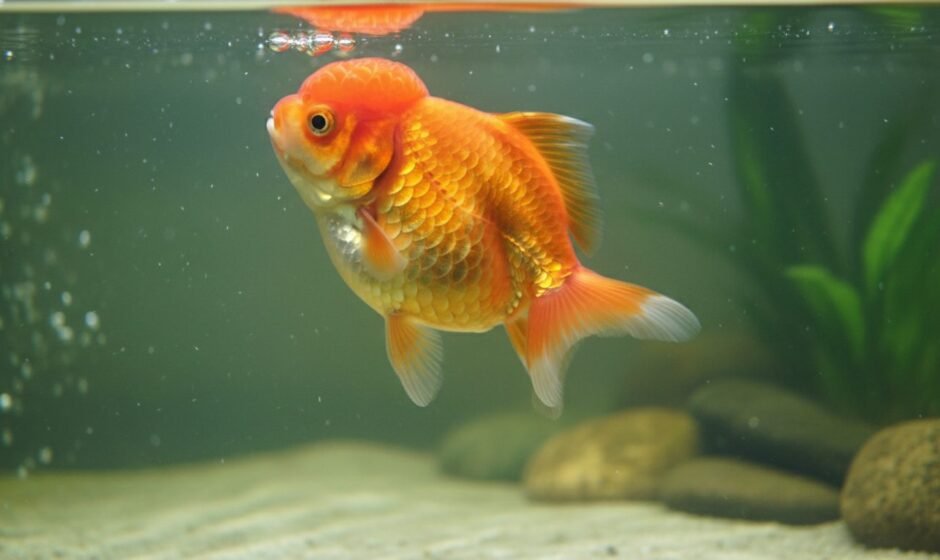
Swim bladder disease is a symptom, not a diagnosis, and in most bettas and fancy goldfish the cause is dinner. Overfeeding, gulped air, and constipation all press on the swim bladder from the outside and tip the fish over. Before you buy any medication, fast the fish for 48 hours. That one move fixes more floating fish than everything in the “swim bladder treatment” aisle combined, and it costs nothing.
What the swim bladder actually does
The swim bladder is a gas-filled sac that lets a fish hold its position in the water without effort. When it works, the fish hovers. When something squeezes it, punctures it, or infects it, the fish floats at the surface, sinks to the bottom, or swims tilted, and it has to fight constantly for a position that should be free. The organ itself is usually fine. In round-bodied fish it sits crammed against a digestive tract that only needs one oversized meal to press on it.
Why bettas and fancy goldfish get it constantly
Fancy goldfish were bred into a ball. Decades of selecting for that round egg shape compressed the digestive tract and swim bladder into a space they were never designed to share, so a moor or an oranda is one big meal away from floating sideways at all times. This is a body-plan problem, which is why it recurs for life in fancy goldfish no matter how well you manage it. Bettas get there a different way: they feed at the surface and gulp air along with floating pellets, and dry pellets swell after swallowing. Same tilt, different route.
Torpedo-shaped fish rarely have this problem. Single-tailed goldfish, danios, tetras, and barbs carry their organs in a body shaped the way evolution drew it, and a buoyancy problem in one of them deserves more suspicion: think water quality or infection before constipation. The rounder the fish, the more likely dinner is the culprit.
The fast-first protocol
Run this in order before considering any medication:
- Stop feeding for 48 hours. No exceptions, no “just a little.” A healthy adult fish is in zero danger from two days without food, and the fast gives the gut time to clear whatever is pressing on the bladder.
- Test ammonia and nitrite while you wait. Poisoned fish lose balance too, and that cause kills faster than constipation. Anything above 0 ppm ammonia means water is the problem; the ammonia guide covers the fix.
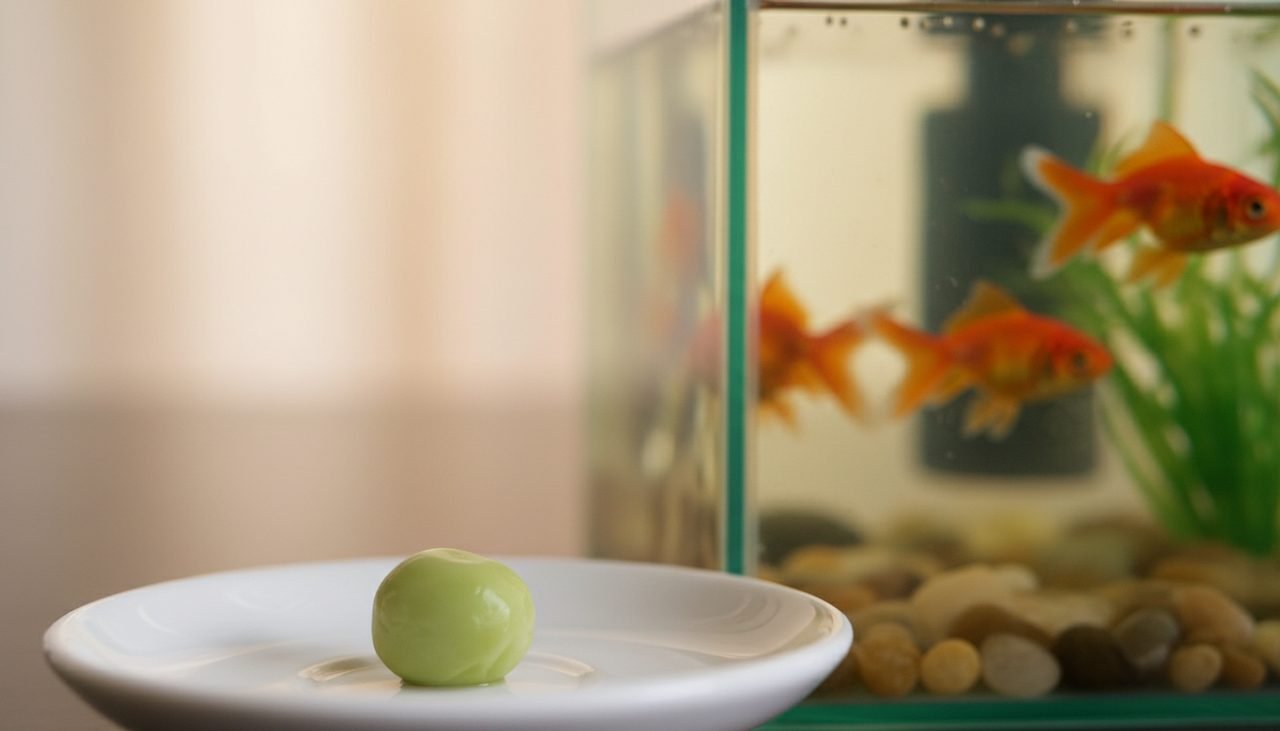
- Goldfish only: after the fast, feed one blanched, shelled pea. The fiber pushes the blockage through. Skip this for bettas; they are carnivores and cannot digest a pea, so it trades one gut problem for another.
- For bettas, refeed with a pellet soaked in tank water for a minute, or a few daphnia, which work as a natural laxative for carnivores.
- Reassess on day 3 or 4. Most digestive cases are visibly better by then.
Matching the symptom to the cause
| What you see | Most likely cause | First move |
|---|---|---|
| Floats after meals, recovers within hours, otherwise normal | Air gulping or pellet swell | Presoak pellets, switch goldfish to sinking food |
| Floats constantly, belly tilted up, still alert and hungry | Constipation or overfeeding | The fast-first protocol |
| Sits on the bottom, struggles upward, then sinks back | Water quality or infection | Test everything, then treat what the test finds |
| Tilted plus clamped fins, no appetite, listless | Systemic infection | Quarantine and a broad-spectrum antibiotic per package instructions |
When the fast does not work
Give the protocol 3 to 4 days. If the fish is still off balance and shows other symptoms (clamped fins, no appetite, bloat, stringy feces), you are looking at infection or environment rather than digestion. Retest the water and check your baseline numbers against the water parameters guide, because chronic low-grade problems produce exactly this slow-motion picture. A true bacterial swim bladder infection is treated in a hospital tank with a broad-spectrum antibiotic such as kanamycin, dosed per the package. A fish that will not eat needs its own triage; the not-eating guide covers that ladder.
And some fancy goldfish never fully right themselves. A permanently tilted goldfish that eats, forages, and gets around is not suffering; plenty live for years swimming like a badly loaded cargo ship. Manage it with sinking gel food, small portions, and low flow, and let the fish be crooked.
Lookalikes that are not swim bladder trouble
Two conditions get misdiagnosed as swim bladder disease often enough to check for. First, dropsy. Look at the swollen fish from directly above: if the scales stand out from the body like an open pinecone, you are dealing with fluid buildup from organ failure, a far more serious problem with its own treatment path, and fasting will do nothing for it. Smooth scales plus a tilt points back to the swim bladder. Second, an egg-bound female. A female betta or goldfish that swells in the belly, tilts, and hovers near the bottom may be carrying eggs she cannot release; the swelling sits low and asymmetric rather than the even balloon of constipation. Most egg binding resolves on its own within a week or two.
Balance problems that come with gasping, darting, or several fish acting strange at once are almost never the swim bladder either. That picture is poisoning, and the ammonia test settles it in five minutes.
Prevention is a feeding rule
Feed what the fish finishes in about two minutes, once a day, with one fasting day a week. Presoak pellets for surface feeders. Give goldfish sinking food so they stop inhaling air at the surface. Hold the tank steady at its proper temperature (76-80°F for tropical communities, 75-81°F for a betta), because cold water slows digestion and cold, overfed round fish are the textbook swim bladder patient. Most owners who follow the two-minute rule never see this problem twice.
Swim bladder FAQ
How long can I safely fast my fish?
Healthy adult fish handle a full week without food, so the 48-hour protocol fast carries no risk. Do not fast juveniles or visibly emaciated fish; those need a different diagnosis, not an empty stomach.
Can a fish recover from swim bladder disease?
Digestive cases, which are most of them, recover within days once the gut clears. Infection cases recover if the antibiotic reaches them in time. Body-shape cases in fancy goldfish improve but return, and the goal there shifts from cure to management.
Why does my goldfish float after every meal?
It is gulping air at the surface or its food is swelling after swallowing. Switch to a sinking pellet or gel food, feed smaller portions, and the after-dinner float usually disappears within a week or two. If it persists on sinking food, run the fast-first protocol.
