Every disease outbreak in an established tank walked in through the front door, on a new fish, usually one that looked perfectly healthy in the store. A quarantine tank is the checkpoint that stops that, and it costs about $50 to build: a bare tank, a seeded sponge filter, a heater, and three weeks of patience. This guide gives the full costed kit list, the seeded-sponge trick that makes an instant-cycled quarantine possible, and a week-by-week observation calendar so you know exactly what you are looking for before a new fish ever touches your main tank.
Why the healthiest-looking fish still needs it
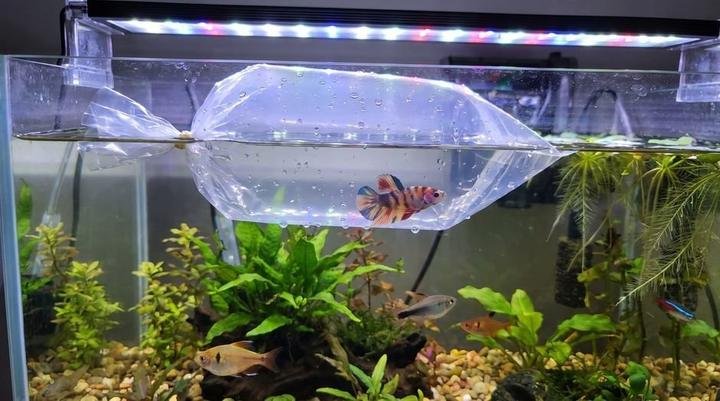
Store fish live in shared water systems where one sick tank can seed every tank on the rack, and stress suppresses symptoms. A fish can carry ich, internal parasites, or a bacterial infection at levels too low to see, then break down a week later when it has your address. Quarantine converts that gamble into a controlled experiment: if the fish is carrying something, it declares itself in a 10-gallon tank you can treat cheaply and drain afterward, instead of in a 40-gallon community where every resident is now exposed and every treatment has collateral damage. The math is lopsided, three weeks of mild inconvenience against the cost of medicating, or losing, an entire established tank.
The $50 kit list
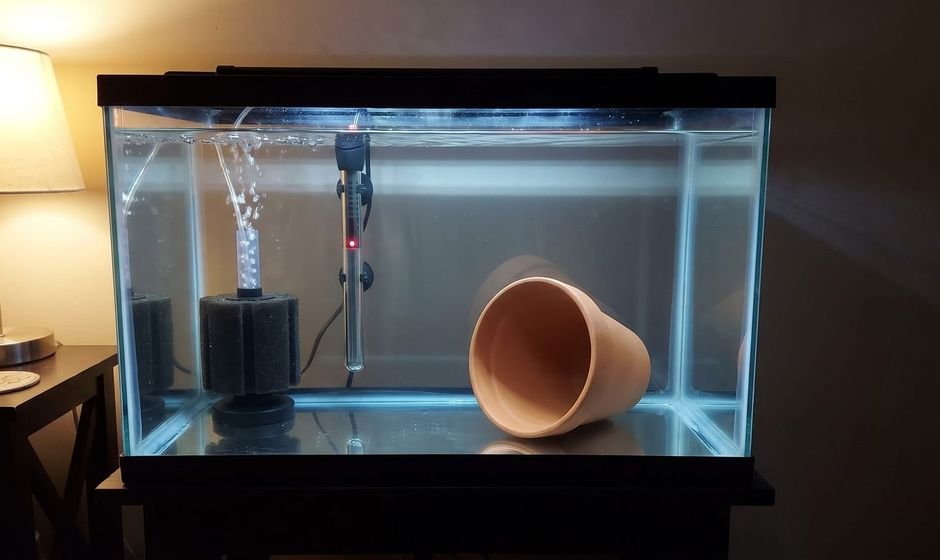
A quarantine tank is deliberately bare, easy to observe, easy to medicate, easy to sterilize. Here is the whole build:
| Item | Typical cost | Notes |
|---|---|---|
| 10-gallon tank | $15–20 | Standard size; often cheaper on sale or secondhand |
| Sponge filter + air pump | $12–15 | The heart of the system, see the seeded-sponge trick below |
| 50W adjustable heater | $12–15 | Adjustable matters: some treatments use temperature |
| Lid or glass canopy | $5–8 | Stressed new fish jump; a lid is not optional |
| Hiding spot | $0 | A clean terracotta pot or PVC elbow. Nothing porous, nothing from the main tank |
| Substrate, light, decor | $0 | None. Bare bottom shows waste, uneaten food, and symptoms clearly |
Total: roughly $45–55, reusable for years. Between uses, drain it, wipe it with diluted bleach, rinse until no smell remains, and store it dry, dry storage is itself a disinfectant, since almost nothing that attacks fish survives desiccation.
The seeded-sponge trick
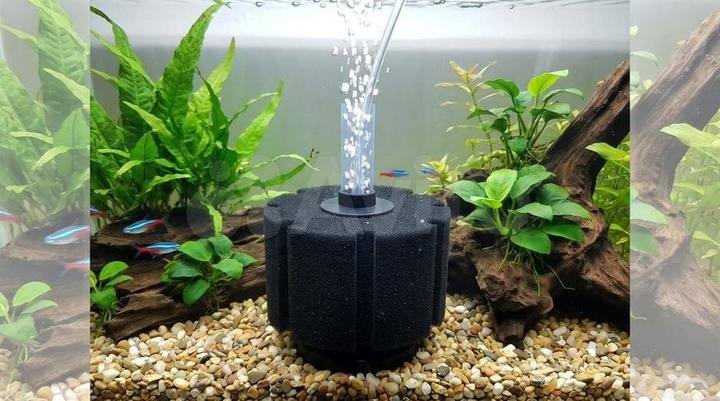
The usual objection to quarantine is the cycle: a tank that sits empty most of the year is an uncycled tank, and putting a stressed new fish into an uncycled tank trades one danger for another. The trick is to keep the quarantine’s sponge filter running inside your main tank’s water, tucked behind the hardscape, or in the filter compartment if there is room, all year round. The sponge quietly grows a full colony of beneficial bacteria on the main tank’s bill. The day you bring a fish home, move the sponge to the quarantine tank, fill the tank with fresh dechlorinated water, and you have an instantly cycled hospital ward. No weeks of waiting, no ammonia spikes on a fish that can least afford them. The whole mechanism is the same one the cycling guide builds from scratch, borrowed instead of grown. After each quarantine, the used sponge gets sterilized or replaced, and a new one starts seeding.
The three-week observation calendar
Three weeks covers the incubation window of the common freshwater diseases. Each week has its own watchlist:
| Week | What you’re watching for | What to do |
|---|---|---|
| Week 1 | Ich spots, flashing, clamped fins, rapid gill movement, refusal to eat past day 2–3 | Feed lightly once daily; test ammonia every other day; small water changes as needed |
| Week 2 | Slower diseases surfacing: fungus, fin rot, white stringy feces (internal parasites), wasting despite eating | Keep feeding and testing; note anything unusual with a daily 30-second look |
| Week 3 | Confirmation week, behavior should be settled: steady appetite, normal swimming, good color | If all clear for the full week, acclimate to the main tank |
The clock has one rule: any symptom resets it. Spot ich on day 16, and the three weeks start over after treatment ends. The calendar measures three clean weeks, not three calendar weeks.
Observe first, medicate second
Some hobbyists dose every new arrival with a fixed battery of medications regardless of symptoms. This guide takes the other side for beginners: observation first, medication only for what you actually see. Prophylactic med regimens stack three or four chemicals on an already-stressed fish, cost more than the quarantine tank itself, and teach you nothing about reading fish. A bare tank and a daily look diagnose most problems in time to treat them, ich gets the heat-and-time protocol, mild fin and skin issues get the salt ladder, and a fish that stays clean gets three weeks of gentle feeding and zero chemistry. The exception worth making: fish from known-risky sources, imports, monster chain-store sales, where a deworming food during quarantine is cheap insurance.
Quarantine tank FAQ
Can I skip quarantine for just one small fish?
The size of the fish has nothing to do with the size of the risk. One carrier neon can seed ich through a whole community. The only honest skip is a brand-new tank with no other fish in it: with nothing to protect, the tank itself is the quarantine.
Do plants and snails need quarantine too?
They can carry hitchhikers, snail eggs, algae, and disease organisms riding on wet surfaces. Plants get a rinse and a few days in a bucket with daily water swaps; anything that arrived in water from a fish system deserves at least a cautious week.
The quarantine tank has no filter media colony, what about ammonia?
That is exactly what the seeded sponge solves. If you were caught without one, run the quarantine like a fish-in cycle: test daily, change water at any reading above 0 ppm ammonia, and feed sparingly. One small fish in ten gallons produces little waste, so daily attention covers the gap.
Can the quarantine tank double as a hospital tank?
Yes, same hardware, same logic, opposite direction: instead of keeping new fish out of the main tank, it takes sick fish out of it for treatment. This is where the adjustable heater and bare bottom earn their keep, since medications dose accurately in a tank with no substrate to absorb them.
Sources
Quarantine periods and biosecurity practice for ornamental fish follow the same logic as formal quarantine protocols; the ich incubation window that sets the three-week clock is covered in the overview of Ichthyophthirius multifiliis.