Aquarium salt is the oldest medicine in the hobby and the most carelessly dosed: the box says “1 tablespoon per 5 gallons” as if every disease and every fish needed the same amount. They don’t. This guide replaces the box with a three-level dosing ladder, a specific concentration for each job, from mild support to parasite treatment, plus the one rule almost everyone gets wrong: salt does not evaporate, so topping off a tank never means adding more. It ends with the list of tanks and fish that should never see salt at all.
What salt actually does
Plain aquarium salt is sodium chloride. No additives, no dechlorinator, nothing else. It works through osmosis: a freshwater fish constantly pumps out the water that seeps in through its skin and gills, and that pumping costs energy. A little salt in the water narrows the gap between inside and outside, so a sick fish spends less energy on plumbing and more on healing. At higher concentrations, salt also dehydrates the soft-bodied parasites and microbes on the fish’s surface faster than it stresses the fish itself. That is the entire mechanism, which is why salt is a genuine tool at the right dose and a slow stress test at the wrong one.
The three-level dosing ladder
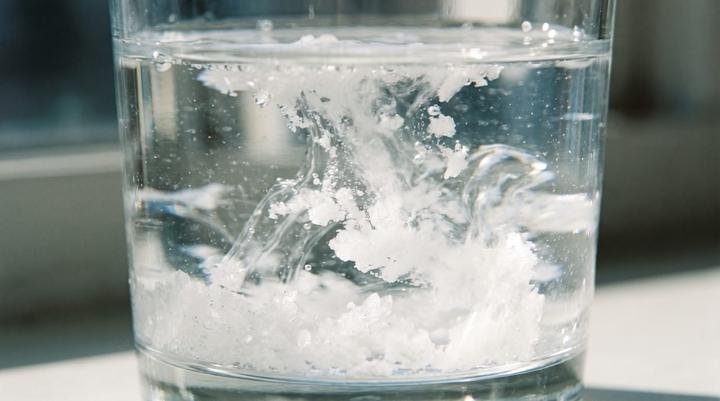
Each level is a different tool for a different job. Always dissolve the salt fully in a cup of tank water before adding it. Never pour crystals into the tank, where they can settle on and burn whatever they land on:
| Level | Dose | Use it for | How long |
|---|---|---|---|
| Level 1, support | 1 tablespoon per 3 gallons | General stress support, mild fin damage, recovery after transport or injury | Up to a few weeks, removed gradually by water changes |
| Level 2, treatment | 1 tablespoon per 2 gallons | Ich (alongside heat), mild bacterial and fungal skin issues | The length of the treatment, typically 10–14 days for ich |
| Level 3, heavy | 1 tablespoon per 1 gallon | Stubborn external parasites and infections that shrugged off Level 2 | Short course only, hardy fish only, ideally in a hospital tank |
Climb the ladder, never jump: start at the level the problem calls for, raise it only if the fish tolerates the current rung and the problem persists. Move up in stages over a day rather than all at once, and watch the fish for the first hour after any increase, gasping, lying on the bottom, or frantic swimming means do an immediate partial water change and hold at the lower level.
The rule that prevents overdoses: salt does not evaporate
Water leaves the tank two ways, and only one takes salt with it. Evaporation removes pure water and leaves every grain of salt behind, so when you top off evaporated water, you add no salt, or the concentration silently climbs week after week. A water change physically removes salty water, so you re-dose only for the gallons you took out. Change 5 gallons on a Level 2 tank, and you add back 2.5 tablespoons: the dose for 5 gallons, nothing more. This one distinction is behind most accidental salt overdoses in the hobby, and it is also your exit strategy, to end a salt treatment, just do normal water changes without re-dosing, and the concentration steps down toward zero on the same schedule as your regular water changes.
When not to use salt
Salt is a whole-tank decision, and some tanks and residents vote no:
- Scaleless and sensitive fish. Corydoras and other catfish, loaches, and plecos absorb salt far faster than scaled fish. If they must be treated, stay at Level 1 and watch closely, or move the sick fish to a hospital tank instead.
- Planted tanks. Most aquarium plants tolerate salt worse than most fish; a Level 2 dose can melt a planted tank. Treat the fish in a separate tank and leave the plants out of it.
- Snails and shrimp. Invertebrates are generally less salt-tolerant than fish; assume treatment levels will harm them.
- The wrong diagnosis. Salt treats things living on the fish. If the white fuzz is epistylis, a colony organism feeding on bacteria in dirty water, salt plus heat is the classic wrong-treatment trap; run the salt-grain test before reaching for the box.
One more boundary: salt is not a water-quality fix. If the real problem is ammonia or nitrite, the treatment is water changes and cycle repair, though for nitrite specifically, chloride does play a genuine protective role, which the nitrite guide explains alongside the emergency dose.
Aquarium salt FAQ
Can I use table salt or sea salt?
Plain, additive-free salt is what matters. Aquarium salt and pure kosher salt qualify; iodized table salt and anti-caking blends do not, and marine salt mix is a different product entirely. It raises pH and hardness because it is formulated to rebuild seawater, not to treat freshwater fish.
Should I add salt to my tank all the time, just in case?
No. Continuous background salt gives parasites time to acclimate, stresses salt-sensitive tankmates for no benefit, and takes your best tool off the table for when you actually need it. Salt is a treatment, not a supplement. The everyday health tools are the feeding and maintenance habits in the setup guide.
How do I give a salt dip instead of dosing the whole tank?
A dip is a short, strong bath in a separate container: around 1 tablespoon per gallon, fish in for 5 to 10 minutes while you watch continuously, out immediately if it rolls or gasps. Dips hit external parasites hard while the main tank stays salt-free. A good option for planted tanks and one-fish problems.
Does salt cure ich by itself?
Level 2 salt is a real ich treatment, but it works on the clock, not on contact, only the free-swimming stage is vulnerable, so the salt must stay at full strength for the entire 10–14 day cycle, usually alongside heat. The ich guide covers the full protocol and the diagnosis that must come first.
Sources
The osmoregulatory mechanism behind salt treatment, how freshwater fish maintain their internal salt balance and what it costs them, is described in the overview of osmoregulation.