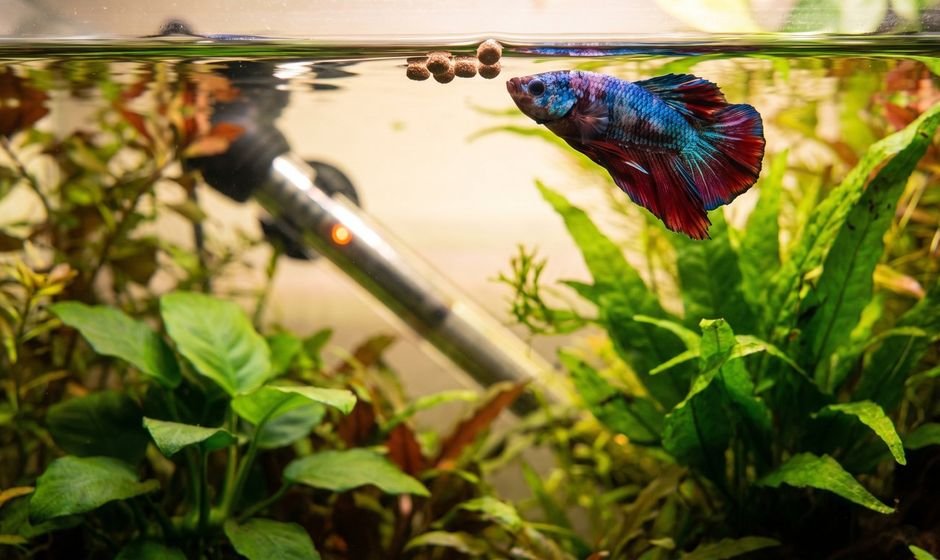
Short answer: Check the thermometer and test the water before anything else. A betta below 73 F has a slowed metabolism and often refuses food entirely, and any ammonia above 0 ppm puts a fish off eating within hours. Those two explain most cases. A healthy adult can go a week without food, so you have time to diagnose.
A day or two of poor appetite in a betta that swims normally, holds its fins open and breathes steadily is not an emergency. Bettas skip meals after a move, after a water change, and sometimes for no reason you will ever identify.
What matters is what comes with it. Refused food alongside clamped fins, a swollen body, white patches or gasping at the surface needs action today. Use this to judge how fast to move:
| What else you see | Most likely cause | How fast to act |
|---|---|---|
| Sluggish, sits on the bottom, tank feels cool | Temperature too low | Today |
| Inflamed gills, gasping at the surface, clamped fins | Ammonia or nitrite above 0 ppm | Immediately |
| Hiding, dull color, moved home this week | Stress from a new environment | Wait 3 to 4 days |
| Swollen belly, no waste, sinks after meals | Constipation or overfeeding | Within a few days |
| Salt-grain spots, cottony patches, pineconed scales | Illness | Immediately |
| Chases pellets then spits them, otherwise lively | Food stale or unfamiliar | Within a week |
1. The water is too cold
This is the most common reason, and stores create it by selling unheated tanks. Digestion slows sharply below 75 F, and by about 70 F many bettas stop feeding altogether. A cold betta looks lazy rather than sick: it rests on the substrate, moves in short bursts, and ignores food landing in front of it.
How to confirm: read a thermometer in the tank. Do not trust the number on the heater dial. Unheated tanks in most homes sit at 64 to 72 F.
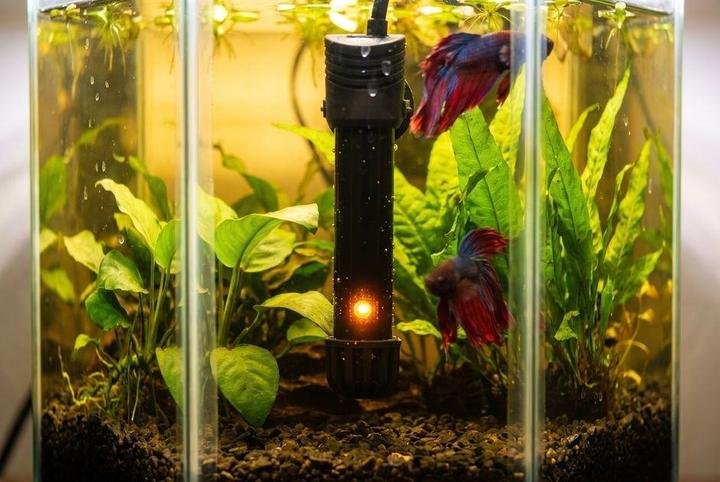
What to do: fit an adjustable, thermostat-controlled heater and bring the tank to 77 to 79 F, raising it no faster than about 2 F per hour. Appetite usually returns within a day or two. Never pour hot water in to warm a tank, and never use a lamp as a heater. The heater and tank basics are in a proper betta setup.
2. Ammonia or nitrite in the water
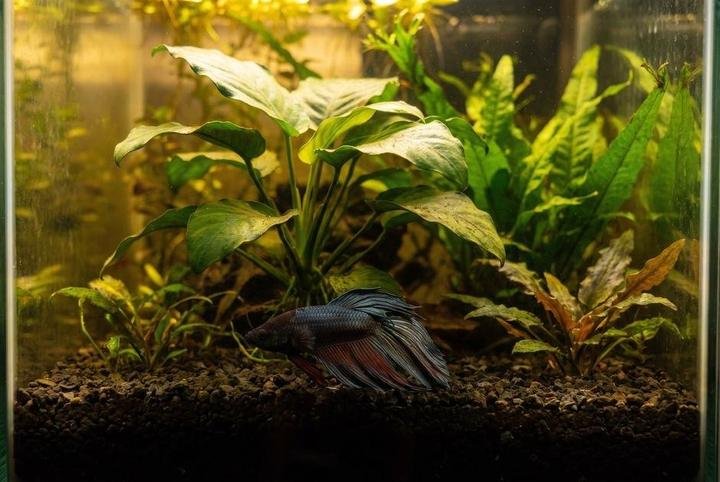
Ammonia burns gill tissue, and a fish struggling to breathe has no interest in eating. Even 0.25 ppm is enough to stop a betta feeding, and you cannot see or smell it. This is the classic new-tank ammonia problem when a betta goes off food in a tank set up within the last two months.
How to confirm: test ammonia, nitrite and nitrate with a liquid test kit. Any ammonia or nitrite above 0 ppm is a problem; nitrate is fine up to around 40 ppm. Paper strips are unreliable for ammonia, so if strips read zero and the fish looks ill, retest properly.
What to do: change 25 to 50 percent of the water, dechlorinated and temperature-matched, and repeat daily to bring ammonia and nitrite to zero. Stop feeding for a day or two, since uneaten food adds to the load. Never rinse filter sponges under the tap; that kills the bacteria doing the work. The water quality and testing guides cover these readings and a stalled cycle.
3. Stress from a move or a new tank
A betta that has just been bagged, driven home and dropped into unfamiliar water is not thinking about dinner. Three or four days of refused food after a move is normal, and the same follows a big rescape or a move to a new tank.
How to confirm: timing tells you. Water tests come back clean, temperature is right, and the fish hides or holds still rather than showing physical symptoms.
What to do: less, not more. Dim the room, keep the tank light off for a day, add cover with plants or a cave, and stop hovering at the glass. Offer two pellets and remove anything uneaten after five minutes. Most bettas eat by day three or four.
4. Constipation from dry pellets or overfeeding
Dry pellets absorb water and swell. A betta fed six or eight twice a day ends up blocked, and a blocked fish stops eating. Bettas have no restraint, so they take everything offered.
How to confirm: look for a rounded, tight belly, no waste in the tank for a day or more, and a fish struggling to stay off the bottom after feeding. Stringy waste trailing from the vent points the same way.
What to do: fast the fish for two or three days, then offer frozen daphnia. It works as a mild laxative and suits a carnivore better than the blanched pea often suggested. After that, soak pellets in tank water for a minute before feeding and cut the ration to two to four pellets twice a day. A betta’s stomach is about the size of its eye.
5. Illness
Loss of appetite is one of the earliest signs something is wrong, so look the fish over in good light before writing it off as fussiness. Check for:
- Clamped fins held tight against the body instead of spread.
- White salt-grain spots over body and fins, often with flicking against decor. That is whitespot (ich).
- Cottony white or gray patches on the mouth, head or fin edges: fungal or bacterial infection.
- Bloating with scales standing out like a pinecone when seen from above. That is dropsy, a sign of organ failure, and the outlook is poor.
- Labored breathing, rapid gill movement, or hanging at the surface even after gulping air.
- Ragged fins with reddened or blackened edges: fin rot, which almost always traces back to water quality.
What to do: identify before you treat. Test the water first, since poor conditions cause or worsen most of these and clean water alone resolves early fin rot. Match the treatment to the diagnosis instead of dosing an all-purpose mixture into the display tank. If there are tank mates, move the sick fish to a separate heated container. More in the fish care section.
6. The food itself
Pellets oxidize once the tub is open and lose the smell that triggers feeding. A tub open six months, or one kept in a warm, humid kitchen, is simply unappealing. Bettas are also fussy and will reject an unfamiliar food for days before trying it.
How to confirm: offer a small piece of frozen bloodworm or brine shrimp thawed in tank water. A fish that takes that eagerly but ignores pellets is telling you the pellets are the problem, not its health.
What to do: buy small tubs, keep them sealed and out of the sun, and replace them within a few months of opening. To switch a fussy fish onto a better staple diet, mix old and new food and shift the ratio over a week or two. Do not let bloodworm become the whole diet; it is rich, low in fiber and causes the constipation covered above.
When it is urgent and when it is not
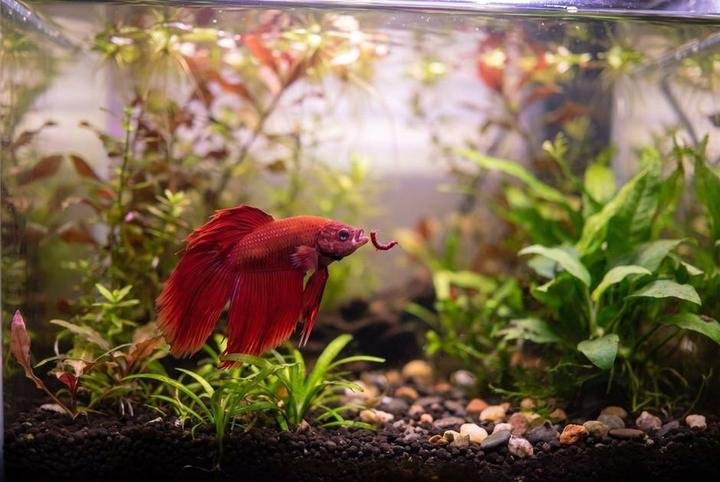
Act the same day if the fish is gasping, has visible lesions, is pineconing, or if ammonia or nitrite shows on a test. Act within a few days for a swollen belly with no waste, or a tank running cold.
Wait and watch if the fish swims normally, tests are clean, temperature is 75 to 81 F and it has been fewer than three or four days. Past seven to ten days of total refusal in a clean, warm tank, something is being missed: retest with a fresh kit and inspect the fish again.
Common questions
How long can a betta go without food?
A healthy adult can go a week or more without lasting harm. That is not a plan, but it means you have time to diagnose properly instead of panicking.
My betta takes a pellet and spits it out. Why?
Usually the pellet is too big or too hard. Soak it in tank water for a minute, or crush it. Persistent spitting with a swollen belly points to constipation instead.
Should I add aquarium salt or a general tonic?
Not as a first step. Treating without a diagnosis stresses the fish and masks what is actually wrong. Fix temperature and water quality first; plenty of appetite problems end there.
My betta only eats in the morning. Is that normal?
Yes. Bettas are most active in the warmer, brighter part of the day, and older fish eat less. One reliable meal a day is enough for an adult.