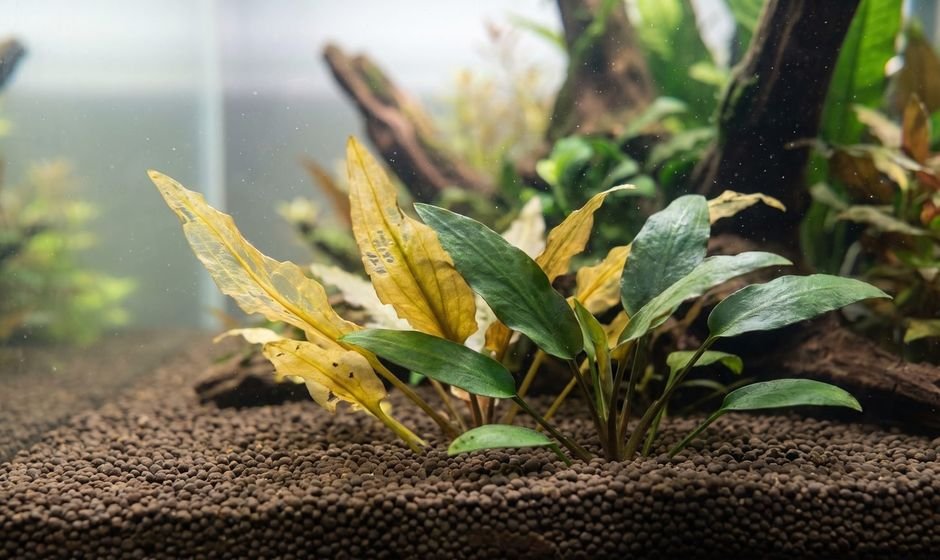
A dying aquarium plant is not mute, it files a report. Which leaves are failing, old or new, tells you which nutrient is missing; where on the plant the damage sits separates hunger from rot from shading. This guide gives you the old-leaf/new-leaf readout that turns yellowing into a diagnosis, the non-food killers to rule out first, and the one-change rule that stops the most common troubleshooting mistake of all: fixing five things at once and learning nothing.
First: is it just normal melt?
If the plant is less than a month or two in your tank and shedding leaves, especially a cryptocoryne collapsing wholesale, the odds are you are watching a scheduled rebuild, not a death. Nursery plants arrive built for a different life and scrap their old leaves to grow underwater replacements; the crypt-melt section of the plants guide explains the mechanism. The tell: the roots stay firm and new, differently shaped leaves appear within a few weeks. Trim the casualties, leave the roots, and give it a month before reading further. Everything below is for plants that were established and then declined.
The old-leaf/new-leaf readout
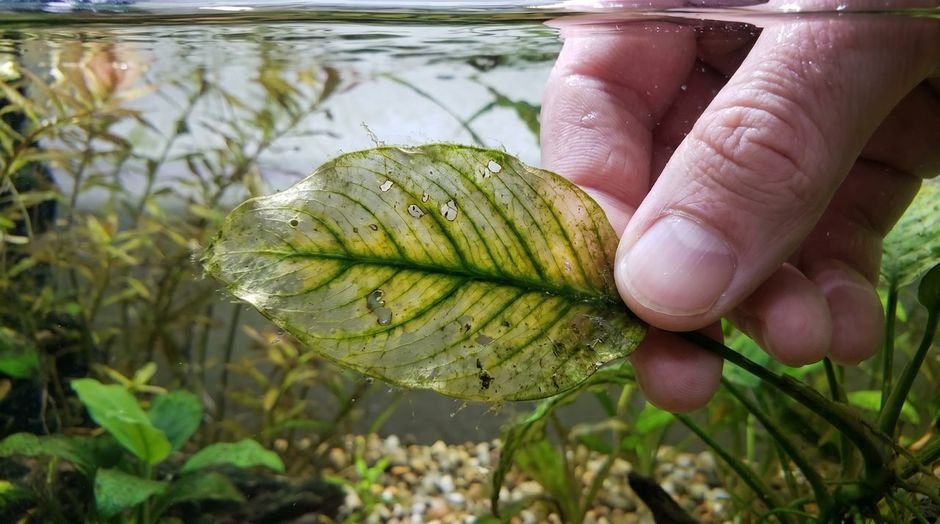
Here is the mechanism that makes leaf damage readable. Some nutrients are mobile inside a plant: when supplies run short, the plant strips them out of its oldest leaves and ships them to the new growth, so the old leaves fail first. Other nutrients are immobile, once built into a leaf they cannot be moved, so a shortage shows up only in the new leaves, while the old ones keep their color. Look at which end of the plant is suffering and you have cut the suspect list in half before buying anything:
| What you see | Where | Likely shortage | Fix |
|---|---|---|---|
| Uniform yellowing, oldest leaves first, slow growth overall | Old leaves | Nitrogen | All-in-one liquid fertilizer; common in lightly stocked, heavily planted tanks |
| Pinholes that spread, then ragged yellow edges | Old leaves | Potassium | All-in-one liquid covers it; the classic deficiency of stocked low-tech tanks |
| Yellow between veins while the veins stay green | Old leaves | Magnesium | Liquid fertilizer containing Mg; check GH, very soft water lacks these minerals |
| New leaves pale, yellow-white, weak | New leaves | Iron | Comprehensive or iron-supplemented liquid; frequent small doses beat one big one |
| New leaves twisted, stunted, or dying at the growing tip | New leaves | Calcium or general immobile shortage | Check GH first, remineralize very soft water rather than chasing single elements |
Two notes before you shop. Old damaged leaves never heal, judge every fix by the growth that comes after it, and trim the wrecked leaves so the plant stops paying to keep them. And if the magnesium or calcium rows fit, test your general hardness before dosing anything: plants drink their minerals from the water, and very soft water starves them of exactly these. The GH section of the water parameters guide covers what the number means and when to remineralize.
The non-food killers: rule these out before dosing
Deficiency is only one of four common killers, and the readout above only applies once the other three are excluded:
| Pattern | Actual problem | Fix |
|---|---|---|
| Whole plant pale and reaching; stems long and bare between leaves; lower leaves dropping | Not enough light. The plant is climbing toward it | Longer photoperiod (6–8 hours on a timer) or a brighter fixture |
| Leaves coated in green, brown, or black growth, failing underneath | Algae shading. The leaf is being starved of light where it stands | Diagnose the algae type with the algae guide; the plant is the victim, not the problem |
| Plant rots at the substrate line while upper growth looks fine at first | Buried crown or rhizome | Replant to the crown line per the planting guide; cut away mushy tissue |
| Established plant declines after months of health, no other change | Root feeder’s tabs exhausted, buried fertilizer runs out silently | New root tabs every ~3 months per the fertilizer guide |
The one-change rule
Plants live on a slower clock than fish. A water problem shows in fish within hours; a plant fix shows in leaves within weeks, because the answer only appears in growth that had not happened yet. That lag is why plant troubleshooting goes wrong: change the light, the fertilizer, and the photoperiod in the same week, and whatever happens next is unattributable. You have three suspects and one outcome. The one-change rule: pick the single most likely fix from the tables above, apply it, and judge nothing for two to three weeks except the color and shape of brand-new leaves. Better, faster new growth means you found it; no change means you cleanly eliminated one cause and move to the next. Slow is the fast way here. It is the same discipline the water-quality troubleshooting guides apply to test readings, stretched to a plant’s timescale.
When to give up on a plant
Some losses are not your fault. A few species sold in fish stores, mondo grass, some dracaena and “lucky bamboo” arrangements, various bright-red “aquatic” plants, are terrestrial or bog plants that cannot live submerged at all; no fertilizer schedule saves them, and they were dying from the day they went under. If a plant matches no row in either table, sheds continuously past the melt window, and its roots have gone soft and brown, remove it before it becomes an ammonia source. Replace it with a proven species from the low-maintenance list. The goal is a tank that grows, not a hospice for the store’s worst decisions.
Melting plants FAQ
Should I remove dying leaves?
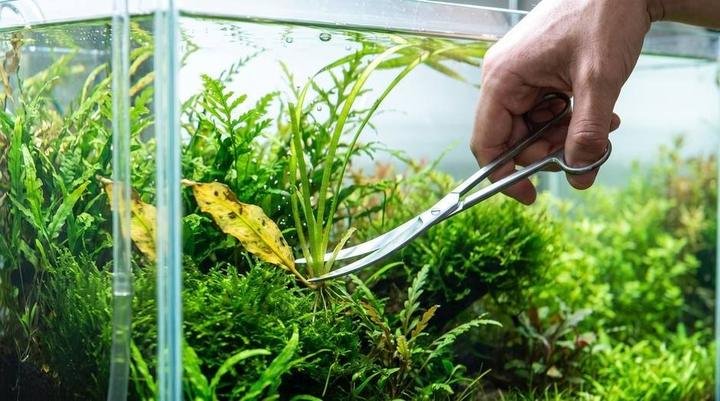
Yes, trim them at the base once they are clearly failing. The plant is already salvaging what it can from them (that is the mobile-nutrient mechanism at work), and a decaying leaf feeds algae and the ammonia system instead of you learning anything from it.
My plant is growing but the leaves have holes. Snails?
Almost never snails, common aquarium snails rasp biofilm and dead tissue, not healthy leaves. Spreading pinholes in otherwise green old leaves is the potassium row of the readout. Holes with ragged, decaying edges on old leaves are usually just those leaves aging out.
Why do my plants melt right after I buy them?
Because most are farmed with their leaves grown in air, and those leaves cannot work underwater. The plant scraps them and rebuilds. It looks like death and is closer to a renovation; the plants guide explains the emersed-growth story. Firm roots plus new submerged leaves within a few weeks means all is well.
Can melted plants come back?
If the roots and crown (or rhizome) are firm, yes, leaves are the plant’s expendable layer, and regrowth from an intact base is routine. Soft, brown, sour-smelling roots are the actual point of no return.
Sources
Nutrient mobility, the basis of the old-leaf/new-leaf readout, is standard plant physiology; see the overview of plant nutrition for which elements plants can and cannot relocate between leaves.