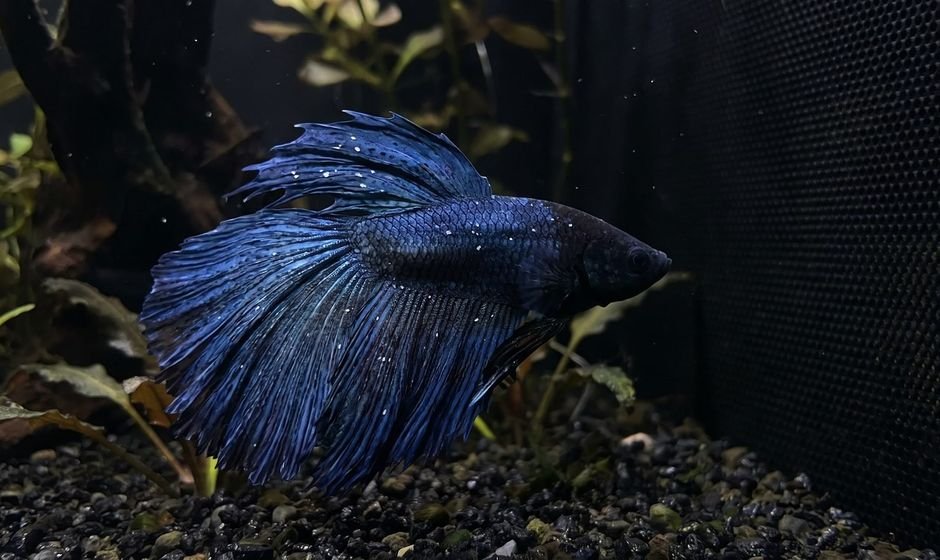
“White spots on my betta” is one search phrase covering at least six different conditions. A parasite, a colony organism, a bacterial infection, a fungus, a stress response, a virus, plus one completely normal anatomical feature that gets healthy females medicated every day. The good news: on a betta, the diseases are unusually easy to tell apart, because those long fins and that dark body turn the spots into a readable display. This guide is the readout. A texture-and-location table that names the condition, and the water-first response that treats it.
Why bettas make diagnosis easier
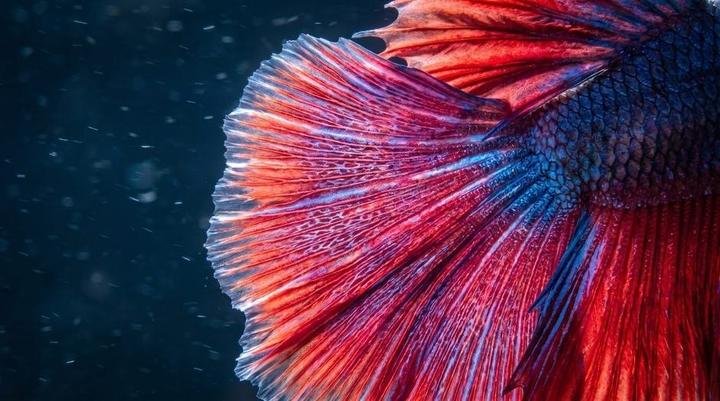
Most fish give you a silver flank and a moving target. A betta gives you a broad, dark, slow-moving canvas and fins like backlit stained glass, white anything shows up in high contrast, and the fin membrane is thin enough that you can see whether a spot sits in the tissue or on it. That in-versus-on question, plus texture and location, sorts nearly every case. Get the betta in good light against a dark background, take a phone photo, and zoom in before touching any medication.
The texture-and-location readout
Match what you see against the whole row, texture, location, and behavior together, not any single column:
| What it looks like | Where it sits | Behavior clue | Likely condition |
|---|---|---|---|
| Uniform round white dots, like salt grains | Embedded in body and fins, evenly scattered | Flashing, clamped fins | Ich |
| Fluffy irregular tufts, like tiny cauliflower | Perched on top, often fin edges and old nips | Normal at first | Epistylis |
| Flat white-gray patch, often edged red, “moldy” saddle over the back or mouth | In the skin, spreading by the day | Lethargy, fast decline | Columnaris (bacterial) |
| Cottony white growth, like a wet cotton ball | On a wound, dead tissue, or uneaten food nearby | Otherwise normal | True fungus |
| Thin milky film or gray slime over large areas | Coating the body, not spots at all | Gasping, irritation | Slime coat response to bad water |
| Hard, wart-like white lumps, cauliflower texture but solid | Fin edges usually, growing slowly over weeks | Completely normal | Lymphocystis (viral) |
The top two rows are the classic mix-up, and they are near-opposites in treatment, heat helps one and feeds the other. If your betta matches either, run the full salt-grain test in the ich vs epistylis guide before treating; that guide owns the complete differential and the wrong-treatment trap.
The false alarm: the egg spot
One white spot on a betta is not a disease at all. A single small white dot on the belly, between the ventral fins, on a female betta is her ovipositor. The egg-laying organ, and a completely normal piece of anatomy. It does not spread, does not grow, does not change, and sits in exactly one place. Healthy females get salted, heated, and medicated over this spot constantly. Before treating any single belly spot on a female: one dot, that location, no change over days, leave her alone.
Water first, medicine second
Four of the six rows in the readout are caused or invited by water conditions: epistylis grows on the bacterial load of dirty water, columnaris strikes stressed fish in poor water, fungus colonizes wounds and waste, and slime coat film is the water problem made visible. So the first response to any white spot is the same regardless of diagnosis: test ammonia and nitrite, do a substantial water change, vacuum the substrate, and cut feeding back. The routine from the water change guide, done today instead of this weekend. Then treat the specific condition: ich gets heat and the salt ladder on a 10–14 day clock; epistylis gets clean water and no heat; columnaris needs a real antibacterial medication and cooler water, fast. It is the one row where a day’s delay matters; true fungus responds to salt or an antifungal plus removing whatever it was growing on; lymphocystis has no treatment and needs none. It usually recedes on its own over weeks.
Prevention is a betta care problem
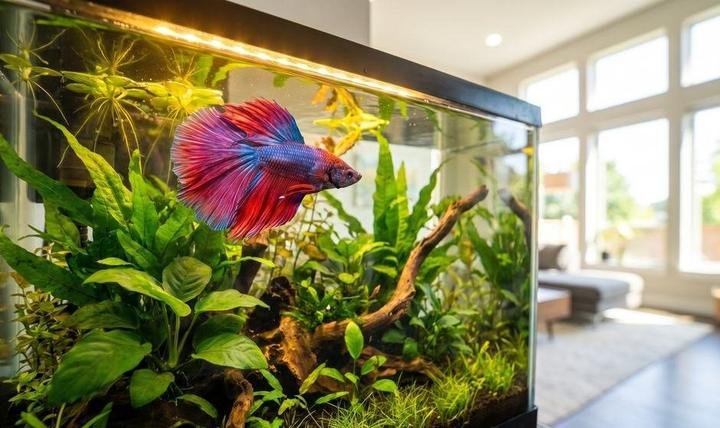
Almost every row of the readout traces back to the same three roots: unheated or unstable water, an uncycled or overfed tank, and stress. A betta in a heated, filtered, cycled 5-gallon-plus tank with clean water rarely gives you a reason to open this guide. The full prevention program is the betta care guide. And because appetite is the earliest warning light on a betta, a fish that stops eating days before any spot appears is telling you something the water test will confirm. The betta not eating checklist reads that signal.
Betta white spot FAQ
Can I use the full 86°F ich treatment on a betta?
Yes, bettas are warm-water fish and tolerate the treatment temperature well for the duration, provided you raise it gradually and keep the water well-oxygenated, since warmer water carries less oxygen. Confirm it is actually ich first; heat is exactly wrong for epistylis.
Is aquarium salt safe for bettas?
Bettas handle the support and treatment levels of the dosing ladder well for the length of a treatment. The cautions are about tankmates, live plants and snails tolerate salt poorly, and about duration: salt is a treatment with an endpoint, not a permanent additive.
The white stuff is only on the mouth. What is that?
Mouth-only white growth is a red flag for columnaris, despite its “mouth fungus” nickname, it is a bacterial infection and it moves fast. Treat it as the urgent row of the table: antibacterial medication, pristine water, and no added heat.
My betta’s spots vanished on their own. Is it cured?
If it was ich, no. The spots dropping off is the parasite’s reproduction step, and each one returns as hundreds of free swimmers within days. Vanishing spots on an untreated tank are the signal to start the full treatment clock, not to relax.
Sources
The conditions in the readout are documented in the overviews of Ichthyophthirius multifiliis, Flavobacterium columnare (columnaris), and Lymphocystivirus.