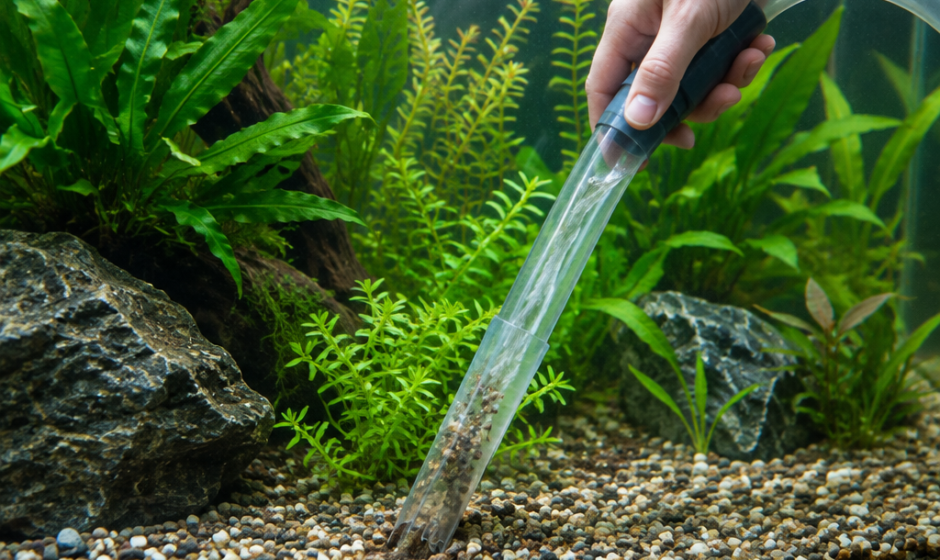
A dirty-looking tank rarely means a dirty tank. Most of what makes water cloudy or the glass green is cosmetic, and the waste that actually harms fish is invisible. Cleaning well means pulling out that waste without destroying the bacteria colony that keeps the water safe.
Never strip the whole tank
Dumping every gallon and scrubbing each surface is the most common beginner mistake, and it backfires hard. Your biological filter lives on surfaces: the filter sponge, the gravel, the decorations. Wipe all of that clean at once and you reset the nitrogen cycle to zero, which sets off new tank syndrome and an ammonia spike that can kill a stocked tank in days. Change part of the water, leave the surfaces alone, and the colony stays intact.
What you need
- A gravel vacuum (siphon)
- Two buckets you use only for the aquarium, never for soap
- An algae scraper or magnet
- Water conditioner
- A cup or turkey baster for spot cleaning
The routine, step by step
Unplug the heater and filter first so neither runs dry. Scrape algae off the glass while the water is still high, so the debris gets siphoned out next. Then run the gravel vacuum across the substrate in sections, letting it pull up the brown mulm as it drains 20 to 30 percent of the water into your bucket.
Refill with fresh water matched to the tank temperature and treated with a water conditioner that neutralizes chlorine and chloramine. Pouring in cold, untreated tap water shocks fish and kills bacteria at the same time. If you want a schedule to anchor this to, most tanks do well on a weekly 20 to 30 percent change.
Cleaning the filter (the part people get wrong)
Rinse filter media in the old tank water you just siphoned out, never under the tap. Chlorine in tap water kills the beneficial bacteria packed into that sponge, and a bleached-clean filter is a dead filter. Swish it until the water runs mostly clear, squeeze, and put it back. Replace cartridges only when they fall apart, and even then keep the old one in the tank for two weeks so the colony seeds the new one. If your filter keeps clogging, it may be undersized for your stock; the filter-type guide covers how to match one to your tank.
How often
Weekly beats monthly by a wide margin. A small 20 percent change every week keeps nitrate low and stable, while a big monthly overhaul swings your water chemistry and stresses fish each time. Setting up a fresh tank instead? Start with the full tank setup walkthrough before you worry about a cleaning schedule. Our aquarium calculators cover the volume, heater and substrate numbers for that build.
If the water still looks off
Cloudy water after cleaning is usually a bacterial bloom, not dirt, and scrubbing harder makes it worse. Read what causes cloudy aquarium water to tell a harmless bloom from a real problem.
Cleaning the glass without chemicals
Algae on the front pane is the part you notice, and it wipes off in seconds. Use a flat blade scraper for the hard green spots and a magnet cleaner or a soft pad for the thin film. Do the glass first, while the water is still high, so the loosened algae drifts down and leaves with the siphon. Skip household glass cleaner entirely, since the spray drifts into the water and the ammonia in most brands is exactly what you spend the rest of the week keeping out. If green film keeps returning within days, the tank is getting too much light or too much food, and the guide to clearing algae without chemicals covers the real levers.
Sand and gravel clean differently
Gravel traps waste between the stones, so push the vacuum tube right in and let the gravel tumble until the water runs clear, then move to the next patch. Sand holds waste on top instead, so hover the tube about half an inch above the surface and let the current lift the debris without pulling the sand up the tube. Either way, clean a third to a half of the open floor each week rather than the whole bed at once, which keeps the bacteria in the substrate undisturbed.
A five-minute weekly checklist
- Scrape the front glass and siphon 20 to 30 percent of the water.
- Vacuum one section of open substrate.
- Top up with dechlorinated, temperature-matched water.
- Wipe salt creep off the rim and lid so the light stays bright.
- Check the heater reading and the filter flow before you walk away.
Size the top-up to your tank with the water change calculator so you swap the same volume every week.
Clean on a rhythm and the tank mostly runs itself. Fish do not need a spotless tank. They need stable water, and a light weekly touch gives them exactly that.
Fish tank cleaning FAQ
How often should you clean a fish tank?
A light touch once a week: a 25 percent water change with a gravel vacuum and a quick glass wipe. Rinse the filter media in old tank water about once a month, never under the tap. Skip the full strip-down entirely, since tearing the tank apart crashes the bacteria that keep the water safe.
Do you remove the fish to clean the tank?
No. Leave the fish in and clean around them. Netting them out and swapping all the water is far more stressful than a partial change, and a complete water swap wipes out the filter bacteria and restarts the nitrogen cycle. Fish are calmest when the routine happens around them.
How do you clean the gravel in a fish tank?
Use a gravel vacuum during the weekly water change. Push the wide end into the gravel so the waste lifts out while the heavier stones drop back, and work across the bottom in sections. For sand, hover the siphon just above the surface instead, so the debris lifts but the sand stays put.
