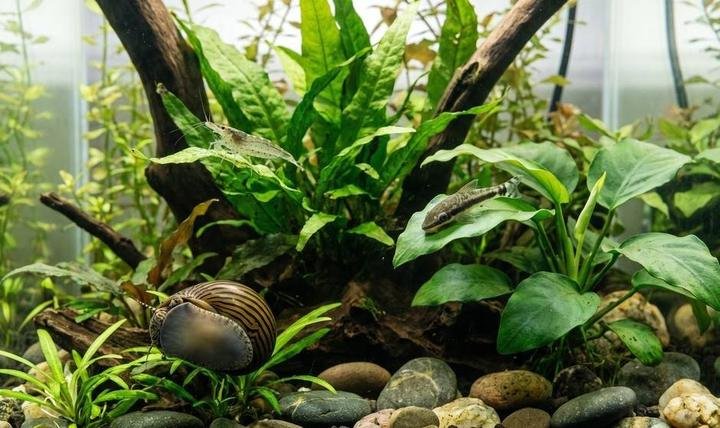
Every fish store sells the same promise: add this fish and your algae problem becomes its dinner. Some of that promise is real. A few species genuinely earn their keep. But the industry’s best sellers include animals that outgrow your tank tenfold, quit the job the day they discover fish food, or start rasping the slime coat off your other fish. This guide is the honest version of the sales pitch: which algae eaters actually work, which tank each one needs, exactly what each will and will not eat, and the myth to clear up before you buy any of them.
The janitor myth
The myth: an algae eater cleans your tank. The mechanism that breaks it: every algae eater is a fish (or snail, or shrimp). It eats the algae and excretes it, converting leaves of algae into dissolved ammonia that your filter turns into nitrate, which is fertilizer for the next generation of algae. Nothing has left the system; it has been converted and recycled. An algae eater added to a tank with a real algae problem is a mop in a room with a burst pipe. What algae eaters actually do well is maintenance: keeping a basically healthy tank polished by grazing the thin film that grows everywhere. Fix the cause first, light, nutrients, and routine, per the algae guide, and then, if you want the polish, hire from the list below.
The eaters that earn their keep
Match the animal to your algae type and your tank size, both columns are load-bearing. Every entry adds waste to the tank, so each one also counts fully against your stocking plan (the stocking guide has the math).
| Species | Actually eats | Will not touch | Minimum tank | The catch |
|---|---|---|---|---|
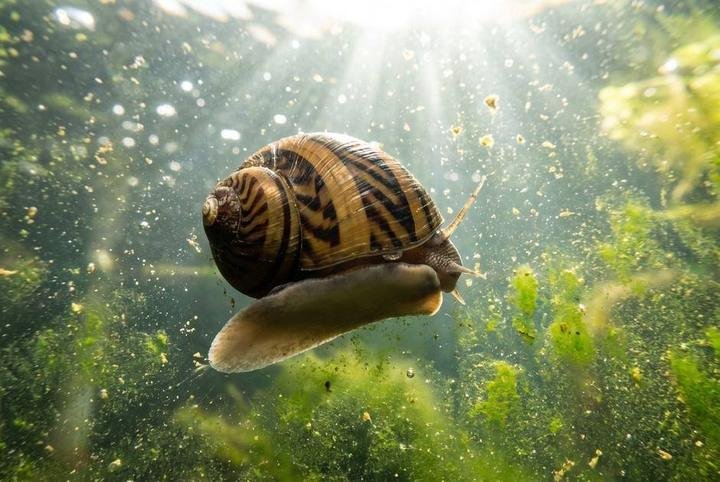
| Nerite snail | Glass film, diatoms, green spot. The best glass cleaner in the hobby | Hair, black beard, cyanobacteria | 5 gallons | Lays small hard white eggs on glass and wood that never hatch in freshwater and never come off easily |
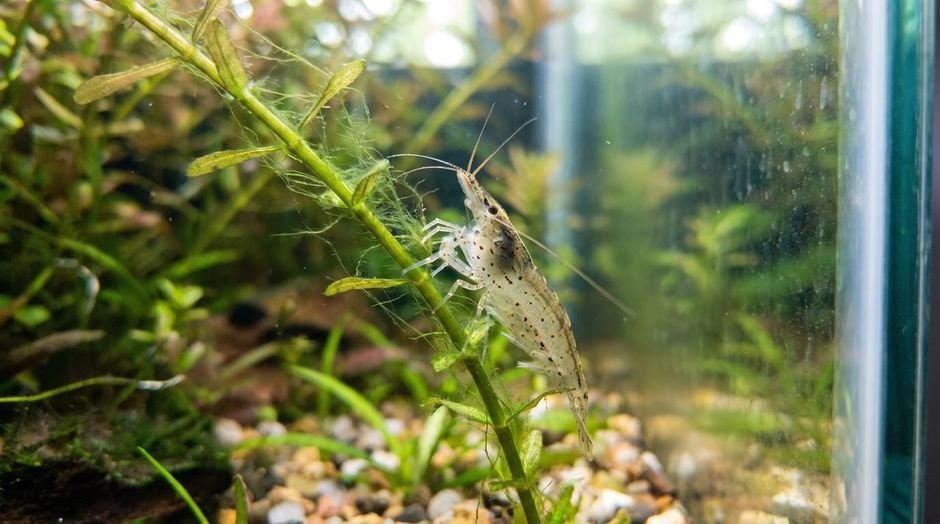
| Amano shrimp | Hair and thread algae, leftover food. The one real hair-algae specialist | Black beard, green water | 10 gallons, group of 3 or more | Works hardest when the tank is fed lightly; a well-fed amano is semi-retired |
| Cherry shrimp | Soft film and biofilm, in small constant bites | Anything tough or long | 5 gallons | Impact needs a colony, not a pair; also a snack for most medium fish |
| Otocinclus | Diatom and soft green films on glass and leaves | Anything tough | 20 gallons, group of 6 | Starves once the film runs out, mature, stable tanks only, never new ones |
| Bristlenose pleco | Flat-surface film, grazes wood | Hair, black beard | 29 gallons | Stays sensibly small (unlike its infamous cousin below) but produces a lot of waste; wants real driftwood to rasp |
| Siamese algae eater | Young black beard tufts, hair algae | Mature black beard | 29 gallons or more | Grows to six inches and loses interest in algae as it learns what fish food is |
The ones to leave at the store
- Common pleco. Sold as a cute two-inch algae eater; grows past eighteen inches, outlives a decade, and outgrows every home aquarium it is sold for. The saddest recurring animal in the hobby. If the label just says “pleco,” assume this one and walk away.
- Chinese algae eater. Eats algae as a juvenile, then quits, and adults develop a taste for the slime coat of slow, flat-bodied tankmates, latching onto their sides. A worse-than-nothing purchase for a community tank.
- “Assorted algae eater” mystery fish. If the store cannot name the species, you cannot know the adult size or the diet. No unnamed janitor is worth the gamble.
Match the eater to the algae, or skip the eater
Work backwards from your actual problem, because for half of them the honest answer is that no animal helps. Brown dusty film in a new tank clears itself on a schedule, the diatom window, and buying grazers for it is the mistake that page exists to prevent. Green water floats where nothing grazes; it dies in a three-day blackout. Black beard algae is ignored by everything popular, its fix is stability, not staff. Cyanobacteria is refused by every grazer for good reason: it is not algae at all. The genuine hires: nerites for film on glass, amanos for hair algae cleanup after the light-and-nutrient fix, otos for film in a mature tank. That is the honest, complete list.
Algae eater FAQ
What is the best algae eater for a 10-gallon tank?
A nerite snail or two plus a small group of amano shrimp covers glass film and thread algae, the two problems a 10-gallon actually gets, at a waste load the tank can carry. Everything on the fish side of the table needs 20 gallons or more, whatever the store says.
Can I keep an algae eater with a betta?
A nerite snail is the safe pick, armored, ignorable, and uninterested in the betta. Shrimp are a gamble that depends on the individual betta’s temperament; some coexist, some hunt. The full tankmate logic is in the betta care guide.
Should I feed my algae eater, or let it live off the tank?
Feed it. A polished tank does not grow film fast enough to sustain its cleaner. That is the otocinclus tragedy in one sentence. Supplement grazers with a sinking wafer a few evenings a week, counted inside the two-minute feeding budget rather than on top of it, and let grazing be the bonus, not the ration.
My algae eater stopped eating algae. Why?
Because fish food is easier. It happens most predictably with Siamese algae eaters and plecos in well-fed tanks: given flakes and wafers, grazing becomes the backup plan. Feed the tank a little leaner and grazing resumes, another reason the eater is the garnish of an algae strategy, never the main course.