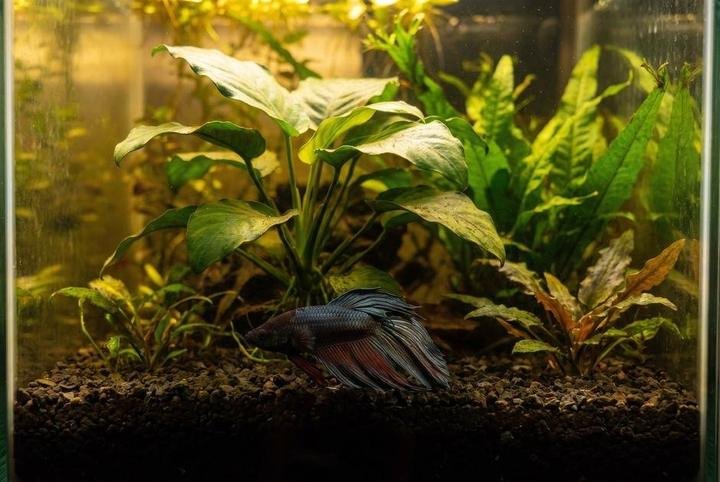
A dying betta gives you signals days before the end, and several of them are reversible if you read them early. The trick is knowing which behavior points to water, which to disease, and which to old age you cannot fix.
Resting on the bottom, barely moving
Bettas do sleep on leaves and gravel, so a resting fish is not automatically a sick one. Worry when the lethargy is constant, the fish ignores food, and its breathing looks labored. The first suspect is always water. Test for ammonia and nitrite; if either reads above zero, do a 30 to 50 percent water change immediately, because ammonia poisoning burns the gills and mimics dying of old age.
Clamped fins held tight to the body
Healthy betta fins flow. Fins clamped shut like a folded fan signal stress, chilling, or the start of an infection. Check that the heater is holding a steady 78 to 80 F, since a cold betta clamps up and stops eating. Sustained clamping alongside other symptoms often means the water chemistry has drifted, which the guide to pH, KH and GH walks through fixing.
Fading color
A betta that dulls from brilliant to washed-out is under stress or aging. Young bettas rarely lose color without a cause; older ones (past three years) fade naturally. Pair fading with a betta that has stopped eating and you are usually looking at a sick fish, not just an old one.
Gasping at the surface
Constant gulping at the top means the fish is not getting enough oxygen, or the water is poisoning it. Bettas breathe air through a labyrinth organ, so an occasional trip up is normal. Nonstop gasping is not. Confirm ammonia and nitrite are both zero, then increase surface movement.
White spots, lying on the side, or a swollen belly
White grains like salt scattered on the fins point to ich; read how to identify white spots on a betta before treating, since the fix depends on the exact cause. A betta lying on its side or struggling to stay upright usually has a swim bladder issue, often from overfeeding, and a two to three day fast frequently resolves it. The wider guide to a fish swimming sideways covers the other causes.
What actually saves fish
Nine times out of ten the fastest fix is a large water change and a heater check, not medication. The water change calculator sizes that change to the exact gallons for your tank. Most bettas that decline are living in unstable water, so start there. If you are still learning the basics of temperature, tank size, and feeding, the betta care guide for beginners covers the setup that prevents most of these problems in the first place.
Your first 24 hours when a betta crashes
When you spot two or more of these signs together, work in this order and you will catch the fixable causes before they turn fatal.
- Test the water first, not your gut. Ammonia, nitrite, and nitrate. The reading decides everything that follows.
- Change 30 to 50 percent of the water if anything reads above zero, matched to tank temperature and dechlorinated.
- Confirm the heater. A thermometer on the far glass should read 78 to 80 F. A stuck or undersized heater chills a betta into clamping and fasting.
- Pause feeding for a day or two if the belly looks swollen or the fish floats, since overfeeding drives most swim bladder trouble.
- Watch before you medicate. Reach for treatment only once water and temperature are ruled out, because the wrong med stresses an already weak fish.
Telling old age from a fixable decline
A betta past three years slows down on its own, and owners often medicate a fish that is simply getting old. Age shows as more resting on leaves, a gentle fade in color, and slightly curled fin edges, all of it gradual. A fixable decline arrives faster and pairs with a trigger you can test for: a water reading above zero, a heater that drifted cold, or white spots that appeared over a weekend. If the numbers are clean and the fish still eats, you are usually watching age rather than illness. How long bettas actually live puts the timeline in context, since a store fish is often close to a year old before you bring it home.
When a betta cannot be saved
Some declines pass the point a water change or a fast can reverse. A fish that cannot stay upright for days, shows pineconed scales from dropsy, or lies gasping on the bottom while eating nothing is suffering rather than aging. At that stage the kind choice is a quick, painless end rather than another round of medication, and the guide to euthanizing a fish humanely walks through the only two methods a vet will stand behind. Knowing when to stop treating is part of keeping fish well.
Common questions
Can a dying betta recover?
Often, yes, when the cause is water or cold rather than organ failure. A betta gone lethargic and clamped from bad water frequently bounces back within days of a big change and a steady heater. One that cannot hold itself upright and shows pineconed scales is past that point.
How long can a sick betta survive?
It depends entirely on the cause. Ammonia poisoning can kill in a day or two; a slow fade from old age plays out over weeks. The faster the decline arrived, the more likely it is something you can still fix.
Why is my betta suddenly lying at the bottom?
Sudden bottom-sitting almost always traces to a water reading above zero or a tank that dropped cold. Test and check the heater before you assume the worst.
